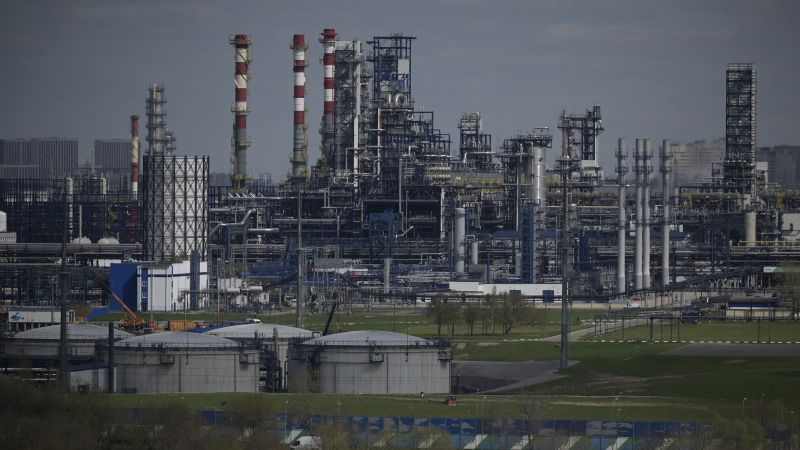
Ukraine Drone Attack Ignites Major Fire at Moscow Oil Refinery
Ukrainian drones successfully targeted and struck a major oil refinery in Moscow on June 18, 2026, causing a significant fire and explosions. This marks one of the largest drone attacks on the Russian capital since the conflict began, with Ukrainian officials stating it as a justified response to Russian aggression. The attack has implications for Russia's energy sector and highlights Ukraine's escalating long-range strike capabilities. The event also underscores the broader impact of the conflict on global energy markets and India's reliance on Russian oil.
Key Highlights
- Ukraine launched a large-scale drone attack on Moscow's oil refinery on June 18, 2026.
- The strike caused a major fire and explosions at the facility, one of the largest on the capital.
- Ukraine considers the attack a justified response to Russian aggression.
- The incident highlights Ukraine's growing long-range drone capabilities.
- The attacks have implications for Russia's energy sector and global oil supplies.
On June 18, 2026, Ukraine launched a significant and large-scale drone attack on the Moscow Oil Refinery, located in the Kapotnya district of the Russian capital. The assault, which saw drones penetrate layered air defenses, resulted in a major fire and explosions at the facility, sending thick columns of black smoke visible across the city. Moscow Mayor Sergei Sobyanin confirmed that air defense systems were actively repelling the attack, and while many drones were reportedly intercepted, several managed to reach their targets, including the refinery. This incident is considered one of the most extensive drone attacks on Moscow since the beginning of the full-scale war between Russia and Ukraine.
Ukrainian President Volodymyr Zelenskyy described the strike as a "fully justified response" to Russia's ongoing attacks on Ukrainian cities and communities, emphasizing that Ukraine's long-range capabilities were once again demonstrated. He further stated that the strike on the Moscow Oil Refinery, which is a critical part of the capital's fuel infrastructure, was a result of the warriors' work against facilities that sustain Russia's war machine. The refinery is vital, supplying approximately 40% of Moscow's petrol needs and 50% of its diesel fuel, and also provides aviation fuel for military purposes. This was not the first time the refinery had been targeted; it was also attacked earlier in the week, reportedly halting its operations.
The scale of the drone barrage was notable, with Russian authorities claiming to have intercepted hundreds of drones, including nearly 200 approaching the capital. However, the fact that several drones successfully struck their targets, including the refinery, highlights the challenges Russia faces in defending its airspace against increasingly sophisticated Ukrainian attacks. Beyond the refinery, drone debris also caused damage to other facilities in the Moscow region, including an apartment building, an industrial facility, and a shopping center. In a broader context, Russia reported that a total of 555 drones were intercepted across the country, indicating a widespread and coordinated offensive.
Ukraine's escalating drone campaign against Russian oil infrastructure has been ongoing for some time, with the aim of disrupting Russia's revenue streams that fund the war. These attacks have affected numerous Russian refineries, leading to reduced refining capacity and impacting domestic fuel supplies. The damage to these facilities not only hampers Russia's ability to export refined products but also has implications for its military operations, which rely heavily on fuel.
For India, these developments have significant relevance. Russian oil has become a crucial component of India's energy strategy, especially following Western sanctions on Moscow. India has ramped up its purchases of discounted Russian crude, with a substantial portion of its imports flowing through key Russian ports like Primorsk, Ust-Luga, and Novorossiysk, which have themselves been targeted by Ukrainian drone strikes. The International Energy Agency (IEA) has warned that prolonged disruptions to these Russian ports could significantly affect Indian refining operations and its crude supply chain. While India has capitalized on discounted Russian oil, creating opportunities for its refiners and boosting exports like diesel, there are underlying risks associated with this reliance. Fluctuations in discounts, potential geopolitical pressures, and the vulnerability of supply routes due to these attacks all pose challenges. The strategic importance of Russian oil for India, coupled with the ongoing Ukrainian attacks on its energy infrastructure, creates a complex geopolitical and economic landscape for New Delhi's energy security.
The use of drones has become a defining feature of the conflict, with both sides rapidly developing and deploying this technology. Ukraine's success in hitting targets deep within Russian territory, including major energy infrastructure, demonstrates its growing mid- and long-range strike capabilities, often leveraging domestically developed drone and missile technology. This campaign not only inflicts economic damage on Russia but also aims to undermine the Kremlin's ability to wage war and create political repercussions.
The broader implications of these attacks extend to global energy markets, although the IEA has noted that significant price movements have not been a direct consequence, partly due to global economic conditions and increased production from other countries. However, disruptions to major oil producers like Russia can always introduce volatility. The continuous targeting of Russian oil refineries by Ukraine represents a significant escalation in the conflict's economic warfare, with ongoing monitoring required to assess its long-term impact on global energy supplies and India's strategic energy decisions.
Frequently Asked Questions
What was the extent of the damage to the Moscow Oil Refinery?
The Moscow Oil Refinery experienced a major fire and explosions following the drone attack on June 18, 2026. While specific details on the extent of structural damage are still emerging, reports indicate that a primary oil processing unit was affected, leading to a suspension of operations. The thick black smoke visible across Moscow signified the severity of the incident.
What is Ukraine's stated reason for attacking Russian oil refineries?
Ukrainian President Volodymyr Zelenskyy has stated that attacks on Russian oil refineries are a "fully justified response" to Russia's continued strikes on Ukrainian cities and communities. Ukraine views these facilities as legitimate targets as they are believed to sustain Russia's war machine and fund its military operations.
How does this attack affect India's energy security?
India relies significantly on Russian oil, with a substantial portion of its imports coming through Russian ports that have also been targeted by Ukrainian drones. While India has benefited from discounted Russian crude, these attacks pose a risk to its crude supply chain. The International Energy Agency (IEA) has warned that prolonged disruptions to Russian port availability could significantly affect Indian refining operations. Therefore, this attack underscores the vulnerability of India's energy security and its dependence on Russian oil supplies.