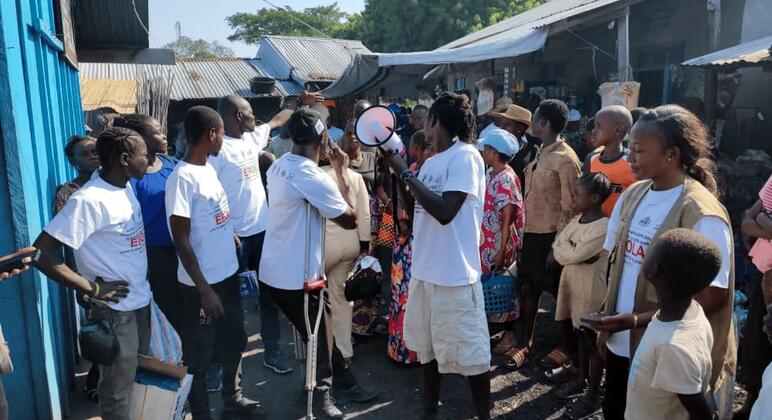
Congo Ebola Burial Team Attacked Amidst Rising Cases and Mistrust
An Ebola burial team was attacked in the Democratic Republic of Congo's South Kivu province, forcing responders to abandon a coffin and fueling fears of further transmission. This incident highlights ongoing community mistrust and resistance that hampers Ebola containment efforts. The Bundibugyo strain outbreak continues to rise, with significant case numbers reported across multiple provinces.
Key Highlights
- Ebola burial team attacked in South Kivu, DRC.
- Community mistrust fuels resistance to containment efforts.
- Bundibugyo strain of Ebola shows rising case numbers.
- Attackers abandoned a coffin, risking further transmission.
- Incident underscores challenges in controlling the outbreak.
An attack on an Ebola burial team in the Democratic Republic of Congo's (DRC) South Kivu province has heightened concerns about further transmission of the Bundibugyo strain of Ebola, as cases continue to rise across the nation. The assault, which occurred in Katana, forced responders to abandon a coffin, leading to community members handling the body. This high-risk practice significantly increases the potential for new chains of infection, according to health officials.
The incident underscores the deep-seated mistrust and resistance that continue to plague Ebola containment efforts in the DRC. Burial teams, trained to handle infectious bodies under strict protocols to prevent contagion, are often targeted by communities who may question the cause of death or resent the perceived invasiveness of safe and dignified burial procedures. These procedures, while crucial for public health, can prevent families from performing traditional rites, leading to anger and suspicion.
The Bundibugyo Ebola outbreak, declared in May 2026, has been characterized by its rapid spread and high mortality rate, making it the fastest-moving filovirus event recorded. As of late August 2026, the DRC had reported over 5,500 confirmed cases and more than 2,600 deaths, with officials estimating that the true number of infections could be as high as 10,000 to 15,000, as only 30-40% of actual infections are being detected. The outbreak has expanded across six provinces, with Ituri province remaining the epicenter, accounting for a significant majority of cases and deaths.
Uganda had also reported cases but declared its outbreak over in late July 2026 after 42 days without a new confirmed case. However, imported cases from the DRC have been reported in other countries, including Germany and France. The World Health Organization (WHO) has declared the outbreak a Public Health Emergency of International Concern (PHEIC) due to its rapid spread and the challenges in containing it.
Response efforts are further complicated by insecurity, population displacement, and high mobility, including cross-border movements. The WHO has stressed the critical role of community engagement and trust in controlling the outbreak, stating that biomedical interventions alone are insufficient. The organization is scaling up support to the DRC and Uganda, strengthening surveillance, contact tracing, clinical management, and community engagement.
There are no approved vaccines or specific treatments for the Bundibugyo strain of Ebola, although promising candidates are being tested. The situation remains dire, with officials urging for increased funding and resources to combat the escalating epidemic. The attack on the burial team serves as a stark reminder of the immense challenges faced by frontline health workers and the critical need for community cooperation to bring this devastating outbreak under control. The article from Global Banking & Finance Review, while reporting on a specific incident, provides context to a larger, ongoing public health crisis that demands global attention and robust intervention.
Frequently Asked Questions
What happened during the attack on the Ebola burial team in Congo?
Residents attacked an Ebola burial team in South Kivu province, Democratic Republic of Congo, forcing responders to abandon a coffin and subsequently handle the body themselves. This incident raises fears of further Ebola transmission.
Why are people attacking Ebola response teams in the DRC?
Attacks on Ebola response teams, including burial teams, stem from a complex mix of community mistrust, resistance to safe and dignified burial protocols, and suspicion about the cause of death. These protocols, while necessary for public health, can conflict with traditional mourning rituals.
What is the current situation of the Ebola outbreak in the DRC?
The Bundibugyo strain of Ebola outbreak in the DRC is rapidly spreading and has become the deadliest in the country's history. As of late August 2026, there were over 5,500 confirmed cases and more than 2,600 deaths, with health officials estimating the true burden to be significantly higher.
What are the challenges in controlling the Ebola outbreak in the DRC?
Key challenges include community mistrust and resistance, insecurity, population displacement, high mobility, and insufficient funding. The rapid spread of the virus also outpaces control measures, making containment a significant hurdle.