Spanish Satellite Survives ISRO's PSLV-C62 Mission Failure | Quick Digest
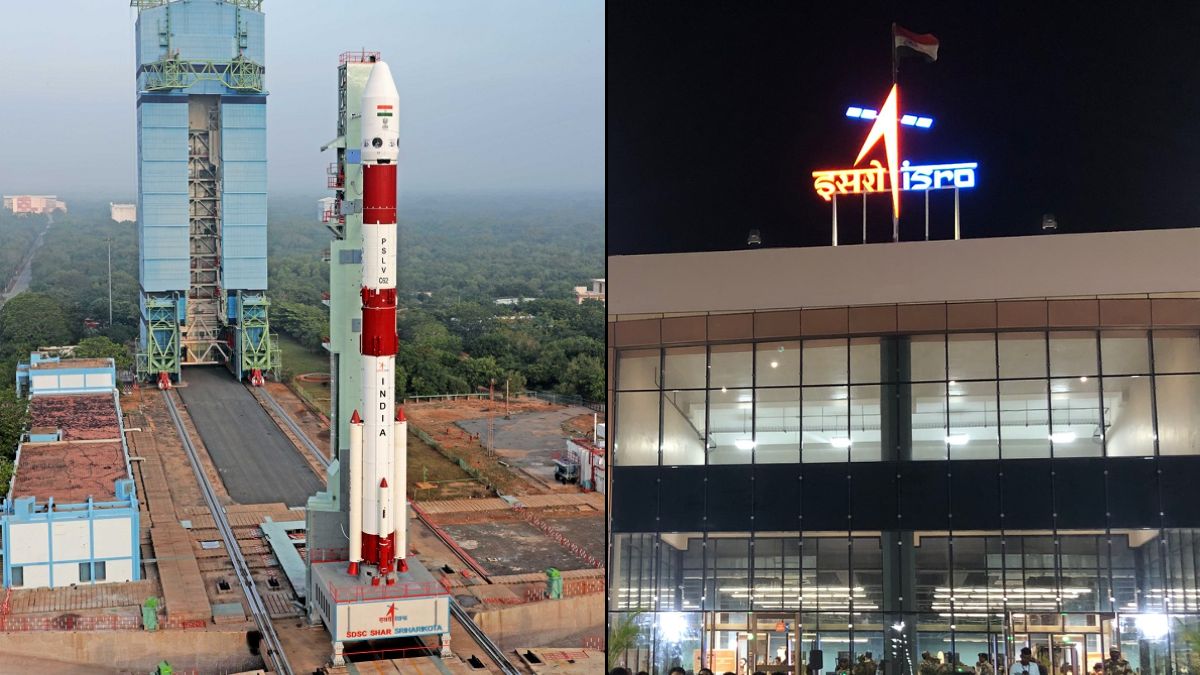
ISRO's PSLV-C62 mission on January 12, 2026, failed due to a third-stage anomaly, leading to the loss of 15 satellites. However, a Spanish experimental capsule named KID remarkably survived the descent and transmitted critical data for over three minutes, offering a rare insight into extreme re-entry conditions.
ISRO's PSLV-C62 mission failed on January 12, 2026, due to a third-stage anomaly.
Out of 16 satellites, only Spain's KID capsule survived the rocket failure.
KID, a 25-kg experimental capsule, transmitted critical data for over three minutes.
The capsule recorded peak deceleration of approximately 28g during its unexpected re-entry.
The mission carried India's EOS-N1 satellite and co-passengers from several countries.
The incident marks the second consecutive PSLV failure, raising concerns for ISRO.
The Indian Space Research Organisation's (ISRO) PSLV-C62 mission, launched on January 12, 2026, from the Satish Dhawan Space Centre, suffered a critical failure due to an anomaly in its third stage. This resulted in the inability to inject its primary payload, the EOS-N1 (Anvesha) hyperspectral earth imaging satellite for strategic purposes, and 15 co-passenger satellites into their intended sun-synchronous orbits, leading to their presumed loss.
Amidst this significant setback, a remarkable outcome emerged: a small, football-sized Spanish experimental re-entry capsule named KID (Kestrel Initial Demonstrator) survived the catastrophic event. Developed by the Spanish startup Orbital Paradigm, the 25-kg capsule defied expectations by separating from the rocket's fourth stage and activating autonomously. It successfully transmitted critical telemetry data back to Earth for over three minutes, providing invaluable information on its performance under extreme conditions, including recording peak deceleration forces of approximately 28g and internal temperature data. The KID capsule was designed for re-entry testing to validate reusable re-entry technologies. While the ultimate fate of the capsule (whether it burned up or splashed down) is yet to be fully confirmed by Orbital Paradigm, its brief data transmission is being hailed as a partial technical success and a significant milestone for private space ventures.
This mission failure is particularly concerning for ISRO as it marks the second successive setback for a PSLV rocket, following a similar anomaly with the PSLV-C61 mission in May 2025. ISRO Chairman V. Narayanan confirmed the deviation in the third stage and stated that a detailed analysis of the failure is underway, with implications for upcoming flagship missions like Gaganyaan and Chandrayaan-4.
Read the full story on Quick Digest