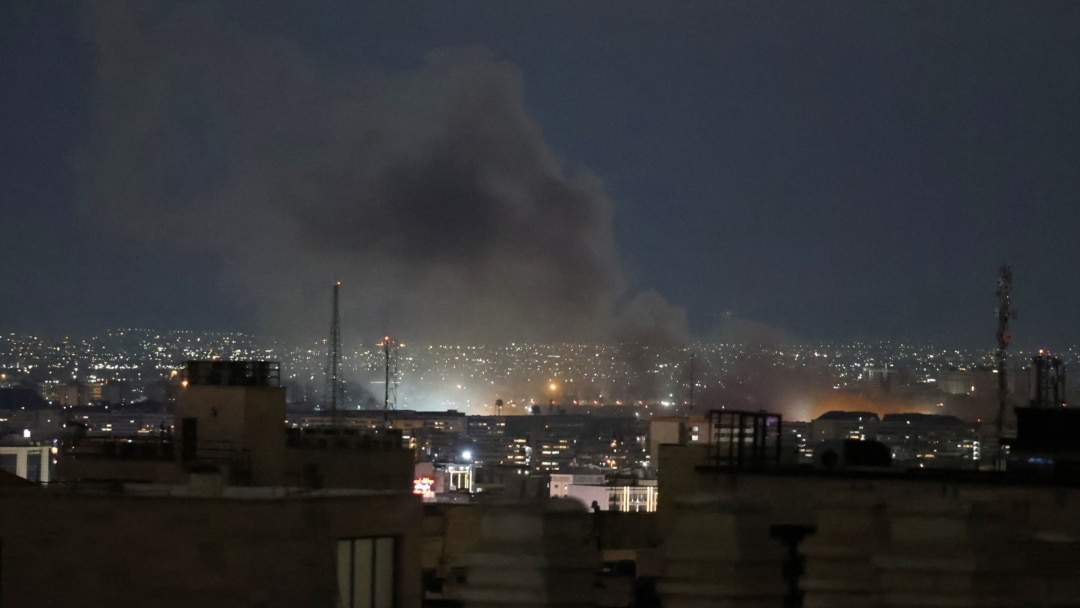
Iran's Khondab Heavy Water Plant: IAEA Confirms Non-Operational After Strike
Iran's Khondab heavy water production plant is no longer operational due to severe damage from a recent Israeli military strike, confirmed the IAEA. The UN nuclear watchdog clarified that the facility contained no declared nuclear material, despite Israel's assertions about its plutonium production potential. This incident underscores escalating regional tensions.
Key Highlights
- IAEA confirms Khondab heavy water plant is non-operational.
- Plant sustained severe damage from an Israeli military strike.
- No declared nuclear material present at the facility, says IAEA.
- Strike occurred on March 27, 2026, reportedly by Israel.
- Follows previous Israeli targeting of the same plant in 2025.
- IAEA warns against targeting nuclear facilities amidst escalating tensions.
The International Atomic Energy Agency (IAEA) has officially confirmed that Iran's heavy water production plant at Khondab is no longer operational, having suffered severe damage from a recent Israeli military strike. This crucial development was announced by the UN nuclear watchdog on Sunday, March 29, 2026, following Iran's report on March 27 regarding an attack on the facility. The IAEA's confirmation was based on an independent analysis of satellite imagery and its existing knowledge of the installation.
Israeli defense officials acknowledged on Friday (March 27, 2026) that their forces had carried out targeted strikes against a heavy water plant located in Arak, central Iran, which is the same facility as Khondab. The Israeli military described the site as a "key plutonium production site for nuclear weapons". Concurrently, Israel also confirmed striking a uranium processing plant in Iran's central Yazd region, further escalating an already tense geopolitical landscape.
A critical detail emphasized by the IAEA is that the Khondab installation contained "no declared nuclear material" at the time of the strike. This assertion was corroborated by Iranian media reports, which stated that the strikes resulted in no casualties and no release of radiation from the site. This information is significant as it mitigates immediate concerns about a potential radiological incident, though the act of striking a nuclear-related facility remains a grave concern.
This is not the first instance of the Khondab heavy water plant being targeted. Reports indicate that Israel had previously struck the facility in June of the preceding year (June 2025). The latest strike on Friday was reportedly executed in response to ongoing Iranian efforts to reconstruct the previously damaged facility, according to statements cited by The Wall Street Journal. This suggests a continuous pattern of pre-emptive or retaliatory actions by Israel against Iran's nuclear infrastructure.
The Khondab facility, historically known as the Arak site, was originally conceived to support an adjacent reactor designed for plutonium production—a material that can be used in the development of nuclear weapons. However, comprehensive reporting, including by The Wall Street Journal, indicates that the reactor itself was never fully completed and remains inactive. Furthermore, the Iranian government did not convert the facility into an alternative operational form, a requirement stipulated under the terms of the 2015 nuclear agreement (Joint Comprehensive Plan of Action - JCPOA). This historical context is vital for understanding the strategic importance Israel places on preventing any potential for plutonium production.
IAEA Director General Rafael Grossi expressed profound concern regarding reports of military activities in the vicinity of nuclear power plants. He underscored the serious consequences of such strikes, warning that they could lead to a major radiological incident if reactors were to be damaged. Grossi urged all parties to exercise maximum military restraint and return to the negotiating table to achieve a diplomatic resolution, highlighting the universal principle that nuclear facilities should never be targeted or have their physical integrity compromised.
The strikes on Iranian nuclear facilities are unfolding amidst broader regional hostilities and significant geopolitical maneuvering. Reports from various sources indicate ongoing U.S.-Israel military operations and complex diplomatic negotiations involving Iran. The U.S. President has reportedly commented on the situation, suggesting "regime change" in Iran and emphasizing American capabilities in the region.
Beyond Khondab, Iran also reported strikes on an industrial facility, the Khuzestan Steel Production Factory, which utilizes radioactive sources, and an incident near the Bushehr Nuclear Power Plant. While no damage to the operational reactor or radiation release was reported at Bushehr, these incidents collectively paint a picture of heightened military engagement and significant risks to regional stability. The continuous targeting of facilities, even those without declared nuclear material, reflects the intense international scrutiny and military pressure on Iran's nuclear program.
Frequently Asked Questions
What is the status of Iran's Khondab heavy water production plant?
The Khondab heavy water production plant in central Iran is no longer operational, according to the International Atomic Energy Agency (IAEA). It sustained severe damage from a recent Israeli military strike.
Was there any nuclear material at the Khondab plant?
The IAEA confirmed that the Khondab heavy water production plant contained no declared nuclear material at the time of the Israeli strike.
Who carried out the strike on the Khondab plant and when?
The strike on the Khondab plant was carried out by the Israeli military on March 27, 2026. Israel confirmed its forces conducted the targeted attack.
What is the significance of heavy water in Iran's nuclear program?
Heavy water is used in certain types of nuclear reactors, like the one historically planned for Khondab (also known as Arak), to produce plutonium. Plutonium can be utilized as fissile material for nuclear weapons.
What has been the international reaction to the strike?
IAEA Director General Rafael Grossi expressed deep concern over military activity near nuclear facilities, warning of serious consequences and urging diplomatic solutions. The incident has intensified broader regional hostilities.