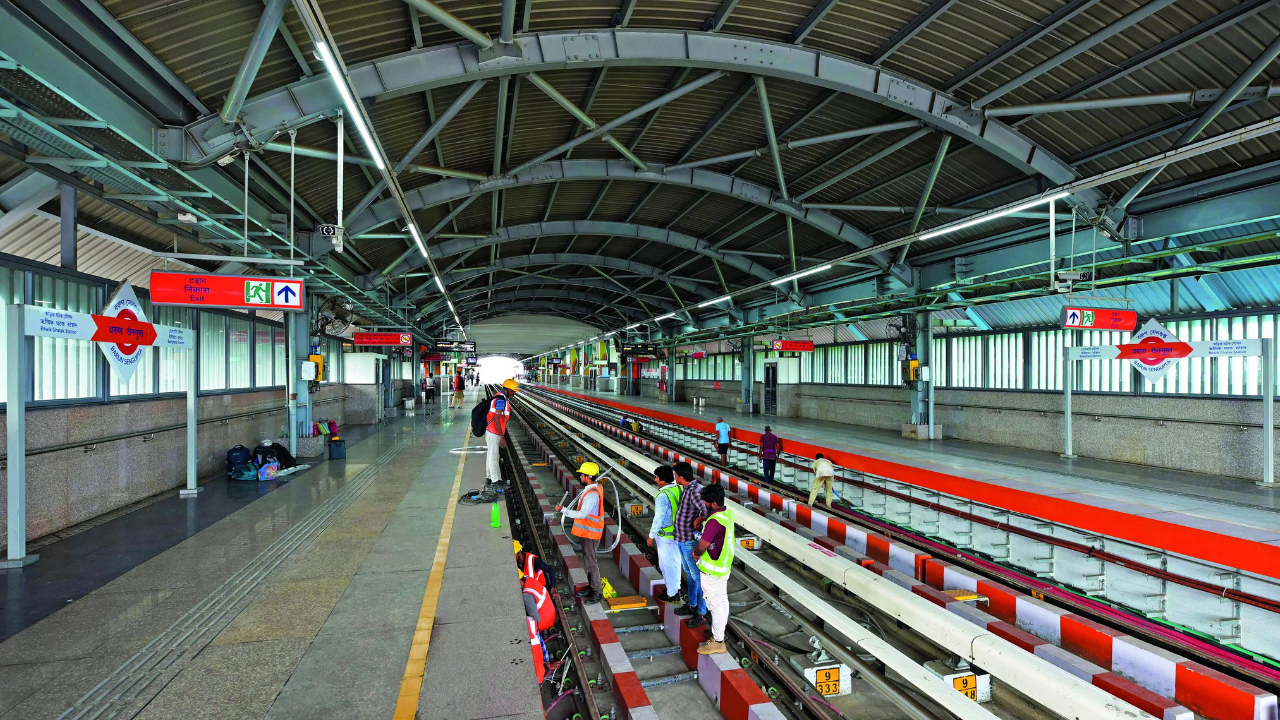
Supreme Court Slams West Bengal Over Kolkata Metro Project Delays
The Supreme Court has sternly criticized the West Bengal government for its "obstinate attitude" and alleged stalling of the Kolkata Metro's Orange Line project. The court emphasized that development should not be hindered by political considerations or festivals.
Key Highlights
- SC criticizes West Bengal govt for metro project delays.
- Orange Line Metro project in Kolkata faces significant hurdles.
- Court links delays to state's 'obstinate attitude'.
- Development should take precedence over festivals, SC states.
- Legal action considered if delays persist.
The Supreme Court of India has strongly reprimanded the West Bengal government for its alleged role in delaying the Kolkata Metro's Orange Line project, particularly the section passing through Chingrighata. The apex court expressed its displeasure with the state's "obstinate attitude" and its tendency to politicize development projects. This strong admonishment came after the court reviewed reports detailing the persistent delays and the lack of cooperation from state authorities, which are seen as hindering crucial infrastructure development in Kolkata.
The Supreme Court's intervention was prompted by petitions highlighting the stalled progress of the Orange Line, a vital east-west corridor for the city's public transportation network. Specifically, the construction of the metro line around the Chingrighata area has been a major point of contention, with allegations that the state government has not provided necessary approvals or cooperation, leading to significant setbacks. The court's bench, comprising Justices H.S. Oka and A.J. Bose, emphasized that development should not be compromised or stalled due to political vendettas or the observance of festivals. This statement underscores the judiciary's view that essential infrastructure projects, crucial for urban development and public welfare, must be prioritized.
Several media outlets, including Live Law, The Times of India, Telegraph India, Hindustan Times, and The Indian Express, have reported on the Supreme Court's strong stance. The reports consistently highlight the court's critical remarks, describing the government's approach as obstructive and politically motivated. The Supreme Court's observations indicate a potential for further legal action if the West Bengal government does not actively facilitate the project's progress. The court explicitly stated that it would not tolerate the politicization of developmental initiatives and urged the state to act responsibly, fulfilling its duty towards ensuring the smooth execution of such projects.
The Orange Line, also known as Line 6, is intended to connect the airport to the city center, significantly improving connectivity for a large segment of the population. Delays in such projects not only escalate costs but also deprive citizens of much-needed public transport infrastructure, impacting daily commutes, economic activity, and overall quality of life. The court's strong intervention reflects a growing concern among judicial bodies about the impediments faced by national infrastructure projects due to inter-governmental friction and political considerations.
The Supreme Court's critique of the West Bengal government's actions is significant as it signals the judiciary's willingness to step in and ensure that developmental projects are not held hostage by political rivalries. The court's directive to prioritize development over perceived political gains or even extensive festival celebrations sends a clear message to all state governments about their responsibilities in advancing national progress. This judicial oversight aims to create an environment where infrastructure development can proceed unhindered, benefiting the public at large. The repeated interventions by the apex court in such matters underscore the gravity of the situation and the critical need for a more collaborative approach between different levels of government for the successful implementation of vital infrastructure projects across India. The court's firm stance is a testament to its commitment to upholding the rule of law and ensuring that public welfare projects are not sacrificed for political expediency.
Frequently Asked Questions
What is the Orange Line Metro project in Kolkata?
The Orange Line, also known as Line 6, is a major Metro Railway project in Kolkata aimed at connecting the Netaji Subhas Chandra Bose International Airport with the city center, significantly improving connectivity and reducing travel time for commuters.
Why is the Supreme Court criticizing the West Bengal government?
The Supreme Court has criticized the West Bengal government for its alleged 'obstinate attitude' and for stalling the progress of the Kolkata Metro's Orange Line project, particularly in the Chingrighata area. The court believes the state is politicizing development and hindering essential infrastructure work.
What was the Supreme Court's main directive?
The Supreme Court emphasized that development should not be compromised or delayed due to political considerations or festivals. It urged the state government to cooperate and facilitate the smooth execution of the metro project.
What are the potential consequences of these delays?
Delays in crucial infrastructure projects like the Kolkata Metro can lead to increased costs, extended construction timelines, and deprive citizens of vital public transportation, negatively impacting daily life and economic activity in the city.