US military strike in Pacific kills two on suspected drug boat
The U.S. military confirmed it carried out an attack on a vessel in the eastern Pacific Ocean, resulting in the deaths of two individuals and leaving one survivor. This incident is part of an ongoing campaign targeting alleged drug-trafficking operations in the region, with critics questioning the legality and necessity of such lethal actions.
Key Highlights
- U.S. military confirmed attack on eastern Pacific vessel.
- Two individuals killed, one survivor reported.
- Incident part of ongoing campaign against alleged drug trafficking.
- Critics question legality and evidence of the strikes.
- No U.S. military personnel were harmed.
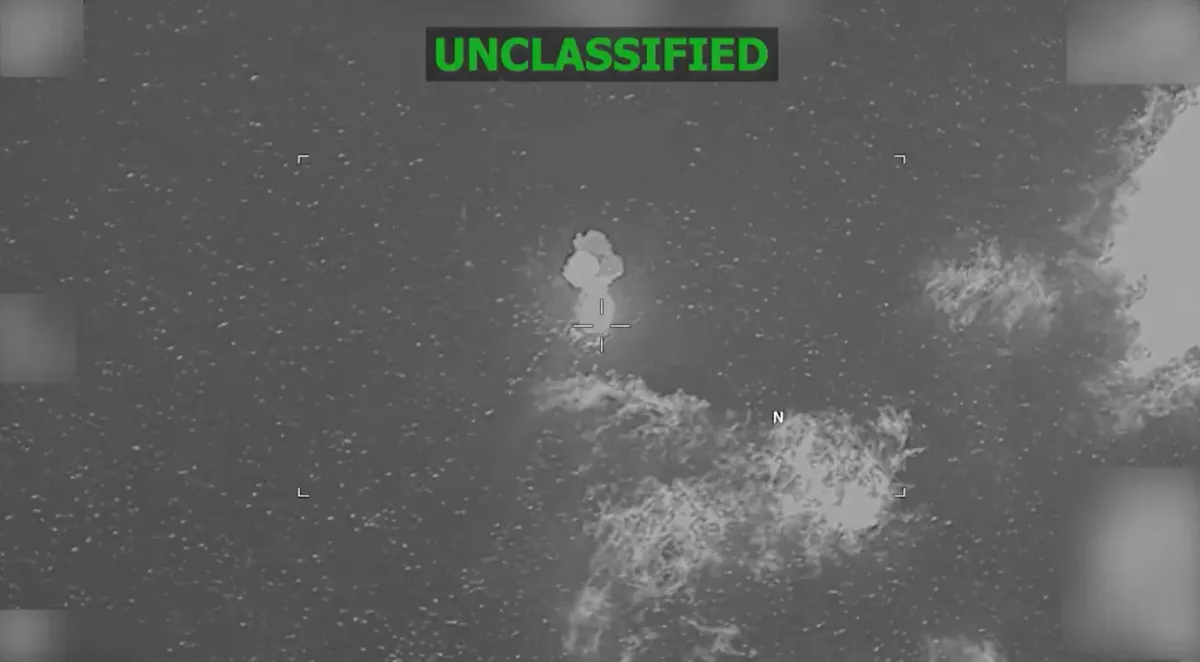
The United States military has confirmed carrying out a lethal strike on a vessel in the eastern Pacific Ocean, resulting in the deaths of two individuals and leaving one survivor. This incident, reported on May 9, 2026, marks the latest in a series of similar operations conducted by the U.S. Southern Command (SOUTHCOM) against suspected drug-trafficking activities. SOUTHCOM released a video appearing to show the vessel being hit by a missile and subsequently erupting in flames. According to SOUTHCOM's statement, intelligence indicated the vessel was transiting along known narco-trafficking routes and was actively engaged in such operations. The command stated that no U.S. military forces were harmed in the operation and that the U.S. Coast Guard was notified to assist in the search and rescue of the survivor. This strike is part of a broader campaign initiated by the Trump administration, which has framed drug trafficking as an act of aggression and designated numerous criminal groups involved in the trade as "terrorist organizations." The administration's strategy includes blowing up alleged drug-trafficking vessels in Latin American waters, including the eastern Pacific and the Caribbean Sea. Since the commencement of this campaign in September 2025, a significant number of individuals have been killed, with estimates varying but often cited as over 170 or even 190 people. However, the military has not consistently provided concrete evidence that the targeted vessels were carrying drugs at the time of the strikes. This lack of verifiable evidence, coupled with the lethal nature of the operations, has drawn considerable criticism. International legal scholars, human rights organizations, and regional leaders have voiced concerns, with many describing the strikes as potential extrajudicial killings. They argue that a state of armed conflict does not exist to justify such operations and that individuals suspected of drug trafficking should be brought to justice through legal channels rather than face fatal attacks. Families of some individuals killed in previous strikes have also come forward, asserting that their relatives were fishermen or informal workers, not "narco-terrorists." The U.S. Southern Command, responsible for military operations in the Caribbean and Latin America, has maintained that its actions are justified by intelligence confirming the vessels' involvement in narco-trafficking. The campaign has seen an escalation in recent weeks, with multiple strikes occurring in May 2026 alone. The legality of these operations remains a contentious issue, with critics arguing that they violate both domestic and international laws. The U.S. military's approach has been defended by the administration as a necessary escalation to stem the flow of illicit drugs into the United States and combat what they term "narcoterrorism." However, the persistent questions surrounding evidence, legality, and accountability continue to fuel debate about the effectiveness and ethical implications of these ongoing military actions. The latest incident underscores the ongoing nature of this campaign and the continued controversy surrounding its execution and justification. Despite the ongoing debates and criticisms, the U.S. military continues to conduct these operations in the eastern Pacific and Caribbean, highlighting the administration's commitment to its anti-narcotics strategy. The total death toll from these strikes has been reported to be over 190 people since September 2025, with a small number of survivors. The rationale provided by the U.S. military consistently centers on intelligence regarding narco-trafficking routes and operations, though the specifics and evidence supporting these claims are often not publicly disclosed due to operational security concerns. The legal framework for these actions is often linked to broader counter-terrorism strategies and the designation of cartels as terrorist organizations, a move that itself has been met with skepticism by international legal experts. The human cost and the unanswered questions about the legality and justification of these strikes continue to be a focal point of international discussion and concern. The situation remains dynamic, with further operations and potential legal challenges anticipated.
Frequently Asked Questions
What happened in the recent U.S. military strike in the Eastern Pacific?
The U.S. military conducted a strike on a vessel in the eastern Pacific Ocean, resulting in the deaths of two individuals and leaving one survivor. The U.S. Southern Command (SOUTHCOM) stated that the vessel was involved in suspected drug-trafficking operations.
Who is conducting these strikes and why?
The strikes are being carried out by the U.S. Southern Command (SOUTHCOM) as part of the Trump administration's counter-narcotics strategy. The administration views drug cartels as a significant threat and has intensified military actions against alleged drug-trafficking operations.
What are the concerns surrounding these military strikes?
Critics, including international legal scholars and human rights groups, question the legality of these strikes, citing a lack of public evidence of drug trafficking and the potential for extrajudicial killings. They argue that individuals should face legal proceedings rather than lethal attacks.
What is the overall death toll from these operations?
Since the campaign began in September 2025, the U.S. military strikes on alleged drug-trafficking vessels have resulted in the deaths of over 170 to 190 people, with varying estimates across reports.