Iran Missile Strikes Dimona Near Israeli Nuclear Facility Amid Escalating Conflict
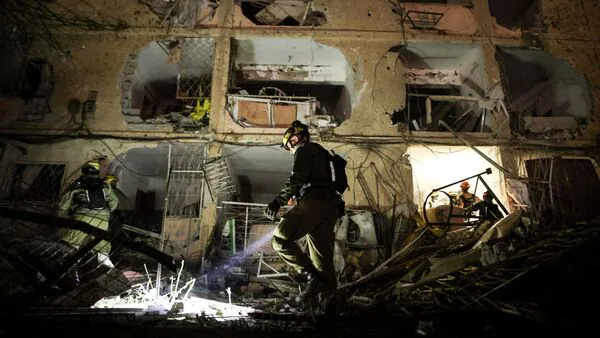
Iranian missiles struck the Israeli towns of Dimona and Arad, causing damage and injuring approximately 180-200 people. These strikes are seen as retaliation for an earlier attack on Iran's Natanz nuclear facility. The incidents highlight the ongoing escalation of the conflict between Iran and Israel, with missiles penetrating Israeli air defenses near a key nuclear site.
Key Highlights
- Iranian missiles targeted Dimona and Arad, southern Israel.
- Around 180-200 people were injured in the attacks.
- The strikes are believed to be retaliation for an attack on Iran's Natanz nuclear facility.
- This marks the first time Iranian missiles have breached Israeli air defenses near a nuclear site.
- The conflict between Iran and Israel continues to escalate.
- Damage to buildings was reported in the affected areas.
In the latest escalation of the ongoing conflict, Iran launched missile strikes on the Israeli towns of Dimona and Arad late on Saturday, March 21, 2026. The attacks resulted in significant damage to buildings and injured an estimated 180 to 200 people, with some reports indicating approximately 11 seriously injured..
The Iranian strikes were stated by Tehran to be a direct retaliation for an earlier strike on its main nuclear enrichment facility at Natanz, which occurred on the same day.. Israel, however, denied responsibility for the attack on Natanz.. This exchange of strikes signifies a dangerous new phase in the already tense regional conflict, which began in late February 2026..
Significantly, this incident marks the first time Iranian missiles have penetrated Israel's air defense systems in the vicinity of a key nuclear facility.. The targeted areas, Dimona and Arad, are located in Israel's sparsely populated Negev desert, with Dimona being approximately 20 km (12 miles) west of Israel's main nuclear research center, the Shimon Peres Negev Nuclear Research Center. Arad is situated about 35 km (22 miles) to the north.. Israel is widely believed to possess the only nuclear arsenal in the Middle East, although its government has never officially confirmed or denied this..
The scale of the Iranian attack and the penetration of Israeli air defenses have raised serious concerns about the evolving military capabilities of both nations and the potential for further regional destabilization.. The Israeli military acknowledged that its air defense systems were activated but failed to intercept some of the missiles.. Investigations into this failure are reportedly underway..
In response to the attacks, Israeli Prime Minister Benjamin Netanyahu stated that Israel would continue its war efforts and strike its enemies on all fronts.. The ongoing conflict, which started on February 28, 2026, with joint US-Israeli strikes against Iran, has already resulted in thousands of deaths in Iran and hundreds on the US-Israeli side..
The broader context of this conflict involves Iran's nuclear program, which has been a major point of international concern and a contributing factor to the current hostilities.. Despite US and Israeli strikes aimed at degrading Iran's nuclear and missile capabilities, experts believe that Iran still retains the knowledge and infrastructure to pursue nuclear weapons.. The International Atomic Energy Agency (IAEA) has continuously monitored Iran's nuclear activities, noting an increase in enriched uranium stockpiles, which brings the country closer to weapons-grade material..
Iran's willingness to escalate the conflict by directly targeting areas near Israel's nuclear facilities demonstrates a shift in its retaliatory strategy, potentially signaling a move beyond proportional responses.. This marks a critical juncture in the long-standing tensions between Iran and Israel, with implications for regional stability and global security..
Sources: Al Jazeera, The Guardian, NDTV, The Times of Israel, Associated Press (AP), Reuters, i24NEWS, Middle East Eye, Anadolu Ajansı, BBC News, PBS, CBS News, Chinadaily.com.cn, 7NEWS, ACLED, Wikipedia, ICAN, FDD, Ad Fontes Media, Media Bias/Fact Check, AllSides, ResearchGate, Open Magazine, Ground News, Biasly, CSIS.
Frequently Asked Questions
What happened during the Iranian missile strikes on Israel?
Iranian missiles struck the southern Israeli towns of Dimona and Arad on March 21, 2026, causing damage to buildings and injuring approximately 180-200 people. These strikes were a retaliation for an earlier attack on Iran's Natanz nuclear facility.
Why is the attack on Dimona significant?
Dimona is located near Israel's main nuclear research center. The missile strikes are significant because they represent the first time Iranian missiles have penetrated Israeli air defense systems in the vicinity of a key nuclear facility, escalating regional tensions.
What is the broader context of the Iran-Israel conflict?
The strikes are part of an ongoing, escalating conflict between Iran and Israel that began in late February 2026. This conflict is heavily influenced by concerns over Iran's nuclear program and the broader geopolitical instability in the Middle East.