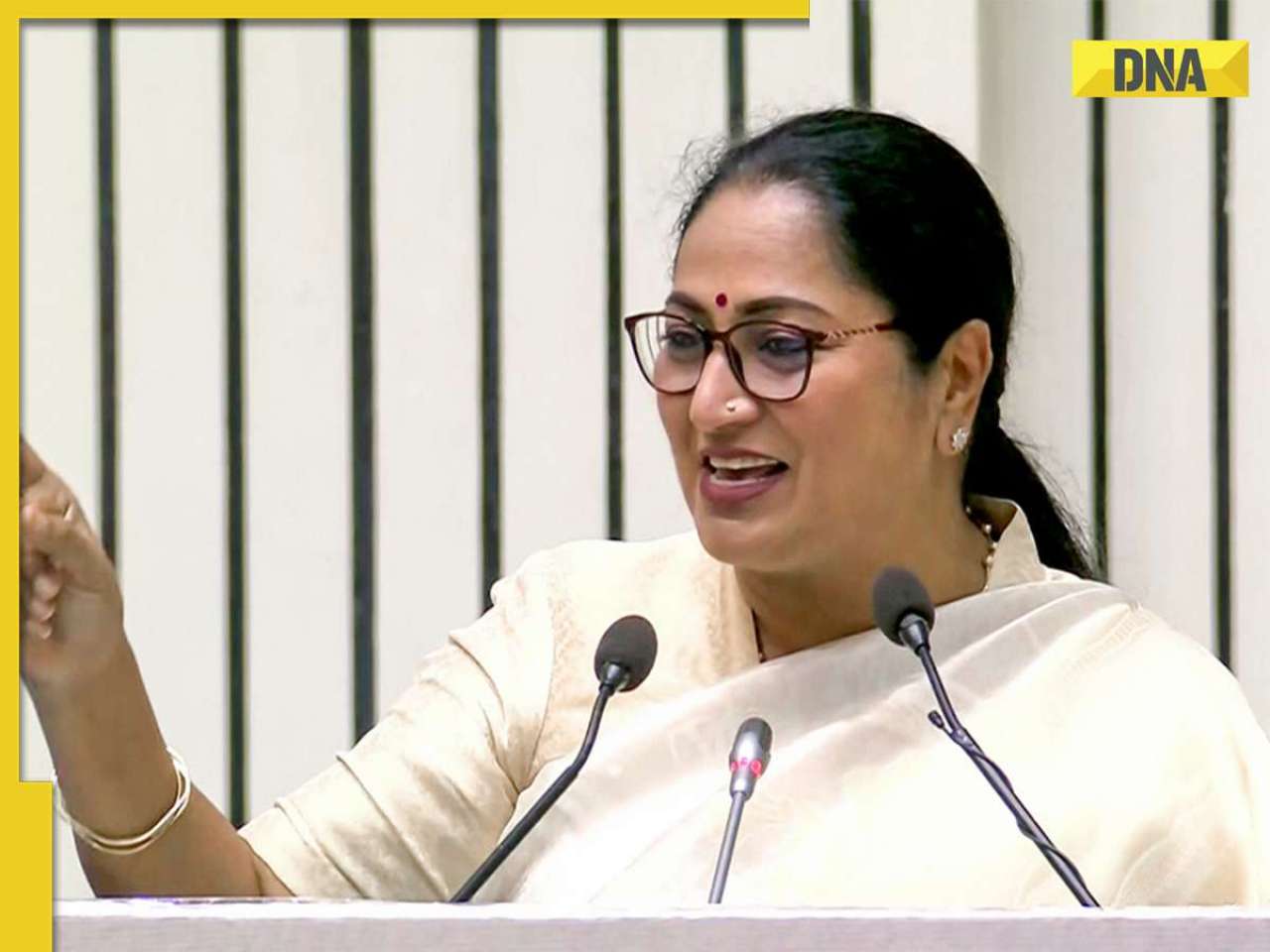
Women's Quota Bill: Kanimozhi Accuses BJP of Electoral Politics
During a special parliamentary sitting, DMK MP Kanimozhi accused the BJP of using the Women's Reservation Bill as an electoral strategy, questioning the timing of amendments and linking implementation to delimitation. Opposition parties raised concerns about the delay and impact on federal structure.
Key Highlights
- DMK's Kanimozhi criticizes BJP for using women's quota bill for electoral gains.
- Opposition challenges linking women's reservation to future delimitation and census.
- Government notified 2023 Women's Reservation Act amid debate on amendments.
- Concerns raised over potential reduction of southern states' representation.
- Demand for immediate implementation of women's quota without delay.
- Bill aims for 33% women's reservation in Lok Sabha and state assemblies by 2029.
During a recent special sitting of Parliament, the debate surrounding the Women's Reservation Bill, officially known as the Nari Shakti Vandan Adhiniyam, intensified with Dravida Munnetra Kazhagam (DMK) Member of Parliament Kanimozhi accusing the Bharatiya Janata Party (BJP) of leveraging the legislation for electoral benefits. Kanimozhi's strong remarks, widely reported, highlighted a critical juncture in the implementation of the law aimed at providing 33% reservation for women in the Lok Sabha and state legislative assemblies.
The special parliamentary session, which began on April 16, 2026, was convened to consider constitutional amendments linked to the operationalization of the Nari Shakti Vandan Adhiniyam, initially passed in 2023. The government introduced three key bills: the Constitution (One Hundred and Thirty-First Amendment) Bill, 2026, the Delimitation Bill, 2026, and the Union Territories Laws (Amendment) Bill, 2026. These amendments are designed to facilitate the women's reservation law by mandating a fresh delimitation exercise, which would then be based on the next census, potentially delaying the full implementation until the 2029 general elections.
Kanimozhi, a prominent voice from the DMK, directly challenged the BJP's intentions, alleging that the party was using women as a "human shield" for its electoral ambitions. She termed the government's approach an "election rescue strategy." Her concerns were echoed by other opposition leaders, including Congress MP Priyanka Gandhi Vadra, who also criticized the government's "political scheming" and suggested that the bills were a means for the BJP to retain power. Priyanka Gandhi notably engaged in a light-hearted but pointed banter with Union Home Minister Amit Shah, remarking that even Chanakya would be "shocked" by his political shrewdness.
A major point of contention raised by Kanimozhi and other opposition members was the 'after delimitation' clause within the bill. Kanimozhi vehemently argued for the removal of this clause, advocating for the immediate implementation of the women's reservation without further delay. She questioned the logic of forcing women to wait indefinitely for their rightful representation. Other opposition leaders like TMC's Kalyan Banerjee also supported immediate implementation without linking it to delimitation.
The debate took another twist with the government's decision to issue a notification on April 16, 2026, bringing the 2023 Women's Reservation Act into force, even while the amendments to the same law were still being discussed in Parliament. This move drew sharp criticism from the opposition, including Kanimozhi, who questioned the respect accorded to the House and called it a "mockery of Parliament." Some opposition members viewed this as a "desperate attempt" by the government to safeguard the 2023 law if the new amendment bills failed to pass.
Beyond the timing and implementation delays, significant concerns were raised regarding the proposed delimitation exercise. Kanimozhi termed the Delimitation Bill, 2026, and the overall framework as a "single greatest assault on the federal structure." She articulated fears that the redrawing of constituencies, especially if based on the 2011 Census, could disproportionately affect states that have successfully controlled their population growth, particularly southern states like Tamil Nadu. This could potentially lead to a reduction in their parliamentary representation, diminishing their voice in the Lok Sabha.
Furthermore, the absence of a specific quota for Other Backward Classes (OBC) women within the 33% reservation was a notable point of contention for some parties, like the All India Majlis-E-Ittehadul Muslimeen (AIMIM), who voted against the original bill for this reason. The opposition collectively indicated that while they supported women's reservation in principle, their concerns revolved around the specific provisions and the perceived political maneuvering behind the bill's implementation.
The government, on its part, urged political parties to support the amendments, with Prime Minister Narendra Modi emphasizing the importance of implementing women's reservation by the 2029 elections and asserting that the legislation was balanced and inclusive. However, the ongoing debate underscored the deep political divisions and strategic considerations at play regarding this landmark legislation.
The overall narrative from the special parliamentary sitting highlighted a complex interplay of political will, procedural challenges, and competing ideologies surrounding women's empowerment and representation in Indian democracy.
Frequently Asked Questions
What is the Nari Shakti Vandan Adhiniyam?
The Nari Shakti Vandan Adhiniyam is the official name for the Women's Reservation Bill, a constitutional amendment passed in 2023, which aims to reserve 33% of seats for women in the Lok Sabha and state legislative assemblies.
Why is DMK's Kanimozhi accusing the BJP of using women as an 'electoral shield'?
Kanimozhi accused the BJP of using the Women's Reservation Bill for electoral gain due to the government's decision to link its implementation to a future delimitation exercise and the notification of the 2023 Act while amendments were being debated, which she viewed as a political strategy to delay actual implementation and garner votes.
What are the main concerns raised by the opposition regarding the Women's Reservation Bill?
The opposition's main concerns include the delay in implementing the reservation due to its linkage with delimitation and census, the potential for reduced representation of southern states, the lack of a specific quota for OBC women, and the timing of the amendments and notification of the original Act.
When is the Women's Reservation Bill expected to be implemented?
Although the Women's Reservation Act was passed in 2023 and formally notified in April 2026, its full implementation, including the 33% reservation, is currently tied to a future delimitation exercise based on the next census, making it unlikely to be in force before the 2029 general elections.