Iran Hints at Bab el-Mandeb Disruption Amidst Hormuz Crisis
Following the effective closure of the Strait of Hormuz, Iran has hinted at disrupting the Bab el-Mandeb Strait, a vital chokepoint for global oil and trade. This escalation, conveyed through statements from Iranian officials and proxies, signals a widening maritime conflict with severe global economic repercussions, especially for oil-dependent nations like India.
Key Highlights
- Strait of Hormuz is effectively closed by Iran, severely disrupting global oil trade.
- Iranian officials have hinted at potential disruption of Bab el-Mandeb Strait.
- Iran-backed Houthi rebels also threaten Bab el-Mandeb, intensifying maritime risks.
- Dual chokepoint closures would severely impact global energy supplies and shipping costs.
- Bab el-Mandeb accounts for about 10-12% of global seaborne oil trade.
- India, a major oil importer, faces acute economic and logistical vulnerabilities.
The geopolitical landscape in the Middle East has entered a perilous new phase, marked by Iran's effective closure of the Strait of Hormuz and recent hints at disrupting another critical maritime chokepoint, the Bab el-Mandeb Strait. This development, widely reported and corroborated by multiple credible sources, significantly escalates global concerns over energy supplies and international trade, with profound implications for countries heavily reliant on Middle Eastern oil, particularly India.
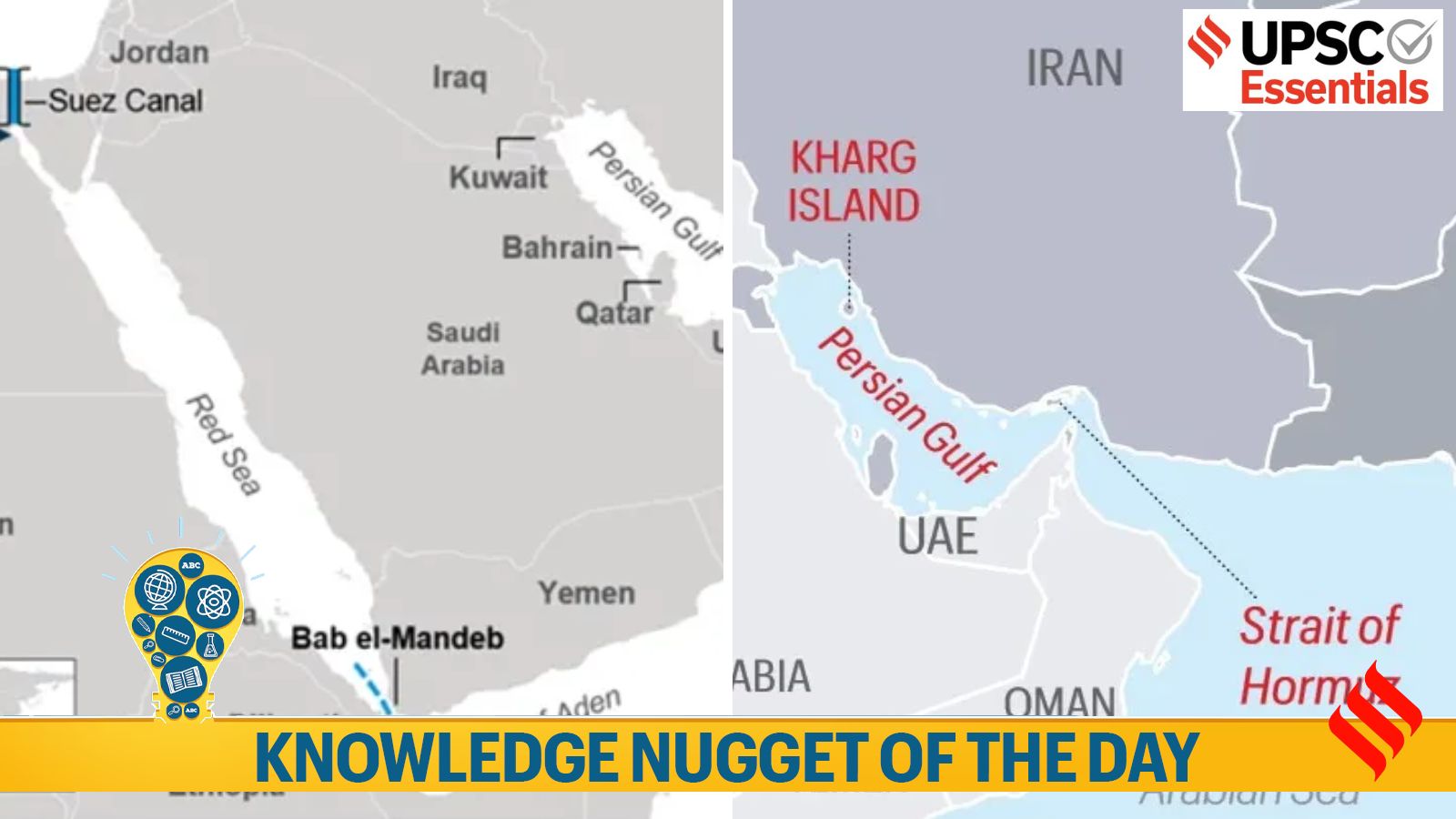
The Strait of Hormuz, a narrow waterway connecting the Persian Gulf with the Gulf of Oman and the Arabian Sea, has been under an effective, though selective, blockade by Iran since late February 2026. This action came in retaliation for joint military strikes by the United States and Israel on Iran. Traffic through Hormuz, which typically handles around 20% of the world's daily oil supply and significant volumes of liquefied natural gas (LNG), has plummeted dramatically, by as much as 98% on some days. Iran's Islamic Revolutionary Guard Corps (IRGC) has issued warnings prohibiting vessel passage, leading to major shipping firms suspending operations and oil prices surging to multi-year highs, surpassing $100 per barrel. While Iran has selectively allowed vessels from certain countries, including China, Russia, and India, to transit under pre-approved conditions, the overall disruption remains severe, creating immense economic and logistical strain globally.
Amidst this ongoing crisis in Hormuz, Iranian officials have now explicitly hinted at extending their maritime pressure to the Bab el-Mandeb Strait. Iran's Parliament Speaker, Mohammad Bagher Ghalibaf, publicly questioned the global reliance on Bab el-Mandeb for oil, LNG, grain, rice, and fertilizer shipments, a move widely interpreted as an indirect threat. Furthermore, unnamed Iranian military sources, cited by the IRGC-affiliated Tasnim News, warned that any US military action against Iranian territory, such as Kharg Island, could trigger a sweeping escalation, including disruption of security at the Red Sea and the Bab el-Mandeb Strait. These warnings underscore Tehran's intent to broaden the conflict beyond the Persian Gulf.
The Bab el-Mandeb Strait, whose name translates to 'Gate of Tears,' is a crucial maritime chokepoint located between Yemen on the Arabian Peninsula and Djibouti and Eritrea in the Horn of Africa. It connects the Red Sea to the Gulf of Aden and the Indian Ocean, serving as a vital link for sea trade between Asia and Europe via the Suez Canal. Approximately 10-12% of global seaborne oil trade and about one-fourth of global container trade passes through this strait annually. Disruption here would compel vessels to undertake longer, more costly journeys around the Cape of Good Hope, adding weeks to transit times and significantly increasing fuel and insurance expenses.
The threat to Bab el-Mandeb is further complicated by the active role of Iran-backed Houthi rebels in Yemen. The Houthis have a history of attacking commercial vessels in the Red Sea and the Gulf of Aden, and they have recently reiterated their warnings of potentially closing the Bab el-Mandeb Strait if Gulf states join the US and Israeli strikes against Iran. While their attacks had subsided after a ceasefire, the renewed conflict has brought these threats back into sharp focus, raising fears of a dual blockade that would create an unprecedented global economic crisis.
The implications for India are particularly severe. India is the world's third-largest oil consumer and relies heavily on crude imports, with nearly 85% of its total imports being crude oil. A significant portion of its oil supplies, especially from the Middle East, transits through the Strait of Hormuz, and non-Gulf oil often comes via the Red Sea and Suez Canal, passing through Bab el-Mandeb. The simultaneous closure or severe disruption of both chokepoints would cripple India's crude imports within weeks, leading to soaring fuel prices, increased inflation, and immense economic strain. Indian refineries are largely designed for Gulf oil grades, making alternative sources challenging. Beyond energy, India's trade with Europe and other regions, which heavily depends on the Red Sea-Suez Canal route, would also face major disruptions, rerouting ships around Africa and incurring substantial delays and costs.
This escalating maritime crisis represents a critical challenge to global energy security and supply chain stability. International efforts are underway to address the situation, but the potential for a wider regional conflict and sustained disruption in these vital waterways remains high, underscoring the urgent need for de-escalation and diplomatic solutions.
Frequently Asked Questions
What is the current status of the Strait of Hormuz?
The Strait of Hormuz is currently under an effective, selective blockade by Iran following the outbreak of the US-Israel war against Iran in late February 2026. Shipping traffic has drastically reduced, by up to 98% on some days, significantly disrupting global oil and LNG supplies.
Why is Iran threatening the Bab el-Mandeb Strait?
Iran's threats to the Bab el-Mandeb Strait are seen as an escalation tactic in response to potential US or Israeli military actions against Iranian territory or if the conflict expands. It's also part of a broader strategy to exert leverage and demonstrate Iran's capacity to disrupt global trade in multiple strategic waterways.
What is the role of Houthi rebels in the Bab el-Mandeb Strait threats?
The Houthi rebels in Yemen, backed by Iran, have historically threatened and attacked commercial shipping in the Red Sea and Bab el-Mandeb. They have recently renewed threats to close the strait if Gulf states join the conflict against Iran, acting as an Iranian proxy to extend Tehran's influence over this critical chokepoint.
How would the disruption of both Hormuz and Bab el-Mandeb impact the global economy?
The simultaneous disruption of both the Strait of Hormuz and the Bab el-Mandeb Strait would be catastrophic for the global economy. It would severely cut global oil and LNG supplies, forcing vessels to undertake longer and costlier routes, leading to massive spikes in energy prices, increased shipping costs, and widespread supply chain disruptions.
What are the specific implications for India if both straits are disrupted?
For India, which relies on crude oil for nearly 85% of its imports and is the world's third-largest consumer, the disruption of both straits would be devastating. It would cripple oil imports, cause fuel prices to skyrocket, fuel inflation, and severely impact trade with Europe and other regions, forcing costly rerouting around Africa and creating immense economic strain.