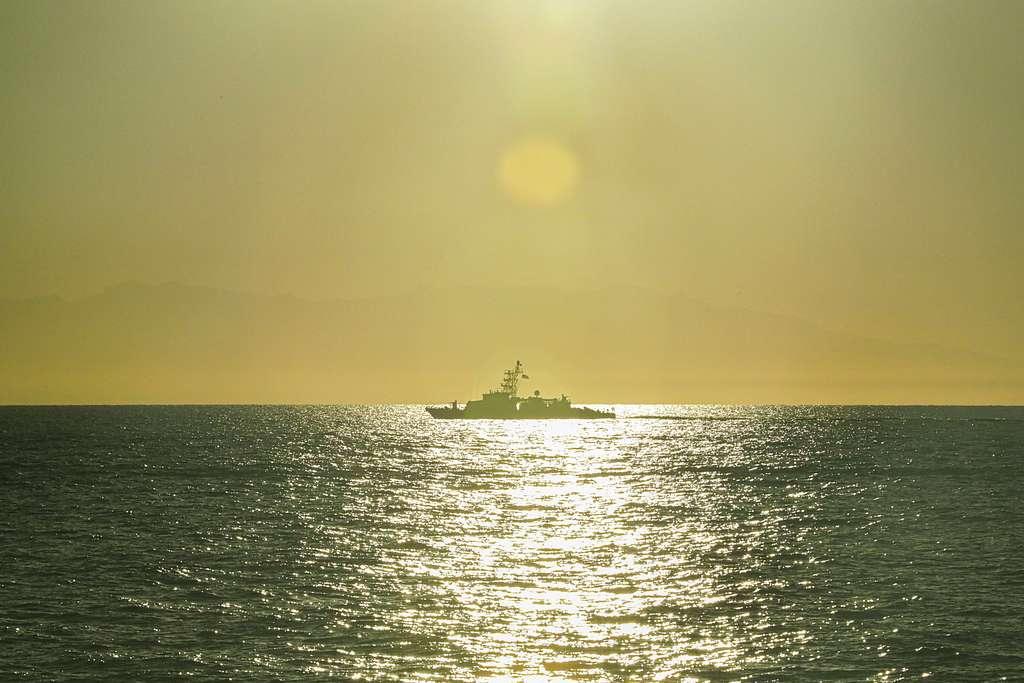
Iran Asserts Hormuz Control with New Maritime Authority, Sparks Global Alarm
Iran has established a new regulatory body, the Persian Gulf Strait Authority (PGSA), asserting control over the Strait of Hormuz and requiring transit permits. This move, which includes potential tolls and extends into disputed waters, violates international maritime law and has sparked widespread international condemnation, significantly impacting global shipping and energy markets.
Key Highlights
- Iran launched Persian Gulf Strait Authority (PGSA) on May 5, 2026.
- PGSA mandates permits and coordination for all Strait of Hormuz transit.
- New maritime zone extends into UAE and Omani claimed waters.
- International law, UNCLOS, guarantees free transit passage in the Strait.
- India, among others, is negotiating with Iran for vessel passage.
- Move heightens global energy market uncertainty and geopolitical tensions.
Iran has unilaterally declared regulatory control over the strategically vital Strait of Hormuz, establishing a new maritime zone and a dedicated authority, the Persian Gulf Strait Authority (PGSA), to oversee and manage all vessel transit. This significant development, confirmed by multiple credible news outlets and official Iranian statements, occurred around May 2026, marking a critical escalation in regional geopolitical tensions and posing serious challenges to international maritime law.
The investingLive article accurately reports Iran's claim of regulatory control. The newly formed Persian Gulf Strait Authority (PGSA), which was officially established on May 5, 2026, during what is now termed the '2026 Strait of Hormuz crisis,' has declared a 'controlled maritime zone' across the Strait. This zone, as defined by Iran, spans from Kuh-e Mobarak in Iran to southern Fujairah in the UAE at the eastern entrance, and from the tip of Qeshm Island in Iran across to Umm Al Quwain in the UAE at the western entrance. Importantly, this claimed zone extends into waters that both the United Arab Emirates and Oman consider to be under their own jurisdiction, directly challenging their sovereignty.
The core function of the PGSA, as announced via an official presence on platforms like X, is to require all transit vessels to seek prior coordination and obtain authorization before passing through the Strait. Reports indicate that the PGSA is already sending out regulations via email to shipping operators. This framework introduces a permit-based approach, demanding detailed operational information, including ship identification, cargo specifics, origin, destination, and crew details, as part of the transit procedures. Iranian officials have also indicated the possibility of 'service-related charges' or 'fees' for vessels utilizing the route, with some reports suggesting significant payments, such as up to $150,000, being demanded for safe passage. Furthermore, Iran has launched a 'Hormuz Safe' platform, offering Bitcoin-backed insurance specifically for Iranian shipping and cargoes transiting the waterway, signaling a formalization of a long-term control strategy rather than a temporary measure.
This assertive move by Iran directly conflicts with established international maritime law, particularly the United Nations Convention on the Law of the Sea (UNCLOS). Under UNCLOS, the Strait of Hormuz is recognized as an 'international strait,' through which all ships and aircraft enjoy the right of 'transit passage.' This right explicitly allows for unimpeded surface, overflight, and submerged transit, and cannot be suspended or conditioned on prior authorization from coastal states. While Iran has not ratified UNCLOS, and therefore technically claims it is not bound by its provisions, the United States and most of the international community argue that the principle of transit passage has become customary international law, meaning it applies universally. Both the United States and China have jointly affirmed their opposition to any militarization of the Strait or the imposition of tolls, unequivocally stating that such actions violate international maritime law and undermine regional stability.
The timing of Iran's declaration is critical, occurring amidst an already highly volatile geopolitical landscape in the Persian Gulf. The region has been embroiled in conflict, with an 'Iran-Israel war' and US involvement starting in late February 2026, leading to strikes on shipping and a US naval blockade of Iranian ports. Although a fragile ceasefire was reportedly in place since April 8, the underlying tensions remain acute. The enforcement of Iran's new regulations has severely impacted shipping traffic, with reports of a drastic reduction in vessels transiting the Strait and potentially thousands of ships and sailors currently trapped in the Gulf, awaiting Iranian permission to proceed.
The implications for India, a major energy importer, are significant. India relies heavily on oil flows through the Strait of Hormuz, with China and India combined receiving 44% of crude oil exports passing through this chokepoint in 2025. The Reuters report highlights that India is among the countries, alongside Iraq, South Korea, and Vietnam, that are actively negotiating directly with Iran, sometimes at the prime ministerial level, to secure passage for their tankers. As of May 14, 2026, 13 Indian-flagged vessels had successfully transited, while another 13 remained stranded west of the waterway, underscoring the direct impact on India's maritime trade and energy security. This situation necessitates careful diplomatic engagement and contingency planning for nations dependent on the Strait for trade and energy. The event represents a fundamental shift in the control dynamics of a critical global chokepoint, with far-reaching consequences for international law, energy markets, and regional stability.
Frequently Asked Questions
What is the Persian Gulf Strait Authority (PGSA)?
The Persian Gulf Strait Authority (PGSA) is a new Iranian maritime regulatory body, established on May 5, 2026, to manage and oversee vessel movement through the Strait of Hormuz. It requires all transiting vessels to seek coordination and authorization, potentially including payment of tolls.
How does Iran's claim of control over the Strait of Hormuz conflict with international law?
Iran's actions directly conflict with the United Nations Convention on the Law of the Sea (UNCLOS), which designates the Strait of Hormuz as an international strait. UNCLOS guarantees the right of 'transit passage,' allowing unimpeded navigation without prior authorization or conditions, a right that Iran's new regulations violate.
What are the potential economic impacts of Iran's new maritime zone?
The Strait of Hormuz is a critical chokepoint for global oil and gas trade, with about one-fifth of the world's oil supply passing through it. Iran's assertion of control and imposition of potential tolls could significantly disrupt global energy markets, raise shipping costs, exacerbate inflation, and negatively impact import-dependent economies worldwide.
How does this situation affect India?
India is a major importer of oil and gas that transits the Strait of Hormuz. Iran's new regulations directly impact India's maritime trade and energy security, leading to the Indian government negotiating directly with Iran to secure passage for its vessels, with some ships reportedly stranded.
What has been the international reaction to Iran's claims?
The international community, particularly the United States and China, has expressed strong opposition to Iran's claims, affirming that the Strait of Hormuz must remain open under international law and that imposing tolls is a violation. The move is widely seen as a geopolitical provocation amidst already high regional tensions.