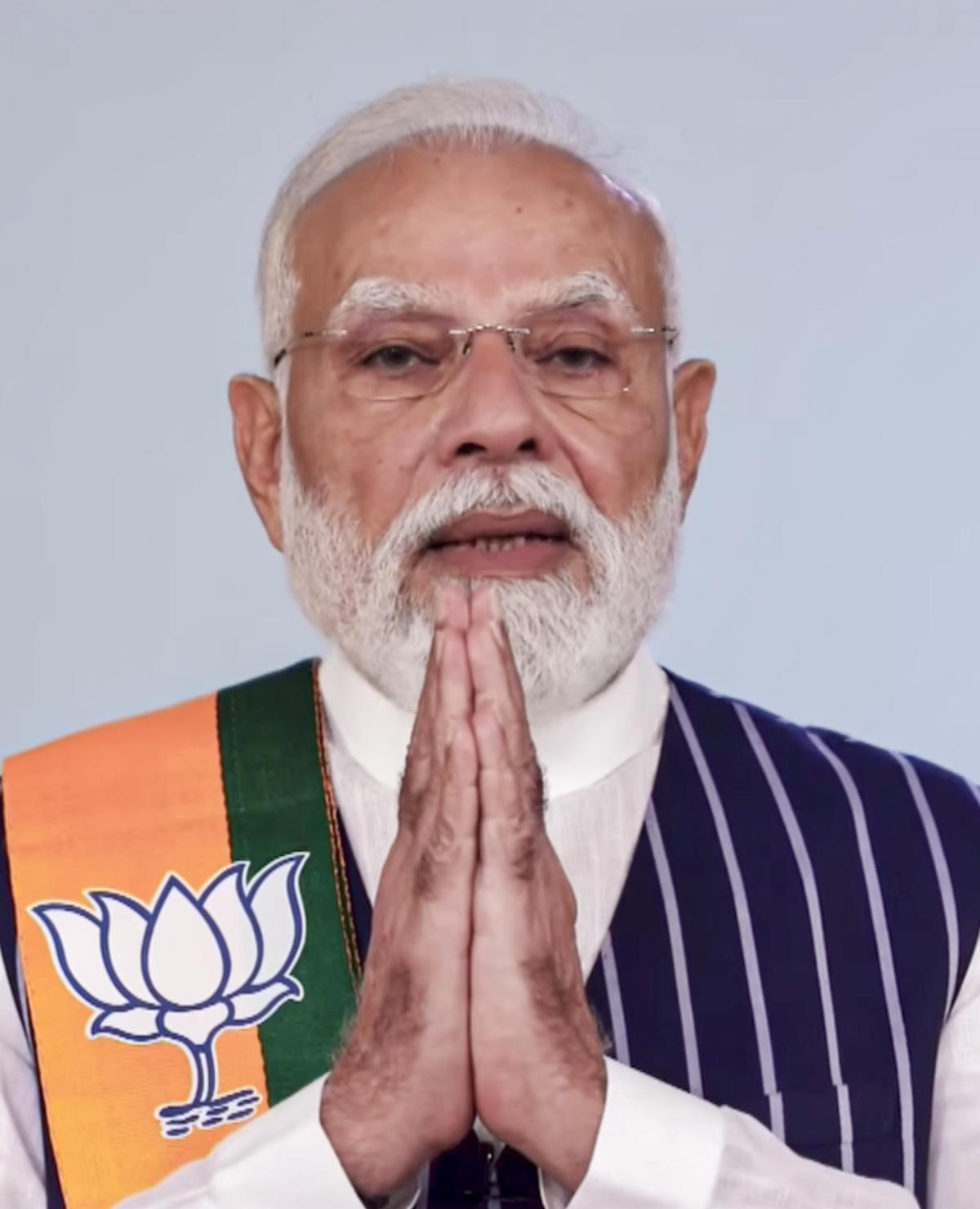
Modi: Ram Temple, CAA Delivered; UCC, 'One Nation One Election' Next
Prime Minister Narendra Modi, on the BJP's 47th Foundation Day, affirmed the delivery of key promises like the Ram Temple and CAA. He highlighted the Uniform Civil Code and 'One Nation, One Election' as significant upcoming agendas, noting active discussions and positive progress towards a developed India.
Key Highlights
- PM Modi addressed BJP on its 47th Foundation Day.
- Ram Temple construction and CAA implementation cited as achievements.
- Uniform Civil Code (UCC) highlighted as upcoming agenda.
- 'One Nation, One Election' also a future priority.
- Modi stressed BJP's 'Nation First' principle and 'Viksit Bharat' vision.
- Party's journey and workers' dedication were lauded.
On April 6, 2026, marking the Bharatiya Janata Party's (BJP) 47th Foundation Day, Prime Minister Narendra Modi addressed party workers, outlining the government's significant achievements and setting the agenda for future policy reforms. The event served as a platform to reiterate the party's foundational principles and its vision for a 'Viksit Bharat' (Developed India) by 2047.
In his address, delivered via video conference, PM Modi proudly highlighted the fulfillment of long-standing promises, cementing the BJP's image as a party that delivers on its commitments. Chief among these achievements was the construction of the grand Ram Temple in Ayodhya, a landmark event for the party and its supporters. He also underscored the implementation of the Citizenship Amendment Act (CAA), which he presented as another promise successfully delivered by his government.
Beyond these accomplished tasks, the Prime Minister laid out ambitious legislative and governance reforms on the horizon. He explicitly flagged the Uniform Civil Code (UCC) and the concept of 'One Nation, One Election' (ONOE) as crucial upcoming agendas for the BJP. Modi stated that serious discussions were actively taking place across the country on both these topics, indicating positive progress in their direction. The UCC aims to provide a common set of laws governing personal matters like marriage, divorce, inheritance, and adoption for all citizens, irrespective of their religion, fostering national integration. 'One Nation, One Election' proposes holding simultaneous elections for the Lok Sabha (the lower house of India's Parliament) and all state legislative assemblies, aiming to reduce electoral expenditure, save public money, and ensure governance stability.
Modi also mentioned other significant achievements of his government, including the abrogation of Article 370 in Jammu and Kashmir, the ban on triple talaq, the construction of a new Parliament building, and the 10% reservation for the economically weaker sections (EWS) in the general category. He affirmed that these initiatives reflected the BJP's commitment to good governance and nation-building.
Reflecting on the BJP's journey, which began with its formation on April 6, 1980, PM Modi lauded the dedication and sacrifices of millions of party workers (Karyakartas) over more than four decades. He traced the party's origins back to the Bharatiya Jana Sangh and its ideological inspiration from the Rashtriya Swayamsevak Sangh (RSS). Modi emphasized that the BJP's rise from electoral margins in the 1980s to becoming the world's largest political party and a dominant force in India was a testament to the tireless efforts and unwavering commitment of its cadre.
During his speech, the Prime Minister contrasted the BJP's 'Nation First' principle with what he termed 'power-based politics,' often alluding to previous Congress regimes. He cited the 1984 era, suggesting that while Congress gained power, the public felt let down, leading to a growing trust in the BJP. Modi asserted that the BJP's governance model focuses on stability, innovation, and a vision for national ascendancy, giving equal respect and importance to everyone, unlike parties focused on specific families.
The Prime Minister also spoke about the party's roadmap for women's reservation, reaffirming the BJP's commitment to implementing the Women's Reservation Act to ensure 33% reservation for women in the Lok Sabha and state assemblies by the 2029 general elections.
Modi called upon party workers to connect with people across the country with complete dedication to fulfill the resolve of a 'Viksit Bharat' by 2047, the centenary of India's independence. He stressed the importance of brainstorming new goals and adapting to changing technology as the party approaches its golden jubilee. The address served as a powerful articulation of the BJP's past accomplishments and its ambitious agenda for India's future, reinforcing its commitment to cultural nationalism, development, and a service-oriented approach to politics.
Frequently Asked Questions
What was the occasion for PM Modi's speech?
Prime Minister Narendra Modi delivered his speech on April 6, 2026, to mark the Bharatiya Janata Party's (BJP) 47th Foundation Day.
What major achievements did PM Modi highlight during his address?
PM Modi highlighted the construction of the Ram Temple in Ayodhya and the implementation of the Citizenship Amendment Act (CAA) as key achievements. He also mentioned the abrogation of Article 370, the ban on triple talaq, and 10% EWS reservation.
What are the key future agendas mentioned by PM Modi?
The Prime Minister identified the Uniform Civil Code (UCC) and 'One Nation, One Election' as significant upcoming agendas, stating that serious discussions and positive progress are being made on these fronts.
What is the Uniform Civil Code (UCC) and why is it significant?
The Uniform Civil Code (UCC) proposes a common set of laws for all citizens of India, regardless of their religion, covering personal matters such as marriage, divorce, inheritance, and adoption. Its significance lies in promoting national integration and gender justice.
What does 'One Nation, One Election' entail?
'One Nation, One Election' is a proposal to hold simultaneous elections for the Lok Sabha and all state legislative assemblies in India. The proponents argue it would reduce election-related expenses, ensure continuous governance, and increase voter turnout.