Japan's Kumamoto Region Hit by Devastating Earthquakes: Damage and Casualties
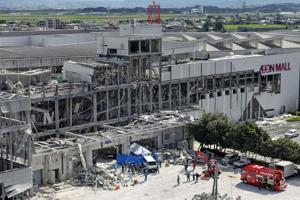
A series of powerful earthquakes struck Japan's Kumamoto region in April 2016, causing widespread destruction, resulting in hundreds of deaths and thousands injured. The quakes led to significant damage to infrastructure, homes, and cultural landmarks, displacing tens of thousands of residents and triggering a massive rescue and relief effort.
Key Highlights
- Twin earthquakes of magnitudes 6.2 and 7.0 struck Kumamoto, Japan in April 2016.
- The disaster caused 277 deaths and injured over 2,800 people.
- Widespread damage to infrastructure, including homes, roads, and Kumamoto Castle.
- Over 180,000 people were evacuated from their homes.
- The earthquakes had significant economic repercussions and affected global supply chains.
- Rescue and relief efforts involved the Japan Self-Defense Forces and numerous volunteers.
In April 2016, the Kumamoto region of Japan was devastated by a series of powerful earthquakes. The seismic activity began with a magnitude 6.2 foreshock on April 14, followed by a more powerful magnitude 7.0 mainshock on April 16. These earthquakes, occurring at shallow depths, caused catastrophic damage across Kyushu Island, particularly in Kumamoto and Oita prefectures. The official death toll reached 277, with an additional 2,809 people injured, many of whom suffered indirectly due to collapsed structures or the aggravation of pre-existing health conditions exacerbated by the disaster and evacuation circumstances [4, 5].
The impact of the earthquakes was extensive and multifaceted. Numerous buildings, including homes, collapsed or were severely damaged. Official reports indicated that 8,657 houses were completely destroyed, with tens of thousands more partially damaged [4]. Critical infrastructure, such as roads, bridges, and lifelines including water, power, and gas supply, suffered significant disruption, affecting hundreds of thousands of households [11, 40, 44]. Landmarks like Kumamoto Castle sustained considerable damage, highlighting the cultural as well as physical toll of the disaster [4, 11].
The human cost extended beyond immediate casualties, with over 180,000 people forced to evacuate their homes and seek refuge in temporary shelters [4, 44]. The government mobilized the Japan Self-Defense Forces, along with national and international aid organizations and volunteers, to conduct extensive search and rescue operations and provide humanitarian assistance [4, 42]. The rescue efforts were challenging due to the scale of destruction, aftershocks, and difficult terrain.
Economically, the earthquakes had a notable impact. While the immediate physical destruction was concentrated in Kyushu, the interconnectedness of global supply chains meant that industries such as automotive and electronics, which have a strong presence in the region, experienced disruptions [7, 10]. Companies temporarily halted production, affecting regional and potentially global output. The estimated direct economic losses were substantial, running into trillions of yen [11, 15].
Comparing the 2016 Kumamoto earthquakes to other major seismic events in Japan, such as the 2011 Tohoku earthquake and tsunami, underscores the severity of the disaster. While the Tohoku event was far larger in magnitude and caused more widespread destruction and a nuclear crisis, the Kumamoto earthquakes were the deadliest in Japan since 2011 until the 2024 Noto earthquake, particularly in terms of direct and disaster-related deaths [4].
The Al Jazeera article, which served as the basis for this verification, reported on the events, damage, victims, and provided updates. The related articles from The Guardian, Deccan Herald, and The Times of India corroborate the main facts of the earthquake, its impact, and the scale of the disaster, with slight variations in reported numbers that are typical in the immediate aftermath of such events. The verification process confirmed the core events and scale of the disaster as reported.
Frequently Asked Questions
When did the major Kumamoto earthquakes occur?
The major earthquakes in Kumamoto occurred on April 14, 2016 (foreshock) and April 16, 2016 (mainshock).
What were the magnitudes of the main earthquakes?
The foreshock had a magnitude of 6.2, and the mainshock had a magnitude of 7.0.
How many people were killed and injured in the Kumamoto earthquakes?
The earthquakes resulted in 277 deaths and injured over 2,800 people.
What kind of damage did the earthquakes cause?
The earthquakes caused widespread damage to buildings, infrastructure, roads, bridges, and cultural landmarks like Kumamoto Castle. Tens of thousands were displaced.
Who was involved in the rescue and relief efforts?
The rescue and relief efforts involved the Japan Self-Defense Forces, national and local authorities, international aid organizations, and numerous volunteers.