Iran Warns Vessels in Hormuz: 'Cooperation with Enemy' Amid US Blockade
Iran's Revolutionary Guards have again closed the Strait of Hormuz, threatening to target any vessel approaching the chokepoint and deeming it 'cooperation with the enemy.' This escalation follows a US naval blockade on Iranian ports, with Indian-flagged tankers reportedly targeted, raising global alarm over a crucial oil shipping lane.
Key Highlights
- Iran's Revolutionary Guards closed Strait of Hormuz, citing US blockade.
- Vessels approaching Hormuz warned of being 'targeted' and 'enemy cooperation'.
- Two Indian-flagged tankers reportedly fired upon near the Strait.
- Closure reverses earlier reopening, intensifying West Asia tensions.
- Global oil supply faces renewed threat; ceasefire ending soon.
- US and Iran remain defiant on control of the vital waterway.
The Strait of Hormuz, a critical maritime chokepoint through which approximately one-fifth of the world's oil passes, has once again become the epicenter of escalating tensions between Iran and the United States. In a significant development, Iran's Revolutionary Guards (IRGC) Navy issued a stark warning, declaring that any vessel attempting to approach the strait would be considered as 'cooperation with the enemy' and would subsequently be targeted. This aggressive stance marks a severe escalation in the ongoing standoff in the West Asia region.
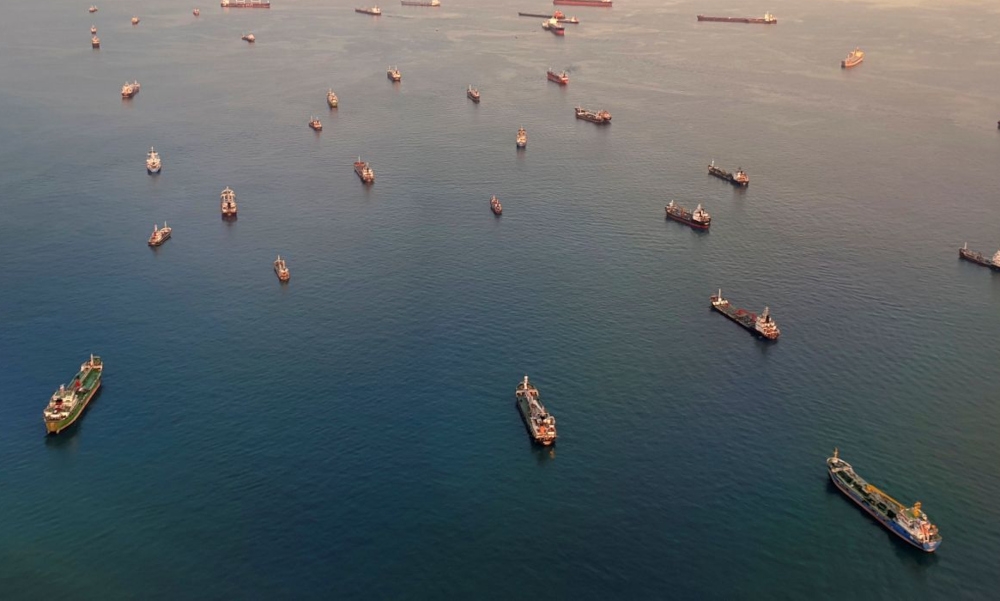
The latest directive from Iran comes after its decision to re-close the Strait of Hormuz, a mere day after announcing its reopening. The closure, as stated by the IRGC, is a direct response to the United States' failure to lift its naval blockade on Iranian vessels and ports, which Iran views as a violation of ceasefire conditions. According to statements published on the Guards' official Sepah News website and quoted by news agencies like AFP and Reuters, the IRGC Navy has explicitly ordered vessels and their owners to remain at anchor in the Persian Gulf and the Sea of Oman, and to strictly follow only their news updates.
The implications of this closure are far-reaching, particularly for global energy markets and international shipping. The Strait of Hormuz is not only vital for oil transport but also for liquefied natural gas supplies. The renewed instability threatens to deepen the global energy crisis, which has been a persistent concern amid geopolitical uncertainties.
Of particular concern to an Indian audience is the report that two Indian-flagged tankers, identified as 'Jag Arnav' and 'Sanmar Herald', were reportedly fired upon by Iranian forces near the Strait of Hormuz just hours before Iran's comprehensive warning. These vessels were reportedly carrying millions of barrels of Iraqi oil. India's Ministry of External Affairs confirmed the incident, and Tehran's ambassador to New Delhi, Mohammad Fathali, was summoned to convey India's deep concern. This incident underscores the direct impact of these tensions on India's energy security and maritime interests.
Both the US and Iran have remained resolute in their positions. US President Donald Trump had previously stated that the US blockade of Iran's ports would remain 'in full force' until Tehran reached a deal. In response, the IRGC Navy reiterated that the Strait of Hormuz would remain closed until the US naval blockade on Iranian ports is lifted. Senior Iranian officials, including Mohsen Rezaei, have issued strong warnings against US warships in the Strait, indicating that Iranian military launchers are prepared to strike.
This current escalation further dampens hopes for a peaceful resolution to the West Asia conflict, especially as a shaky ceasefire is nearing its end. Mediating efforts, notably by Pakistan, have been ongoing, with reports of new proposals being relayed and considered. However, the aggressive rhetoric and actions from both sides suggest a continued impasse. The Iranian military's joint command emphasized that the control of the Strait of Hormuz has 'returned to its previous state' under their strict management, and restrictions would not be lifted as long as the US blockade persists.
The international community is closely monitoring the situation, with various maritime agencies reporting incidents and issuing warnings to commercial vessels. Reports from the UK Maritime Trade Operations Centre (UKMTO) and Vanguard indicate that IRGC gunboats have fired upon tankers, and at least one container vessel was hit by an unknown projectile. These incidents, alongside the explicit threats, contribute to a highly volatile environment for maritime trade in the region.
The strategic importance of the Strait of Hormuz cannot be overstated. It connects the Persian Gulf with the Arabian Sea and is the only sea passage from the Persian Gulf to the open ocean. Its closure, even temporarily, has immediate and significant ripple effects on global oil prices and supply chains, impacting economies worldwide, including India's, which is a major importer of crude oil. The current situation highlights the delicate balance of power and the potential for a rapid escalation of conflict in an already fragile region.
The warnings from Iran, including the declaration that US President Donald Trump's claims on the waterway 'have no validity,' underscore Iran's determination to assert its control over the vital passage in response to perceived aggressions. The ongoing cycle of threats and counter-threats, coupled with actual military actions, poses a serious challenge to international security and stability.
Frequently Asked Questions
What is the Strait of Hormuz and why is it globally significant?
The Strait of Hormuz is a narrow waterway connecting the Persian Gulf with the Arabian Sea. It is strategically vital because approximately one-fifth of the world's total petroleum consumption, including a significant portion of India's crude oil imports, passes through it. Its closure or disruption has immediate and severe implications for global energy markets and the world economy.
Why has Iran re-closed the Strait of Hormuz and issued these warnings?
Iran's Revolutionary Guards (IRGC) re-closed the Strait of Hormuz, reversing an earlier decision to open it, because they claim the United States failed to lift its naval blockade on Iranian ports. Iran views this blockade as a violation of ceasefire conditions and has warned that approaching the strait would be seen as 'cooperation with the enemy' and result in vessels being targeted.
What does Iran mean by 'cooperation with the enemy'?
According to statements from Iran's Revolutionary Guards, any attempt by vessels to approach or pass through the Strait of Hormuz while it is declared closed, and particularly in defiance of their directives, will be interpreted as an act of 'cooperation with the enemy' – implicitly referring to the United States and its allies. This designation carries the threat of the offending vessel being targeted.
How does this situation impact India?
This situation significantly impacts India as it relies heavily on oil imports that traverse the Strait of Hormuz. Reports indicate that two Indian-flagged tankers were recently fired upon by Iranian forces near the strait, prompting India to express serious concern to the Iranian ambassador. The closure and increased tensions directly threaten India's energy security and the safety of its maritime trade routes.
What are the broader international implications of Iran's actions?
Iran's actions in the Strait of Hormuz raise serious international concerns, escalating regional tensions and threatening a global energy crisis. It challenges freedom of navigation, heightens the risk of military confrontation between Iran and the US, and complicates diplomatic efforts to maintain a fragile ceasefire in West Asia. The situation could lead to significant spikes in oil prices and further instability in the region.