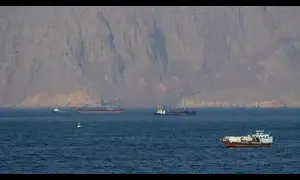
Oil Prices Rally Amid Renewed US-Iran Tensions, Hormuz Supply Risks
Global oil prices have surged due to escalating US-Iran hostilities and renewed supply threats in the Strait of Hormuz, a critical chokepoint. This geopolitical volatility is pushing crude higher, raising concerns for major importers like India, despite some analysts noting underlying market oversupply.
Key Highlights
- Oil prices rallied significantly, Brent crude gaining 5-6% weekly.
- Renewed US-Iran conflict led to attacks on shipping in Strait of Hormuz.
- Strait of Hormuz disruptions threaten 20% of global oil supply.
- India, a major importer, faces heightened vulnerability but shows resilience.
- IEA warns instability could derail oil market recovery outlook.
- Market remains highly volatile, driven by geopolitical risks over fundamentals.
Global oil prices have experienced a significant rally in early July 2026, primarily driven by escalating geopolitical tensions between the United States and Iran, which have rekindled severe supply risks in the critical Strait of Hormuz. Brent crude, a global benchmark, saw weekly gains of approximately 5-6%, settling around $76 per barrel, while West Texas Intermediate (WTI) also rose by about 5% to around $72 per barrel in mid-July. Daily surges of over 4% were reported on July 8, reflecting the market's acute sensitivity to the renewed instability in the Middle East.
The Strait of Hormuz, through which roughly 20% of the world's daily oil supply—between 17 and 21 million barrels of crude and petroleum products—transits, has once again become a flashpoint. Reports confirm renewed US-Iran hostilities following the collapse of a three-week ceasefire, which included attacks on commercial vessels and US military infrastructure in the region. Specifically, an Iranian strike on a Qatari LNG carrier exiting the Strait near Oman triggered a new wave of shipping disruptions, causing vessel traffic to fall by approximately 15% and pushing the waterway to a near-standstill as operators reassess security risks. This escalation has injected a substantial "geopolitical risk premium" into oil prices, overriding other market fundamentals.
The International Energy Agency (IEA), in its July 2026 Oil Market Report, cautioned that the latest escalation in hostilities on July 7-8 threatens to derail expectations of a global oil market surplus in 2027. While global oil supply had shown some rebound in June, recovering by 4.1 million barrels per day (mb/d) as transit through the Strait of Hormuz partially resumed, the renewed fighting casts a pall over this recovery. The IEA emphasized that achieving a lasting peace agreement is crucial for the normalization of oil markets. Furthermore, global strategic oil reserves are reported to be at their lowest levels in decades, leaving less buffer against prolonged supply shocks.
For India, a country highly dependent on oil imports (over 80% of its requirements), these developments pose significant challenges. The nation's crude oil imports reached a record 4.93 million bpd in June, partly due to refiners proactively securing supplies amidst the initial Hormuz disruptions. India has strategically diversified its crude oil sources, including increased purchases from Russia (which became India's largest supplier, accounting for over 40% of imports in May 2026), Saudi Arabia, the UAE, West Africa, and Latin America. This diversification has bolstered India's resilience against immediate crude supply shortages. However, prolonged instability in the Strait of Hormuz could still lead to disruptions in liquefied petroleum gas (LPG) and liquefied natural gas (LNG) supplies, as well as significant increases in shipping and insurance costs, impacting overall energy bills and inflation. The International Monetary Fund (IMF) noted India's economic resilience despite higher global oil prices, though it slightly lowered India's 2026 growth forecast.
In response to the energy supply shocks and high import dependence, India is actively expanding its domestic crude exploration efforts. Vedanta Oil & Gas, for instance, has reaffirmed its goal of increasing production to 500,000 barrels of oil equivalent per day (boed) and advocates for accelerated exploration to unlock India's vast hydrocarbon resource potential. These domestic initiatives aim to strengthen energy security, reduce reliance on volatile global markets, and support economic growth.
Despite the immediate price rally driven by geopolitical fears, some analyses point to an underlying physical oversupply in the crude oil market, with global inventories expanding by approximately 180 million barrels over the past 90 days as of July 2026. The International Energy Agency's forecast also suggested a potential oversupply in 2027 if current tensions de-escalate, and the New York Federal Reserve President expressed expectations for energy prices to ease over the next 6-12 months, assuming supply resilience. However, the current market sentiment is clearly dominated by the heightened geopolitical risk, which continues to keep prices elevated and volatile. The impact of these elevated prices extends beyond energy, potentially increasing transportation, manufacturing, and electricity costs worldwide, thereby exacerbating inflationary pressures and complicating central bank efforts to manage interest rates and support economic growth.
Frequently Asked Questions
What is causing the current rally in oil prices?
The recent rally in global oil prices is primarily driven by renewed geopolitical tensions between the United States and Iran, which have led to heightened supply risks in the Strait of Hormuz, a crucial global oil transit chokepoint.
How do tensions in the Strait of Hormuz affect global oil supply?
The Strait of Hormuz is vital for global oil supply, with approximately 20% of the world's crude and petroleum products passing through it daily. Renewed hostilities, such as attacks on commercial vessels, cause disruptions to shipping traffic, leading to fears of supply shortages and driving up prices.
What is the impact of these oil price developments on India?
As a major oil importer, India faces increased vulnerability due to higher global oil prices, which can impact inflation, current account deficits, and overall economic growth. While India has diversified its crude sources for resilience, prolonged instability could affect LPG and LNG supplies and increase shipping costs.
Are there any factors mitigating the oil price rally?
Some analyses suggest an underlying physical oversupply in the market, with global inventories expanding. The IEA's July report also hints at a potential market surplus in 2027 if tensions de-escalate, and the US Federal Reserve anticipates energy prices might cool over the next 6-12 months, assuming resilient supply.
What is the IEA's latest outlook on the oil market?
The IEA's July 2026 Oil Market Report indicated a demand recovery from a May low and a rebound in global oil supply in June. However, the agency warned that the latest escalation in hostilities in the Middle East threatens to derail the expected return to a global oil market surplus in 2027, emphasizing the need for a lasting peace agreement for market normalization.