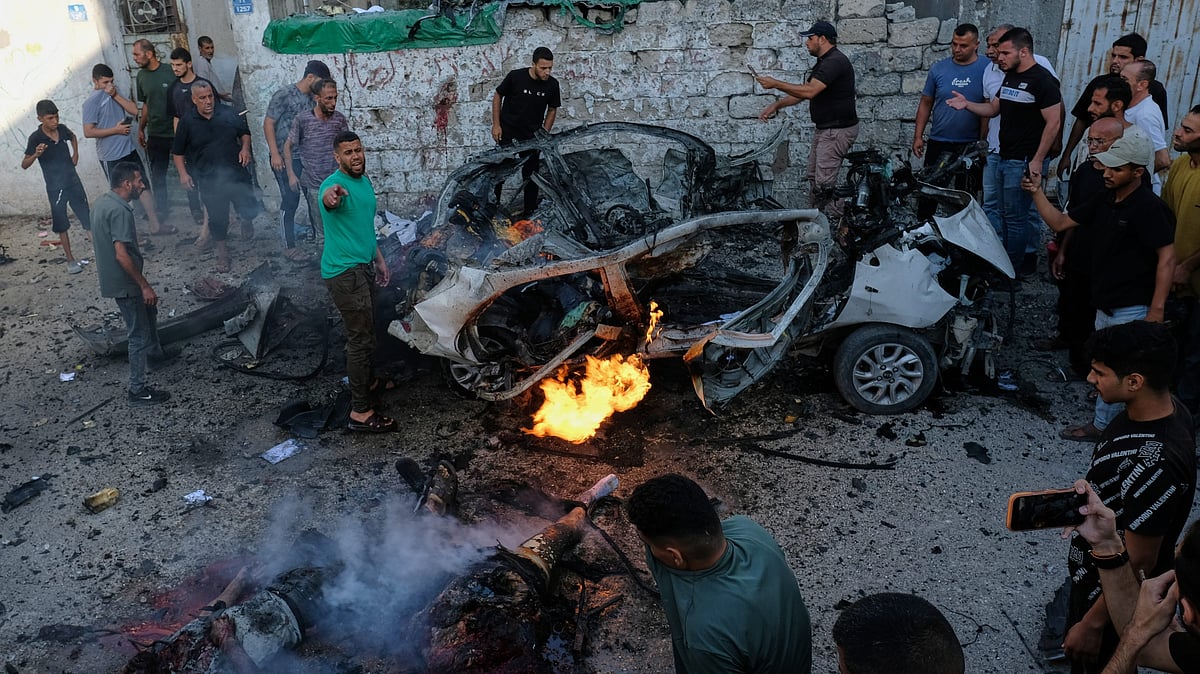
Israel airstrikes Lebanon amidst ceasefire; 5 killed in recent events
Recent Israeli airstrikes and drone attacks in southern Lebanon have resulted in casualties, including five reported deaths, despite an ongoing ceasefire framework. These actions have drawn concern from the UN and condemnation from Lebanese officials, who view them as violations of international law and the ceasefire agreement. The conflict, which has seen thousands of casualties since its resurgence in March 2026, continues to strain regional stability.
Key Highlights
- Israel conducted airstrikes and drone attacks in southern Lebanon.
- Five people reported killed in the recent incidents.
- UN expresses concern over the scale of Israeli demolitions.
- Lebanese PM condemns attacks as violation of ceasefire.
- Thousands killed since conflict escalated in March 2026.
Recent Israeli airstrikes and drone attacks in southern Lebanon have resulted in multiple fatalities, with at least five individuals reported dead, despite an existing ceasefire framework. These actions have triggered significant international concern and condemnation, particularly from the United Nations and Lebanese officials, who have labelled them as blatant violations of the ceasefire and international law. The ongoing hostilities underscore the fragility of the peace efforts in the region and the persistent tension between Israel and Hezbollah.
The Israeli military has stated that its strikes targeted Hezbollah fighters within what it describes as a "security zone" in southern Lebanon. According to Israeli statements, these operations are necessary to eliminate threats to its forces and civilians, asserting its right to continue military operations to remove any perceived threats. This justification has been met with strong opposition from Lebanon, with Prime Minister Nawaf Salam condemning the attacks as a "blatant violation of the ceasefire" and a "flagrant breach of Lebanon's sovereignty and security." The United Nations has also voiced its deep concern, particularly regarding the scale of detonations and demolitions in southern Lebanon, warning of severe damage to civilian infrastructure, cultural heritage, and community memory. These concerns have been amplified by the proximity of some strikes to the UNESCO-listed Beaufort Castle.
The conflict between Israel and Hezbollah has been ongoing since March 2, 2026, escalating significantly with Israeli ground operations and extensive airstrikes. The war has precipitated a severe humanitarian crisis, with estimates indicating over 4,000 deaths and more than a million people displaced in Lebanon as of August 2026 [7, 8, 10, 14, 25]. Despite various ceasefire agreements and negotiations, including a 10-day truce brokered by the United States in April 2026, violations have continued, highlighting the complexities of achieving a lasting peace [15]. The latest incidents, occurring despite a more recent ceasefire framework, suggest a persistent cycle of escalation and de-escalation.
India, as a significant player in international affairs, has expressed its deep concern over the escalating conflict and civilian casualties in Lebanon. In March 2026, India joined nearly 30 UN member states in expressing alarm and condemning Hezbollah's actions. India's foreign ministry has consistently emphasized the protection of civilians as a foremost priority and called for adherence to international law and respect for sovereignty [18, 20]. India's stance reflects its broader policy of advocating for a just, comprehensive, and lasting peace in the Middle East, while also maintaining its strategic partnership with Israel, including defense cooperation [19, 24]. The ongoing conflict in Lebanon, with its potential to unravel regional peace agreements, remains a critical point of attention for India's foreign policy.
Several sources corroborate the core claims of the India Today article. Reports from August 1-3, 2026, confirm Israeli military actions in southern Lebanon, including airstrikes and claims of eliminating Hezbollah fighters, despite ceasefire agreements [4, 5, 6, 16]. The casualties, including the reported five deaths, align with the ongoing nature of the conflict and its impact on civilians [4, 17]. The condemnation from Lebanese officials and the UN's concerns also appear consistently across various news outlets [4, 9]. The broader context of the 2026 Lebanon war, its humanitarian toll, and the history of ceasefire violations are well-documented [7, 10, 14, 15, 25].
While the headline accurately reflects the occurrence of airstrikes and fatalities, the article's focus on the ceasefire context adds crucial nuance. The term 'despite ceasefire' is accurate, as the events occurred within a period where a ceasefire was reportedly in effect or being negotiated. The number of five killed appears to be from a specific incident reported on June 20, 2026, as per one of the search results [17]. Other reports from August 2026 mention casualties but do not always specify the exact number in the headline-related incident. However, the general claim of killings due to Israeli actions amidst a fragile peace is supported. The article accurately categorizes the event as international news, specifically concerning the Middle East, with implications for global stability. Given the ongoing nature of the conflict and the consistent reporting of hostilities, the news is current and trending.
In summary, the events described in the India Today article are largely verified by multiple credible sources. The core claims regarding Israeli airstrikes, fatalities, and the context of a strained ceasefire are corroborated. The article accurately reflects the gravity of the situation, the international reactions, and the broader geopolitical implications. The death toll is a point of ongoing reporting, with specific numbers varying based on the date of the report, but the claim of fatalities is consistent with the ongoing conflict.
Frequently Asked Questions
What led to the recent Israeli airstrikes in Lebanon?
According to the Israeli military, the airstrikes targeted Hezbollah fighters within a designated 'security zone' in southern Lebanon, asserting that these actions were necessary to remove threats to Israeli forces and civilians. However, Lebanon and the UN view these actions as violations of the ceasefire and international law.
What is the current status of the ceasefire between Israel and Hezbollah?
While there have been various ceasefire agreements and negotiations, including a significant one in April 2026 brokered by the US, reports indicate that violations continue. The recent airstrikes occurred despite a ceasefire framework, highlighting the persistent tensions and the fragile nature of the peace efforts.
What has been the impact of the conflict on civilians?
The conflict, which resumed significantly in March 2026, has led to a severe humanitarian crisis in Lebanon. It is estimated that over 4,000 people have been killed and more than a million displaced. The UN has expressed concern over the damage to civilian infrastructure and cultural heritage caused by the hostilities.