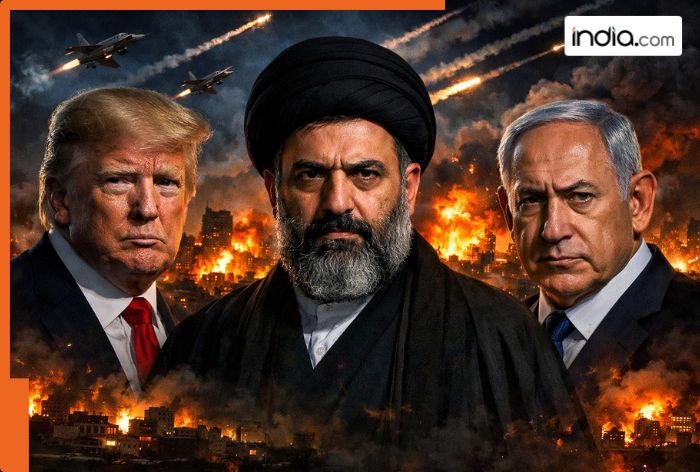
Iran threatens West Asia power plants; Trump postpones strikes amid talks
Iran's Revolutionary Guard threatened to attack electrical plants in West Asia powering U.S. bases if their own power infrastructure is targeted. This escalation occurred as U.S. President Donald Trump issued a deadline for Iran to reopen the Strait of Hormuz. Trump later announced a five-day postponement of potential strikes on Iranian power plants, citing productive talks with Tehran, though Iran denied negotiations were underway.
Key Highlights
- Iran threatened to retaliate against regional power plants if its own are attacked.
- U.S. President Trump set a deadline to reopen the Strait of Hormuz.
- Trump postponed potential strikes on Iranian power plants for five days.
- Iran denied engaging in direct negotiations with the U.S.
- Tensions remain high amid ongoing conflict and threats to critical infrastructure.
Amidst escalating tensions in the Iran-Israel war, Iran's paramilitary Revolutionary Guard issued a significant threat on March 23, 2026, vowing to attack electrical power plants in West Asia that supply U.S. military bases if Iran's own power infrastructure is targeted. This statement came as U.S. President Donald Trump had set a 48-hour deadline, expiring late Monday (March 23, 2026), for Iran to fully reopen the Strait of Hormuz, which has been effectively closed due to Iranian actions. Trump had threatened to "obliterate" Iranian power plants, starting with the largest one, if the demand was not met.
In response to Trump's ultimatum, Iran's military declared that if its energy infrastructure were violated, it would target American energy, information technology, and desalination infrastructure across the region. The speaker of the Iranian parliament, Mohammad Bagher Ghalibaf, further stated that critical infrastructure, energy infrastructure, and oil facilities throughout the region would be considered legitimate targets and would be "irreversibly destroyed." These threats highlighted the severe potential for a wider regional conflict and a deepening global energy crisis, with the Strait of Hormuz being a crucial artery for global oil supply.
However, the situation saw a shift when President Trump announced via social media that the U.S. would postpone any military strikes against Iranian power plants and energy infrastructure for a five-day period. He cited "very good and productive conversations" regarding a resolution to the hostilities in the Middle East, with further talks expected throughout the week. This announcement led to a surge in U.S. stocks and a plunge in the dollar.
Despite Trump's claims of productive talks, Iranian state media, including the IRAN newspaper and the Fars news agency, denied that any direct negotiations had taken place with the U.S. Some Iranian reports suggested that Trump had "backed down" or "retreated" from his deadline out of fear of Iran's response. The International Energy Agency had previously warned that the conflict could lead to an energy crisis worse than the 1970s oil shocks combined.
The conflict, which began with U.S. and Israeli strikes on Iran on February 28, 2026, has already resulted in significant loss of life and economic disruption. Reports indicated that over 2,000 people had been killed. The war has also seen Israel launching fresh strikes on Iran, with explosions reported across several districts of Tehran.
Amidst these developments, the United Arab Emirates reported intercepting incoming missiles and drones from Iran. The crisis underscored the precarious geopolitical situation in West Asia, with the potential for further escalation and severe consequences for global energy security and civilian populations.
The article highlights the heightened rhetoric and the potential for catastrophic impacts on critical infrastructure, including power and water desalination plants, which are vital for the region. The ongoing conflict, marked by reciprocal threats and military actions, continues to pose a significant risk to regional stability and the global economy. The date of publication for this news was March 23, 2026.
Frequently Asked Questions
What was Iran's primary threat in response to potential U.S. strikes?
Iran's Revolutionary Guard threatened to attack electrical power plants in West Asia that supply U.S. military bases if Iran's own power infrastructure was targeted. They also vowed to target Israel's power plants and other economic and energy infrastructures where Americans have shares.
What was President Trump's ultimatum regarding the Strait of Hormuz?
President Donald Trump issued a 48-hour deadline, set to expire on March 23, 2026, demanding that Iran fully reopen the Strait of Hormuz to international shipping or face the obliteration of its power plants, starting with the largest one.
Did President Trump proceed with the strikes on Iranian power plants?
No, President Trump announced a five-day postponement of potential strikes on Iranian power plants and energy infrastructure, citing "very good and productive conversations" with Iran. However, Iran's state media denied that any direct negotiations had taken place.