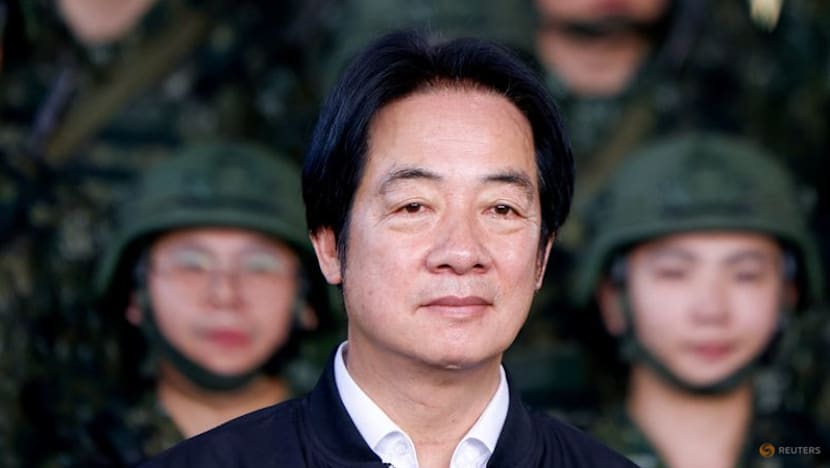
Taiwan President Warns of China's Expansionist 'Six Wars' Plan
Taiwanese President Lai Ching-te has warned that if China annexes Taiwan, Japan and the Philippines would be the next targets, potentially escalating to the Americas and Europe. He emphasized Taiwan's need to bolster its defenses with a proposed $40 billion budget, while China's state media has previously alluded to a "Six Wars" plan for territorial reclamation.
Key Highlights
- Taiwan President Lai Ching-te warns of China's expansionist agenda.
- Japan and Philippines cited as potential next targets after Taiwan.
- China's "Six Wars" plan involves territorial reclamation claims.
- Taiwan seeks significant defense budget increase amid rising tensions.
- Regional security in Indo-Pacific is under threat from China's actions.
- China denies expansionist intent, calling Taiwan an internal affair.
Taiwanese President Lai Ching-te has issued a stark warning, stating that if China successfully annexes Taiwan, other nations in the Indo-Pacific region, specifically Japan and the Philippines, would become the next targets of Beijing's expansionist ambitions. In an interview, Lai expressed confidence that Taiwan's parliament would approve a critical $40 billion defense budget to bolster the island's security capabilities, including the acquisition of new weapons from the United States. He also indicated that the repercussions of a Chinese takeover of Taiwan could eventually extend to the Americas and Europe, underscoring the global implications of such a conflict.
This warning comes amid heightened geopolitical tensions in the Indo-Pacific, with China consistently asserting its claim over Taiwan and threatening the use of force to achieve "reunification." While Beijing denies expansionist intentions and frames Taiwan as an internal matter, its military activities and rhetoric have fueled regional concerns.
The concept of China's "Six Wars" plan has been previously discussed by geopolitical analysts and Chinese state media, outlining a hypothetical series of conflicts aimed at reclaiming territories China believes were lost historically. These plans, which have appeared in articles from sources like Hong Kong's Wen Wei Po, suggest a timeline for potential military actions targeting Taiwan, the South China Sea, India, Japan, Mongolia, and territories lost to Russia. While the specific timelines and targets are speculative, they reflect a narrative of historical grievance and national rejuvenation that permeates some segments of Chinese strategic discourse.
Japan and the Philippines, in particular, have shown increasing concern and preparedness regarding potential Chinese aggression. Japan has signaled a more robust stance, with statements from Prime Minister Sanae Takaichi suggesting that an attack on Taiwan would be considered a "survival-threatening situation" for Japan, potentially necessitating a military response. Similarly, the Philippines, under President Ferdinand Marcos Jr., has acknowledged its vulnerability and the likelihood of being drawn into a Taiwan conflict due to its proximity and the significant Filipino community on the island. The Philippines has also been strengthening its defense strategy and expanding military cooperation with the United States, with some bases located strategically close to Taiwan.
Taiwan's government has been actively working to enhance its defense capabilities, including the proposed $40 billion budget. However, legislative hurdles, such as delays in approving this defense spending, have been noted, potentially creating a "rupture" in the island's defense posture and complicating regional deterrence efforts.
China's military activities, including large-scale drills in the Taiwan Strait, are viewed by Taiwan as a constant pressure tactic aimed at wearing down the island's resolve. Taiwan's Defense Minister Wellington Koo has warned that the public risks becoming "numb" to these actions, emphasizing that the threat remains "urgently and realistically." The ongoing military buildup and assertive actions by China have solidified concerns among regional powers and the United States about the potential for conflict in the Indo-Pacific.
The EurAsian Times, the source of the article, is a news outlet that has been described as having a right-center bias and a tendency towards sensationalized headlines. While it often reports on geopolitical and defense matters, its credibility has been questioned by some, with a note to consult additional sources for verification.
Overall, President Lai's warning highlights the escalating geopolitical situation in the Indo-Pacific, emphasizing the interconnectedness of regional security and the potential for wider conflict should China attempt to forcibly take control of Taiwan. The "Six Wars" concept, while speculative, underscores the broader territorial ambitions attributed to Beijing by some analysts.
Frequently Asked Questions
What is President Lai Ching-te's main warning regarding China?
President Lai Ching-te warns that if China annexes Taiwan, Japan and the Philippines would be the next targets of China's expansionist ambitions, with potential repercussions reaching as far as the Americas and Europe.
What is China's alleged "Six Wars" plan?
The "Six Wars" plan is a concept that has appeared in Chinese state-affiliated media and analyses, suggesting a series of military campaigns China might undertake to reclaim territories it considers lost historically. These hypothetical conflicts have been projected to target Taiwan, the South China Sea, India, Japan, Mongolia, and lands lost to Russia.
Why is Taiwan seeking a significant defense budget increase?
Taiwan is seeking a substantial increase in its defense budget, including a proposed $40 billion package, to bolster its self-defense capabilities and deter potential Chinese aggression, especially in light of rising regional tensions and military pressure from Beijing.
What is the current stance of Japan and the Philippines regarding Taiwan's security?
Japan has indicated that an attack on Taiwan could be considered a "survival-threatening situation" for its own security, suggesting a potential military response. The Philippines has acknowledged its vulnerability and the likelihood of being involved in a Taiwan conflict, leading to strengthened defense strategies and U.S. military cooperation.