Russia Backs India for Long-Term Diplomatic Role in US-Iran Tensions
Russian Foreign Minister Sergey Lavrov on May 15, 2026, endorsed India for a long-term diplomatic role in resolving US-Iran tensions, citing New Delhi's vast experience and global standing. While acknowledging Pakistan's efforts in facilitating immediate dialogues, Lavrov suggested India could bridge gaps between Iran and Arab nations, amidst ongoing West Asia instability and energy security concerns.
Key Highlights
- Russia's FM Lavrov backed India as a long-term mediator in US-Iran conflict.
- India's vast diplomatic experience and global standing were highlighted.
- Pakistan is currently facilitating immediate US-Iran dialogues.
- India could mediate between Iran and its Arab neighbours for stability.
- Lavrov cited India's BRICS chairmanship and energy interests.
- The ongoing West Asia crisis and energy security concerns form the backdrop.
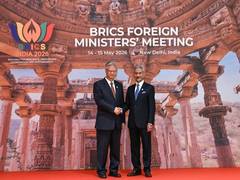
Russian Foreign Minister Sergey Lavrov, during a media briefing in New Delhi on Friday, May 15, 2026, publicly endorsed India to play a significant long-term diplomatic role in mediating the ongoing tensions between the United States and Iran. Lavrov's remarks came after a meeting of BRICS Foreign Ministers, underscoring India's growing international standing and diplomatic capabilities amidst a complex geopolitical landscape in West Asia.
Lavrov clarified that while Pakistan was actively involved in facilitating immediate dialogues between Washington and Tehran to address urgent problems, India was better positioned for a broader and sustained diplomatic engagement, particularly in fostering dialogue between Iran and its Arab neighbors for long-term regional stability. This distinction has been interpreted by several news outlets as Russia backing India 'over Pakistan' for the long-term role, especially given ongoing questions surrounding Pakistan's neutrality as a mediator. Reports suggest that Pakistan's credibility has been challenged due to actions like allegedly allowing Iranian military aircraft at its airbase or facilitating overland transit routes that could help Iran bypass U.S. sanctions, leading to distrust in some international circles.
The Russian Foreign Minister cited India's "vast diplomatic experience and international standing" as key reasons for its suitability in such a crucial mediating role. He highlighted India's historical contributions to global mediation and peacekeeping efforts, tracing back to its non-aligned diplomatic approach. Examples cited include India's role in the 1953 Korean armistice, the International Commission for Supervision and Control in Vietnam during the 1950s and 60s, brokering Austrian neutrality in 1955, and participating in peace efforts during the Suez Canal crisis, the Congo conflict, and the Iran-Iraq war. More recently, India's G20 presidency saw it advocating for dialogue and diplomacy, particularly concerning the developmental consequences of conflicts like the Russia-Ukraine war.
Furthermore, Lavrov emphasized India's direct stake in ensuring stability in the West Asia region. As the current BRICS chair and a major energy consumer, India has significant interests in maintaining peace and ensuring uninterrupted oil supplies from the region. He explicitly suggested that India could leverage its position to invite Iran and the United Arab Emirates to initiate conversations aimed at avoiding hostilities.
The backdrop to these diplomatic overtures is the persistent and heightened tension in West Asia, which escalated significantly in early 2020 following the U.S. assassination of Iranian General Qassem Soleimani and subsequent Iranian retaliatory missile strikes on U.S. bases in Iraq. These events sparked fears of a broader conflict and continue to contribute to regional instability and global energy security concerns, particularly around the strategic Strait of Hormuz. Lavrov himself characterized the root cause of the crisis as "unprovoked aggression by the U.S. and Israel against Iran" and accused other countries of attempting to deepen hostility between Iran and Arab nations, while asserting Russia's commitment to de-escalation.
This development signifies Russia's recognition of India's growing geopolitical influence and its potential to act as a credible, neutral arbiter in complex international disputes. For India, accepting or actively pursuing such a role would align with its stated foreign policy of promoting dialogue and peaceful resolution of conflicts, reinforcing its image as a "Vishwa Bandhu" or "friend of the world." The proposal highlights the evolving dynamics of international relations, where India is increasingly seen as a responsible global stakeholder capable of contributing to peace and stability beyond its immediate neighborhood.
Frequently Asked Questions
Why did Russia propose India as a mediator in the US-Iran conflict?
Russian Foreign Minister Sergey Lavrov proposed India due to its 'vast diplomatic experience and international standing,' its historical role in global mediation efforts, its current position as BRICS chair, and its direct interest as a major energy consumer in regional stability in West Asia.
What role is Pakistan currently playing in the US-Iran situation?
Lavrov stated that Pakistan is currently assisting in establishing dialogues between the United States and Iran to resolve immediate concerns. However, he suggested India for a long-term, broader diplomatic role.
What is the significance of India's 'long-term diplomatic role' as suggested by Russia?
Russia's suggestion highlights India's potential to facilitate lasting stability by mediating not just between the US and Iran, but also between Iran and its Arab neighbours. This move acknowledges India's growing influence and its capacity to act as a neutral and credible arbiter in complex international disputes.
What is the current state of the US-Iran conflict that prompted Russia's suggestion?
The US-Iran conflict remains tense, rooted in escalated hostilities from early 2020, including the assassination of Qassem Soleimani and retaliatory strikes. The ongoing West Asia crisis involves concerns over regional stability and global energy security, particularly concerning the Strait of Hormuz.
How could India facilitate dialogue between Iran and the UAE?
Lavrov suggested that India, as the current BRICS president and a country with significant energy interests in the region, could invite Iran and the United Arab Emirates to engage in conversations to avert hostilities and foster greater understanding.