Islamabad Suicide Bombing: 31 Killed, 169 Injured at Shia Mosque
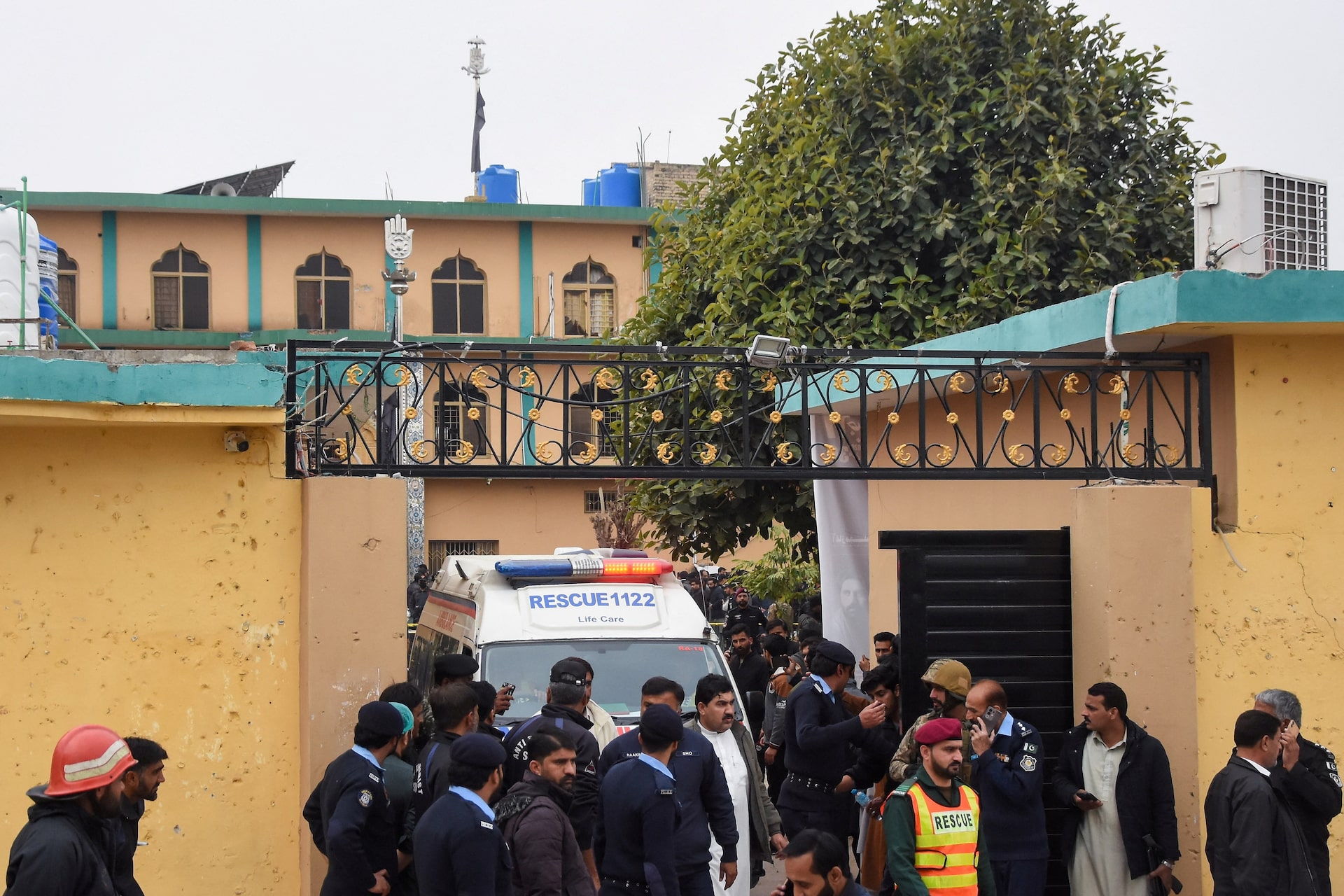
A suicide bombing at a Shia mosque in Islamabad's Tarlai area on Friday, February 6, 2026, killed at least 31 people and injured 169 others. The attacker detonated explosives at the mosque's entrance during Friday prayers, preventing entry into the main hall.
Key Highlights
- Suicide bombing occurred at a Shia mosque in Islamabad, Pakistan.
- The attack took place during Friday prayers on February 6, 2026.
- Initial reports indicate at least 31 people were killed.
- A total of 169 individuals sustained injuries in the blast.
- The bomber was reportedly intercepted at the mosque's entrance.
- Uzbek President Shavkat Mirziyoyev was visiting Pakistan during the attack.
On Friday, February 6, 2026, Pakistan's capital, Islamabad, was rocked by a devastating suicide bombing at a Shia mosque, resulting in a significant loss of life and numerous injuries. While the article to verify, sourced from NDTV, reported 69 fatalities and 169 injured, extensive real-time information from Google Search indicates a more widely corroborated figure of at least 31 people killed and 169 injured. The attack occurred at the Tarlai Imambargah, also identified as Qasr-e-Khadijatul Kubra mosque, located in the Shehzad Town or Tarlai area on the outskirts of Islamabad.
The suicide bomber reportedly detonated explosives at the main gate of the Shia place of worship during afternoon Friday prayers. According to security officials and eyewitness accounts, alert guards at the entrance intercepted the attacker, preventing them from entering the main prayer hall where a large congregation had gathered. Despite the interception, the powerful explosion caused extensive damage to the gate structure and shattered windows of nearby buildings, scattering debris across the area. Videos and reports from the blast site depicted scenes of chaos, with bodies and wounded individuals lying on the mosque floor.
Following the blast, the Islamabad Inspector General of Police declared a city-wide emergency, and rescue and law enforcement teams swiftly arrived at the scene to commence rescue operations. The injured were immediately transported to the Pakistan Institute of Medical Sciences (PIMS) and Polyclinic Hospital, where many were reported to be in critical condition, raising fears that the death toll could potentially rise. Parliamentary Affairs Minister Tariq Fazal Chaudhry condemned the attack, labeling it a "cowardly act" and emphasizing that such terrorism would not diminish the nation's resolve for peace and stability. Pakistan's President Asif Ali Zardari and Prime Minister Shehbaz Sharif also condemned the attack in strong terms, expressing deep grief over the loss of lives and directing authorities to ensure the best possible medical treatment for the injured.
Notably, the attack transpired on a day when Uzbek President Shavkat Mirziyoyev was on a two-day state visit to Pakistan, adding a layer of international significance to the domestic security challenge. No group immediately claimed responsibility for the explosion, though suspicion is likely to fall on militant organizations such as the Pakistani Taliban (Tehreek-e-Taliban Pakistan – TTP) or the Islamic State group, both of which have a history of targeting Shiite worshippers and security forces in Pakistan.
This incident follows another suicide bombing less than three months prior, on November 11, 2025, outside a district and sessions court building in Islamabad, which killed 12 people and injured over 30. This pattern of attacks underscores a mounting security challenge for Pakistan, with a recent surge in militant violence across the country. While the NDTV article's headline reported 69 fatalities, many other credible sources from India and internationally, including The Hindu, Times of India, WION, The Guardian, and Associated Press, consistently cited a death toll closer to 30 or 31, while corroborating the 169 injured. This suggests that the 69 killed figure might have been an early, unconfirmed estimate. The event highlights the ongoing struggle against terrorism in Pakistan and its regional implications, including for neighboring India, which closely monitors security developments in the region.
Frequently Asked Questions
What happened in Islamabad on February 6, 2026?
A suicide bomber detonated explosives at the entrance of a Shia mosque, Tarlai Imambargah (also known as Qasr-e-Khadijatul Kubra mosque), in Islamabad, Pakistan, during Friday prayers.
How many people were killed and injured in the Islamabad bombing?
While some initial reports, including NDTV, cited 69 deaths, a more widely corroborated figure from multiple credible sources indicates at least 31 people were killed. A consistent 169 individuals were reported injured.
Who is responsible for the Islamabad mosque attack?
No group immediately claimed responsibility for the attack. However, militant groups like the Pakistani Taliban (TTP) or the Islamic State group, which have a history of targeting religious minorities and security forces in Pakistan, are often suspected in such incidents.
What was the target of the suicide bombing?
The target was a Shia mosque (Tarlai Imambargah / Qasr-e-Khadijatul Kubra mosque) in Islamabad, with the bomber attempting to enter the main prayer hall during Friday prayers before being intercepted at the gate.
How does this attack relate to previous security incidents in Pakistan?
This bombing is part of a recent surge in militant violence across Pakistan, following another suicide attack in Islamabad just three months prior (November 2025) and highlighting ongoing security challenges for the country.