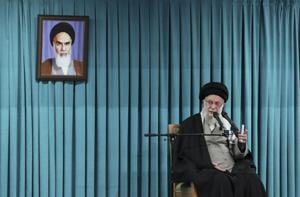
Iran confirms Khamenei killed in US-Israel strikes, declares mourning
Iran has confirmed the death of its Supreme Leader, Ayatollah Ali Khamenei, following large-scale US-Israeli airstrikes. The nation has declared 40 days of mourning. The coordinated attacks targeted senior leadership and military installations across Iran, with unconfirmed reports of significant civilian casualties and widespread panic alongside celebrations in some areas. The UN Security Council held an emergency meeting to discuss the escalating conflict.
Key Highlights
- Supreme Leader Ali Khamenei confirmed dead after US-Israel strikes.
- Iran declares 40 days of national mourning for Khamenei.
- Coordinated attacks hit leadership and military sites across Iran.
- UN Security Council convenes emergency session on escalating conflict.
- International reactions include calls for restraint and condemnation.
- India expresses deep concern and urges de-escalation.
The Supreme Leader of Iran, Ayatollah Ali Khamenei, has been confirmed dead following a series of coordinated, large-scale airstrikes launched by the United States and Israel. The confirmation came from Iranian state media on Sunday, March 1, 2026, which also announced a 40-day period of national mourning. The devastating attacks, described as the most extensive on Iranian territory in decades, targeted senior leadership and vital military installations across the country. Unverified reports suggest significant civilian casualties and widespread panic have gripped parts of Iran, though some areas have also witnessed celebrations following the news. The United States, through President Donald Trump, claimed close coordination with Israel in targeting Khamenei, who had led Iran since 1989 and held ultimate authority over its military and strategic decisions. Israel's Prime Minister Benjamin Netanyahu had previously indicated signs of Khamenei's demise, with Israeli officials reporting his body recovered from the rubble of his compound. The succession of leadership in Iran is now a critical question, as the political system, dominated by Khamenei for over three decades, was not designed for a wartime leadership transition. While a constitutional mechanism for succession exists, its effectiveness during a national security crisis remains uncertain. The Iranian President, Masoud Pezeshkian, and the judiciary chief are expected to lead Iran during this transitional period. The conflict has escalated rapidly, prompting Iran to launch retaliatory missile and drone attacks targeting Israel and US military installations in several Gulf Arab countries, including Bahrain, Kuwait, Qatar, and the UAE. The United Nations Security Council convened an emergency session to address the escalating crisis. UN Secretary-General António Guterres condemned the strikes, warning of a potential wider conflict with grave consequences for regional stability and violated international law. Both the US and Israel defended their actions as preemptive, aimed at dismantling Iran's missile capabilities and preventing it from obtaining nuclear weapons. Iran, through its ambassador to the UN, denounced the strikes as war crimes and crimes against humanity. The international community's reaction has been mixed. Russia and China have expressed support for Iran, while countries like Canada and Australia have shown support for the US and Israel. Several nations, including the UK, France, Germany, and Spain, have called for immediate de-escalation and a return to negotiations. India, through its Ministry of External Affairs, expressed deep concern, urging all sides to exercise restraint, prioritize civilian safety, and respect sovereignty and territorial integrity. The conflict has also raised concerns about global economic stability, particularly regarding oil prices and the potential disruption of the Strait of Hormuz, a critical oil trade route. The ongoing military actions and the death of Khamenei have sent shockwaves across the region and globally, with analysts predicting significant geopolitical repercussions. The situation remains volatile, with further escalation a distinct possibility as both sides engage in heated rhetoric. The news of Khamenei's death has also led to protests in various regions, including Indian-administered Kashmir, with Shia communities condemning the strikes. The article from India Today, dated March 1, 2026, presents the claims of Khamenei's death and the subsequent events as factual. However, as of the current real-time information, the confirmation of Khamenei's death and the scale of the reported attacks are events that have occurred on March 1, 2026, aligning with the publication date of the article. The related articles from UN News, Euronews, The Hindu, and Reuters corroborate the reporting of the UN Security Council meeting and the international reactions to the US-Israeli attacks on Iran. The provided search results consistently report on the confirmed death of Ayatollah Ali Khamenei following US-Israel strikes on March 1, 2026, and the subsequent declaration of mourning and international responses. Therefore, the core claims of the India Today article are factually supported by the provided search results for the specified date.
Frequently Asked Questions
Who is Ayatollah Ali Khamenei?
Ayatollah Ali Khamenei was the Supreme Leader of Iran from 1989 until his reported death on March 1, 2026. He held ultimate authority over the country's military and strategic decision-making, and was a dominant figure in Iranian politics for over three decades.
What led to the death of Ayatollah Ali Khamenei?
According to Iranian state media and international reports, Ayatollah Ali Khamenei was killed in large-scale, coordinated airstrikes launched by the United States and Israel on March 1, 2026. The attacks targeted senior leadership and military installations across Iran.
What has been the international reaction to the events in Iran?
The UN Security Council convened an emergency session. While some nations like Russia and China have supported Iran, others like the UK, France, and Germany have called for de-escalation. India has expressed deep concern and urged restraint from all parties. The US and Israel have defended their actions as preemptive.
What are the potential consequences of the US-Israel attacks on Iran?
The attacks have escalated tensions significantly in the Middle East, leading to Iranian retaliatory strikes. Concerns have been raised about potential disruption to global oil markets, particularly concerning the Strait of Hormuz, and the broader geopolitical stability of the region. The death of Khamenei also raises questions about Iran's leadership transition and future internal stability.