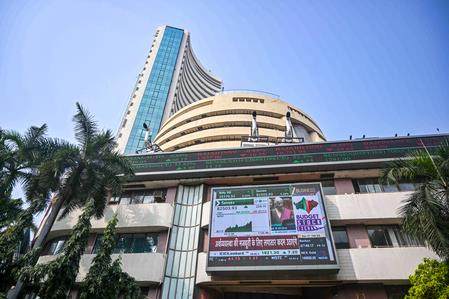
Indian Markets Decline as US-Iran Tensions Drive Oil, Rupee Falls
Indian equity benchmarks, Nifty and Sensex, resumed weekly declines amidst escalating US-Iran tensions which pushed Brent crude prices higher. The Indian Rupee hit a record low past 96 per dollar, further pressured by a domestic fuel price hike contributing to inflation fears.
Key Highlights
- Indian stock markets, Nifty and Sensex, recorded weekly declines of nearly 3%.
- Renewed US-Iran tensions significantly boosted global Brent crude oil prices.
- The Indian Rupee depreciated to a new record low beyond 96 against the US dollar.
- Domestic fuel prices increased by ₹3 per litre, fueling inflation concerns in India.
- The ongoing West Asia conflict continues to disrupt global oil supplies.
- Economists expect the fuel hike to raise India's CPI inflation.
Indian equity markets concluded the week with significant declines, as both the Nifty 50 and BSE Sensex indices registered a nearly 3% fall over the period. On Friday, May 15, 2026, the Nifty 50 closed down 46.10 points (0.19%) at 23,643.50, while the Sensex dropped 160.73 points (0.21%) to settle at 75,237.99. This downturn followed a volatile week that included a rebound on Thursday, May 14, where both benchmarks had seen substantial gains.
A primary factor driving the market's negative sentiment was the escalation of geopolitical tensions between the United States and Iran. Reports from May 15, 2026, indicated that US President Donald Trump reiterated his demands for a nuclear deal, while Iran continued to assert control over the strategically vital Strait of Hormuz, a key choke point for global oil trade. These renewed tensions, coupled with stalled peace talks, perpetuated concerns about disruptions to global oil supplies.
Consequently, Brent crude oil prices experienced a notable surge. On Friday, Brent crude traded towards $107-$108 per barrel, heading for an estimated weekly gain of 5% to 8%. The U.S. Energy Information Administration (EIA) also highlighted that disruptions to crude oil production in the Middle East had significantly increased, with the Strait of Hormuz assumed to be effectively closed until late May, contributing to large oil inventory draws. Analysts from Goldman Sachs observed that prompt Brent/WTI crude nearby futures increased by 5-7% week-over-week, directly attributing this to low flows through the Strait of Hormuz and limited progress on a US-Iran deal.
The impact on the Indian economy was compounded by a weakening rupee and domestic inflationary pressures. The Indian Rupee depreciated to a new record low against the US dollar on Friday, breaching the 96 mark and touching 96.03 in early trade. The currency has been under consistent pressure, emerging as Asia's weakest-performing currency in 2026, having declined more than 6% against the dollar so far this year. Economists and market experts attributed this depreciation to elevated crude oil prices, a firm US dollar, and ongoing concerns surrounding the West Asia conflict.
Adding to India's economic challenges, state-run oil marketing companies (OMCs) implemented a significant fuel price hike, increasing petrol and diesel prices by ₹3 per litre on May 15, 2026. This was the first major price adjustment in 49 months and was deemed crucial for OMCs to recoup daily losses incurred due to rising global crude oil prices, which had surpassed $107 a barrel. The price hike is expected to fuel inflation, with economists forecasting a direct impact of approximately 0.15% on the Consumer Price Index (CPI) and an overall increase of around 25 basis points on an annualised basis. Higher transportation and operating costs are anticipated to be passed on to consumers, leading to increased prices for essential goods and services across various sectors. Foreign portfolio investors (FPIs) have also been exiting Indian equities, with cumulative withdrawals exceeding ₹2 lakh crore by early May 2026, driven by global valuations, geopolitical uncertainties, and a stronger US dollar, further impacting the rupee and widening India's Current Account Deficit.
Overall, the combination of global geopolitical instability leading to higher oil prices, a depreciating domestic currency, and the resultant inflationary pressures from fuel price hikes created a challenging environment for Indian financial markets and the broader economy.
Frequently Asked Questions
Why did Indian stock markets decline this week?
Indian stock markets, including Nifty and Sensex, recorded weekly declines primarily due to escalating US-Iran tensions, which led to a rise in global crude oil prices, and the depreciation of the Indian Rupee to a record low.
How are US-Iran tensions affecting global oil prices?
Renewed tensions between the US and Iran, including stalled peace talks and concerns over the closure of the Strait of Hormuz, are causing significant disruptions to global oil supplies, pushing Brent crude prices higher, towards $107-$108 per barrel.
What is the impact of the fuel price hike in India?
India's recent ₹3 per litre hike in petrol and diesel prices, the first in 49 months, is expected to increase the Consumer Price Index (CPI) by approximately 0.15% directly, with an overall annualised impact of around 25 basis points, leading to higher transportation and essential goods costs.
Why has the Indian Rupee fallen to a record low?
The Indian Rupee depreciated to a new record low beyond 96 against the US dollar due to persistent strength of the US dollar, elevated global crude oil prices, ongoing geopolitical uncertainties from the West Asia conflict, and significant outflows by foreign portfolio investors.
What are the broader economic implications for India?
The combination of higher crude oil prices, a weakening rupee, and rising fuel costs is expected to exacerbate inflation, increase India's import bill, widen the Current Account Deficit, potentially reduce consumer spending, and create a challenging environment for economic growth.