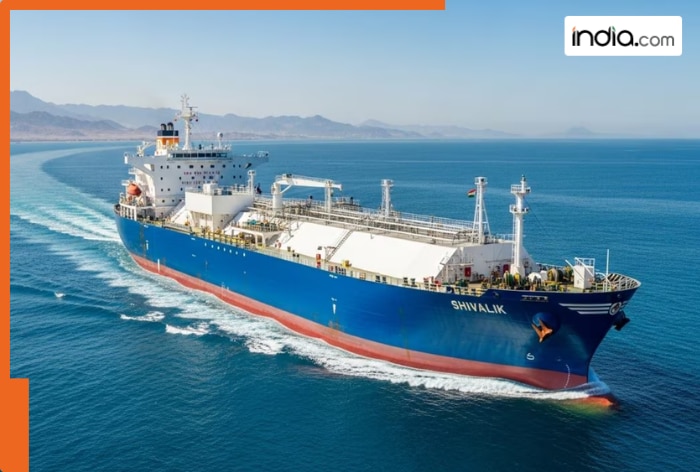
Indian LPG Carriers Navigate Tense Strait of Hormuz Amid West Asia Conflict
Indian LPG carriers are navigating the tense Strait of Hormuz amidst heightened West Asia conflict, crucial for India's energy security. While some vessels like Shivalik and Nanda Devi have safely transited, Jag Vasant and Pine Gas are preparing for passage. India's diplomatic efforts with Iran are key to ensuring safe maritime trade and averting a severe domestic LPG crisis.
Key Highlights
- Indian LPG carriers Shivalik and Nanda Devi safely crossed Strait of Hormuz.
- Indian LPG tankers Jag Vasant and Pine Gas prepare for transit.
- Heightened West Asia tensions severely impact Strait of Hormuz shipping.
- India heavily relies on Strait of Hormuz for 90% of its LPG imports.
- India engages in diplomatic efforts with Iran for safe passage of vessels.
- Indian Navy's Operation Sankalp ensures maritime security for Indian vessels.
In a critical development for India's energy security, multiple Indian-flagged Liquefied Petroleum Gas (LPG) carriers have been navigating or are preparing to navigate the highly volatile Strait of Hormuz amidst escalating geopolitical tensions in West Asia. The Strait, a narrow waterway connecting the Persian Gulf to the open ocean, is a vital global chokepoint through which approximately 20% of the world's oil and liquefied natural gas (LNG) flow.
The current crisis stems from heightened conflict involving Iran, the United States, and Israel, which has led to significant disruptions and security concerns for international shipping in the region. Reports indicate that the Strait of Hormuz has been effectively shut down for many vessels, with Iran reportedly laying mines to prevent shipping without its explicit permission.
Among the Indian vessels, two LPG carriers, the Shivalik and Nanda Devi, successfully transited the Strait of Hormuz and arrived at Mundra Port and Kandla Port in Gujarat around March 16 and 17, 2026. These vessels, chartered by state-run Indian Oil Corporation (IOC) and owned by the Shipping Corporation of India Ltd., carried approximately 92,700 metric tons of LPG, providing crucial relief to India's domestic supply.
Following these transits, two other Indian-flagged LPG tankers, the Jag Vasant and Pine Gas, are currently positioned near Sharjah in the United Arab Emirates and are preparing to sail through the Strait of Hormuz in the coming days. The Jag Vasant is chartered by Bharat Petroleum Corporation Limited (BPCL), while the Pine Gas is operated by IOC. Their successful passage is deemed critical for India, which is grappling with a severe LPG supply crisis.
India's reliance on the Strait of Hormuz for its energy imports is profound. Approximately 90% of India's LPG imports, 60% of its LNG imports, and around half of its total crude oil imports transit through this strategic waterway. Any prolonged disruption in this route has direct and severe consequences for India's economy and energy security, potentially driving up fuel costs and impacting millions of households reliant on LPG.
The Indian government has engaged in extensive diplomatic efforts to ensure the safe passage of its vessels. Prime Minister Narendra Modi and External Affairs Minister S. Jaishankar have been in close communication with leaders in the Gulf region to discuss the situation and secure unhindered transit for Indian ships. India has directly appealed to Iran, which has reportedly granted safe passage to some Indian vessels after negotiations. India's High Commissioner to the UK, Vikram Doraiswami, also condemned Iran's actions regarding commercial shipping at the 36th extraordinary session of the International Maritime Organization (IMO) Council, emphasizing the importance of respecting navigational rights and protecting civilian vessels.
Domestically, the Directorate General of Shipping (DGS) has been functioning as the operational nerve center for India's maritime regulatory response. Since January 2026, the DGS has issued a series of advisories and security protocols for Indian Flag Vessels and seafarers. The Ministry of Ports, Shipping and Waterways (MoPSW) is closely monitoring the situation in coordination with the Indian Navy, Ministry of External Affairs (MEA), and Maritime Rescue Coordination Centre (MRCC). The Indian Navy's 'Operation Sankalp,' active since 2019, involves the deployment of frigates and destroyers to provide a 'security blanket' for Indian-flagged vessels. Currently, 22 Indian-flagged vessels with 611 Indian seafarers are located to the west of the Strait of Hormuz, all of whom are reported to be safe.
The successful and ongoing transits underscore India's diplomatic agility and the critical importance of maintaining open channels with all regional players to safeguard its vital energy lifelines. The situation remains fluid, with global energy markets closely watching developments in this crucial maritime corridor.
Frequently Asked Questions
What is the Strait of Hormuz and why is it crucial for India?
The Strait of Hormuz is a narrow, strategically vital waterway connecting the Persian Gulf to the open ocean. It is critical for India because approximately 90% of its LPG imports, 60% of its LNG imports, and about half of its total crude oil imports pass through this strait.
Which Indian LPG carriers have been involved in recent transits through the Strait of Hormuz?
Recently, two Indian LPG carriers, Shivalik and Nanda Devi, successfully transited the Strait of Hormuz and reached Indian ports. Additionally, two other Indian-flagged LPG tankers, Jag Vasant and Pine Gas, are preparing for or are actively in transit through the strait.
What is causing the heightened tensions and disruptions in the Strait of Hormuz?
The heightened tensions are a result of escalating geopolitical conflict in West Asia, specifically involving Iran, the United States, and Israel. This has led to concerns over global energy supplies and increased risks for shipping, with Iran reportedly imposing restrictions on transit.
How is the Indian government responding to the maritime security challenges in the region?
India is responding through diplomatic engagement, with Prime Minister Modi and EAM Jaishankar holding talks with Gulf leaders and Iran to ensure safe passage for vessels. Domestically, the Directorate General of Shipping has issued advisories, and the Indian Navy's 'Operation Sankalp' is actively ensuring the security of Indian-flagged vessels.
What is the impact of these disruptions on India's energy security?
Given India's significant dependence on the Strait of Hormuz for energy imports, especially LPG, the disruptions pose a critical threat to the country's energy security. It has led to an LPG supply crisis in India and could impact fuel availability and prices nationwide.