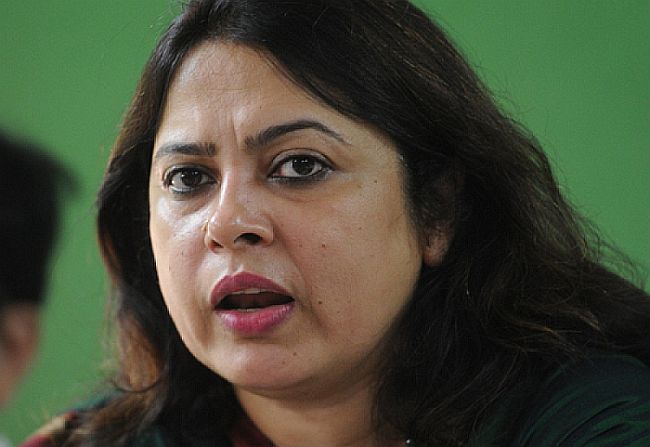
Supreme Court hears Congress leader Meenakshi Natarajan's plea on Rajya Sabha nomination rejection
The Supreme Court is set to hear Congress leader Meenakshi Natarajan's plea challenging the rejection of her Rajya Sabha nomination from Madhya Pradesh. The rejection, based on allegations of non-disclosure of a pending case in her affidavit, has sparked political controversy.
Key Highlights
- SC to hear plea on Rajya Sabha nomination rejection
- Natarajan's nomination rejected over affidavit details
- Congress alleges BJP conspiracy
- SC questions maintainability of plea
- No interim relief granted on election results
The Supreme Court of India has agreed to hear a plea filed by Congress leader Meenakshi Natarajan, challenging the rejection of her nomination papers for the Rajya Sabha elections from Madhya Pradesh. The nomination was rejected on June 9, 2026, by the Returning Officer, Arvind Sharma, who is also the Principal Secretary of the Madhya Pradesh Assembly. The rejection came after objections raised by Bharatiya Janata Party (BJP) leaders, including Rajya Sabha candidate Mahesh Kewat and State General Secretary Rahul Kothari. The BJP's primary contention was that Natarajan had failed to disclose details of a case pending before a court in Hyderabad in the affidavit accompanying her nomination papers. Specifically, the Returning Officer's order stated that Natarajan had responded to a notice issued by a Hyderabad court in October 2025 but did not mention this in Form 26, submitted with her nomination papers, deeming the affidavit incomplete.
Senior Advocate Abhishek Manu Singhvi, representing Natarajan, argued before a Supreme Court bench comprising Justices Prashant Kumar Mishra and A.S. Chandurkar that the criminal proceedings relied upon by the Returning Officer had not reached the stage where a competent court had taken cognisance of the complaint. He contended that a pre-cognisance notice does not constitute a pending criminal case requiring mandatory disclosure under electoral law. The Congress party has maintained that the rejection is legally unsustainable, as no criminal case exists without cognisance being taken by a court. They argue that Section 33A of the Representation of the People Act, which mandates disclosure, applies only after cognisance is taken.
The Supreme Court, while agreeing to list the plea for hearing on June 12, 2026, declined to grant any interim relief preventing the declaration of the election results. The court observed that courts should ordinarily not intervene once the electoral process has commenced. This decision means that the declaration of the election result, which was scheduled to follow the withdrawal deadline on the same day, could proceed. The polling for the Rajya Sabha seats in Madhya Pradesh is scheduled for June 18, 2026. The rejection of Natarajan's nomination effectively eliminates the Congress from the contest for one of the three Rajya Sabha seats from Madhya Pradesh, leaving the BJP with a significant political advantage.
The BJP has fielded three candidates for the three Rajya Sabha seats from Madhya Pradesh. With the state assembly's effective strength at 229, a candidate requires 58 first-preference votes to win. The BJP, with 164 MLAs, has the numbers to win two seats. The Congress, with 63 MLAs, was banking on Natarajan to secure the third seat. The rejection of her nomination has altered this calculation, potentially leading to the BJP winning all three seats.
The Congress has alleged that the rejection of Natarajan's nomination was part of a "premeditated conspiracy" by the BJP to snatch a seat. Party leaders have staged protests and met with the Election Commission of India to seek intervention. The Chief Minister of Madhya Pradesh, Mohan Yadav, however, suggested that internal dynamics within the Congress, with leaders eyeing the seat for themselves, may have contributed to irregularities in Natarajan's nomination form.
The controversy highlights the strict disclosure requirements for electoral candidates and the legal interpretations surrounding what constitutes a 'pending criminal case' for the purpose of nomination affidavits. The Supreme Court's eventual ruling on the maintainability of Natarajan's plea and the merits of the case will be crucial in setting a precedent for future electoral disputes involving disclosure norms. The case also underscores the intense political maneuvering in India's upper house elections, particularly in states where the numbers game is closely contested.
Frequently Asked Questions
Why was Meenakshi Natarajan's Rajya Sabha nomination rejected?
Meenakshi Natarajan's nomination was rejected by the Returning Officer based on objections raised by the BJP. The BJP alleged that she failed to disclose details of a case pending before a Hyderabad court in her election affidavit. The Returning Officer deemed her affidavit incomplete as it did not mention a notice from the Hyderabad court.
What is the Congress's stance on the rejection?
The Congress party maintains that the rejection is legally unsustainable. They argue that no criminal case exists without a court taking cognisance, and that Natarajan had only received a notice to appear, not that a case had been formally filed against her. They allege the rejection is a "premeditated conspiracy" by the BJP.
What was the Supreme Court's decision on the plea?
The Supreme Court agreed to hear Meenakshi Natarajan's plea challenging the rejection of her nomination. However, the court declined to grant any interim relief to prevent the declaration of election results, observing that courts should generally not intervene once the electoral process has commenced.
What are the implications of the nomination rejection?
The rejection of Meenakshi Natarajan's nomination effectively eliminates the Congress from the contest for one of the three Rajya Sabha seats from Madhya Pradesh. This significantly increases the BJP's chances of winning all three seats.
When are the Rajya Sabha elections in Madhya Pradesh scheduled?
The polling for the three Rajya Sabha seats in Madhya Pradesh is scheduled for June 18, 2026.