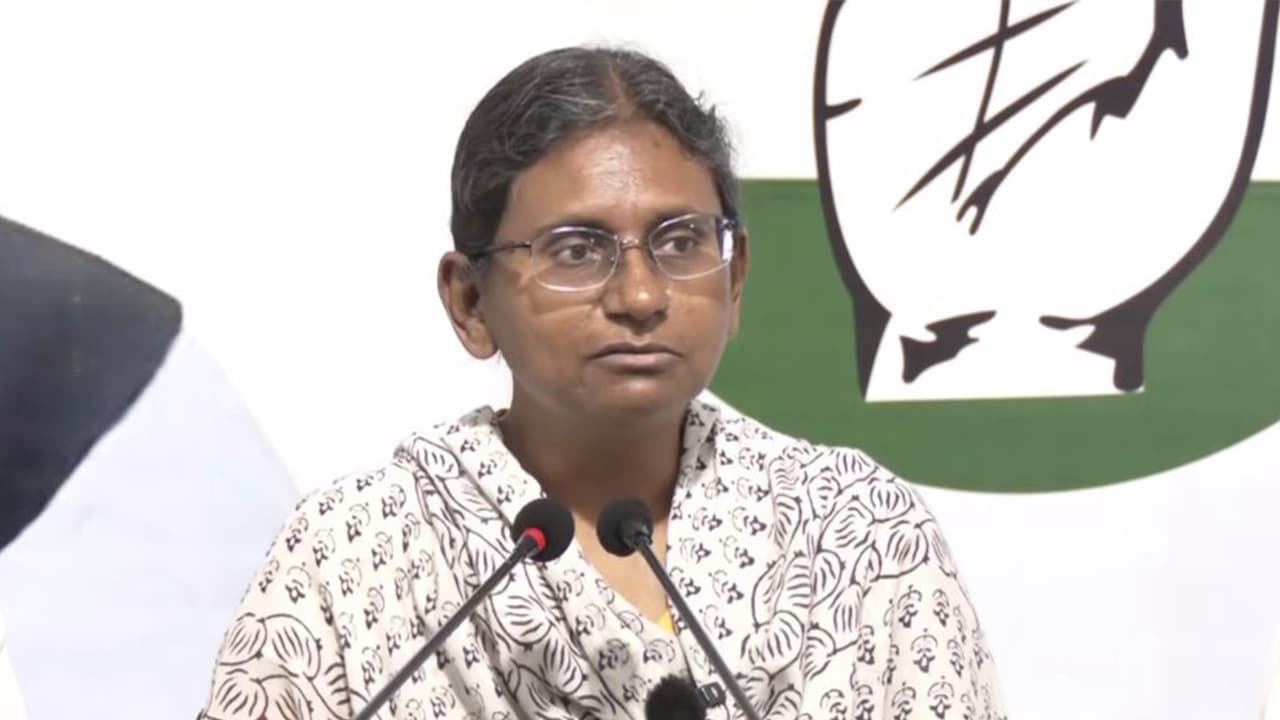
Meenakshi Natarajan's RS Candidacy: Hyderabad Court Returns Complaint Amid Legal Battle
Congress leader Meenakshi Natarajan's Rajya Sabha nomination was rejected over non-disclosure of a Telangana court complaint. While the Supreme Court dismissed her challenge, a Hyderabad court later returned the complaint for jurisdictional reasons, clarifying no criminal case was pending against her.
Key Highlights
- Rajya Sabha nomination rejected on June 9, 2026, for non-disclosure.
- Complaint filed by A. Srilatha alleging sexual harassment and Natarajan's inaction.
- Supreme Court dismissed Natarajan's writ petition, advised election petition.
- Hyderabad court returned the complaint on June 13, citing jurisdictional issues.
- Court clarified no criminal case pending against Meenakshi Natarajan.
- Natarajan filed an election petition in Madhya Pradesh High Court on July 22, 2026.
Congress leader Meenakshi Natarajan's bid for a Rajya Sabha seat from Madhya Pradesh faced a significant legal and political hurdle when her nomination was rejected on June 9, 2026. The Returning Officer invalidated her candidature on the grounds of non-disclosure of a pending private complaint in her election affidavit (Form 26). This decision sparked a major controversy, with the Congress party criticizing it as a politically motivated move by the BJP.
The complaint in question originated in Telangana, filed by a woman named A. Srilatha in September 2025 before the Nampally District Magistrate Court in Hyderabad. Srilatha alleged sexual harassment by a former Narayanpet Congress leader, Kumbham Shiva Kumar Reddy, and further accused Meenakshi Natarajan, who assumed the role of AICC in-charge for Telangana in February 2025, of failing to take appropriate action despite being informed of the allegations. Natarajan was named as an accused on the premise that she did not act on the sexual assault complaint in her capacity as AICC in-charge.
Natarajan challenged the rejection of her nomination, asserting that the matter cited against her was merely a legal notice or a pre-cognizance inquiry, not a criminal case requiring disclosure under Section 33A of the Representation of the People Act, 1951, which mandates disclosure only of criminal cases where charges have been framed by a trial court. She argued that she could not be held vicariously liable for the alleged actions of another.
Following the rejection, Natarajan initially sought recourse by filing a writ petition in the Supreme Court on June 10, 2026, challenging the Returning Officer's decision. However, the Supreme Court, comprising Justices Prashant Kumar Mishra and A.S. Chandurkar, dismissed her petition on June 12, 2026. The apex court held that it lacked jurisdiction under Article 32 of the Constitution to intervene in the electoral process once it had commenced, citing Article 329(b) which bars judicial interference in election disputes except through an election petition. The Court directed Natarajan to pursue her remedy by filing an election petition in the appropriate High Court as per the Representation of the People Act, 1951.
Crucially, a day after the Supreme Court's ruling, on June 13, 2026, the IV Additional Chief Metropolitan Magistrate Court at Nampally, Hyderabad, returned the private complaint that had been the basis for her nomination's rejection. The court cited a lack of jurisdiction, stating that several individuals named as accused in the complaint, including Natarajan, were current or former public representatives. The court directed the petitioner to approach the competent court, thereby clarifying that no criminal case was pending against Meenakshi Natarajan in this matter. This development, although coming after her nomination was rejected and her Supreme Court plea dismissed, provided significant relief to Natarajan, legally affirming her stance that there was no active criminal case against her requiring disclosure.
Despite this clarification, the damage to her Rajya Sabha nomination had already been done. With the Supreme Court having advised an election petition, Meenakshi Natarajan subsequently moved the Madhya Pradesh High Court. On July 22, 2026, she filed an election petition before the High Court, challenging the rejection of her nomination for the Rajya Sabha elections from Madhya Pradesh. This ongoing legal battle underscores complex issues surrounding electoral transparency, candidate disclosure norms, and the interplay between judicial processes and election administration in India. The controversy also brought to light political tensions within the Congress party and allegations of manipulation by the BJP.
Frequently Asked Questions
Why was Meenakshi Natarajan's Rajya Sabha nomination rejected?
Meenakshi Natarajan's Rajya Sabha nomination was rejected on June 9, 2026, by the Returning Officer because she failed to disclose a pending private complaint from a Telangana court in her election affidavit (Form 26).
What was the nature of the complaint against Meenakshi Natarajan?
The complaint, filed by A. Srilatha in September 2025 in a Hyderabad court, alleged sexual harassment by another Congress leader and accused Natarajan, as AICC in-charge for Telangana, of failing to act on these allegations despite being informed.
What was the Supreme Court's decision regarding Meenakshi Natarajan's plea?
The Supreme Court dismissed Meenakshi Natarajan's writ petition on June 12, 2026, stating it lacked jurisdiction under Article 32 to intervene in ongoing election processes. The Court advised her to file an election petition in the appropriate High Court as the correct legal remedy.
What was the outcome of the Telangana court complaint?
On June 13, 2026, the IV Additional Chief Metropolitan Magistrate Court at Nampally, Hyderabad, returned the private complaint citing a lack of jurisdiction, as several accused were current or former public representatives. The court also clarified that no criminal case was pending against Meenakshi Natarajan in the matter.
What is Meenakshi Natarajan's current legal recourse?
Following the Supreme Court's advice, Meenakshi Natarajan filed an election petition before the Madhya Pradesh High Court on July 22, 2026, challenging the rejection of her Rajya Sabha nomination.