Zomato Price Gap Row: Customer Flags ₹320 Order as ₹655 | Quick Digest
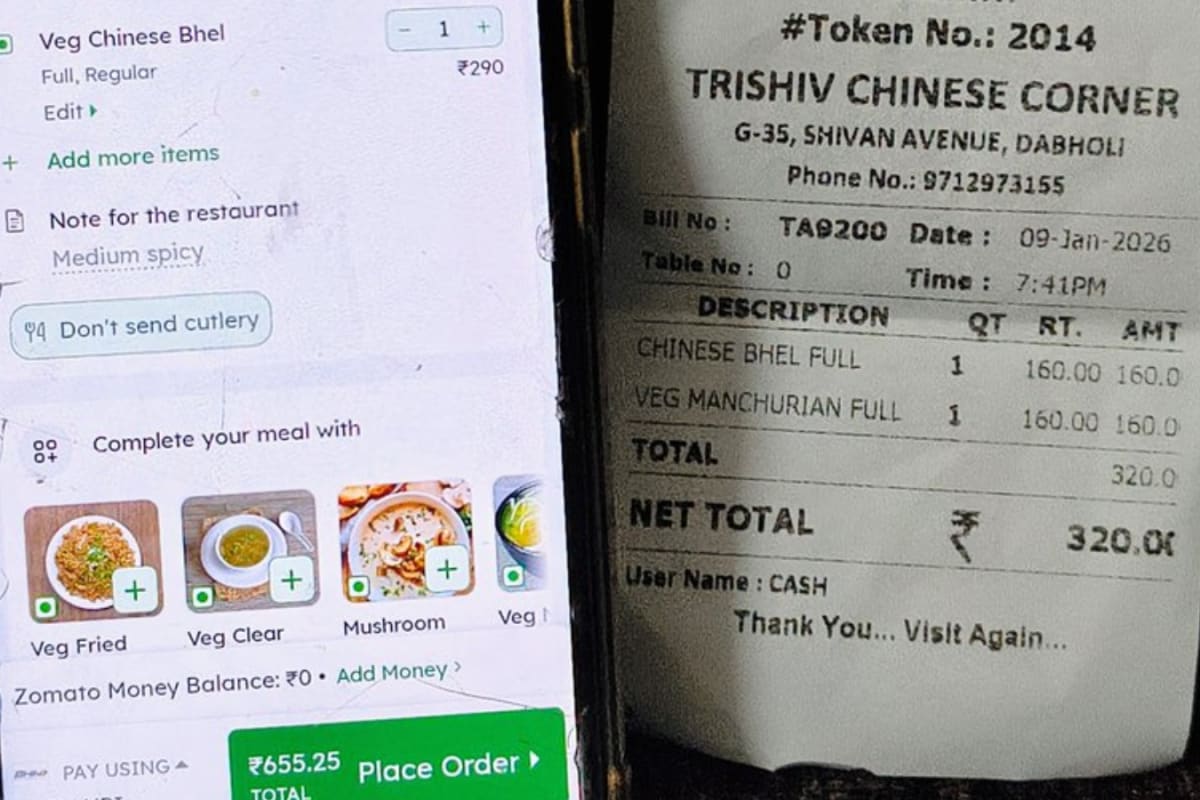
A woman's viral social media post highlighted a significant price discrepancy on Zomato, where a ₹320 offline order appeared as ₹655 before discounts. Zomato responded, stating restaurants set prices, reigniting public debate on food delivery charges in India.
Customer flags ₹320 order priced at ₹655 on Zomato.
Woman shared screenshots comparing offline and app prices.
Zomato attributes pricing to restaurant partners as intermediary.
Incident fuels ongoing debate on food delivery costs in India.
Similar price discrepancies reported by other users previously.
Competition Commission of India (CCI) has investigated Zomato's practices.
The Hindustan Times reported a recent incident where Nalini Unagar, a social media user, brought to light a significant price disparity on the food delivery platform Zomato. She shared screenshots indicating that a food order costing ₹320 when purchased directly from a Chinese food outlet was listed at ₹655 on the Zomato app before any discounts were applied. Even after availing discounts, the final amount she had to pay was ₹550, leading her to assert that customers were being "blatantly overcharged".
This viral post quickly garnered considerable attention across social media platforms, sparking extensive debate among Indian internet users regarding the fairness and transparency of online food delivery pricing. In response to the outcry, the official Zomato Care handle issued a clarification, stating that the prices displayed on its platform are solely determined by its restaurant partners. Zomato emphasized its role as an intermediary between customers and restaurants and committed to relaying Unagar's feedback to the specific restaurant partner for review.
This incident is not an isolated one, as consumer complaints about price discrepancies between offline restaurant menus and online food delivery platforms have been a recurring issue in India. Past instances, highlighted by other users such as Rahul Kabra and Kannan, have also triggered similar public discussions and responses from the food delivery giant. These price differences are often attributed to various factors including platform fees, delivery charges, packaging costs, Goods and Services Tax (GST), and restaurants strategically increasing prices on the app to compensate for commissions charged by aggregators like Zomato and Swiggy. The Competition Commission of India (CCI) has previously scrutinized Zomato and Swiggy for alleged anti-competitive practices, specifically concerning "exorbitant commission" rates imposed on restaurant partners. Although a specific complaint regarding Zomato's pricing policy was dismissed by the CCI in March 2025, a broader investigation into anti-competitive conduct by both major food delivery apps, initiated in April 2022, remains ongoing. This latest viral post reinforces ongoing consumer concerns about transparency in online food delivery pricing in India.
Read the full story on Quick Digest