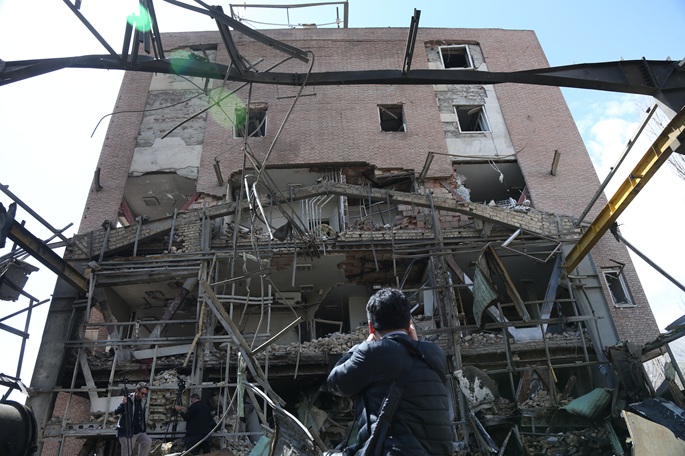
Iran Drone Strikes Hit Kuwait Oil, Energy Infrastructure
Iranian drone attacks on April 5, 2026, caused severe damage and fires at Kuwait's Shuwaikh oil complex, other energy facilities, and government buildings. No casualties were reported in Kuwait, but the attacks, part of broader regional escalation, disrupted oil exports and power generation.
Key Highlights
- Iranian drones attacked Kuwaiti oil, power, and government sites on April 5, 2026.
- Fires erupted at the Shuwaikh oil complex and other energy facilities.
- Severe material damage was reported, and power units were shut down.
- No casualties occurred in Kuwait; emergency teams contained the blazes.
- Iran's IRGC claimed responsibility amid a broader US-Israel-Iran conflict.
- Attacks extended to energy infrastructure in UAE and Bahrain, impacting regional stability.
A series of Iranian drone attacks on Sunday, April 5, 2026, caused significant damage and sparked fires at critical oil and energy infrastructure across Kuwait, along with similar incidents reported in the United Arab Emirates (UAE) and Bahrain. This wave of assaults marks a serious escalation in the ongoing regional conflict involving Iran, the United States, and Israel, which reportedly began in late February.
In Kuwait, the primary target of the drone strikes included the strategically important Shuwaikh oil sector complex, which notably houses the headquarters of the Kuwait Petroleum Corporation (KPC) and the oil ministry. State energy company Kuwait Petroleum Corporation confirmed that several of its operational facilities, including those belonging to its subsidiaries Kuwait National Petroleum Company (KNPC) and Petrochemical Industries Company (PIC), were also hit. The attacks resulted in widespread fires and "severe material damage" across these sites.
Beyond the oil sector, Kuwait's vital electricity and water infrastructure also came under direct attack. Two power and water desalination plants were targeted by Iranian drones, sustaining "significant material damage" and leading to the shutdown of two electricity generation units. Additionally, a government ministries complex in Kuwait City was struck, causing considerable material damage.
Crucially, Kuwaiti authorities confirmed that despite the extent of the damage, no human casualties were reported in any of the incidents within Kuwait. Emergency and firefighting teams from the affected companies, supported by the Kuwait Fire Force, were immediately deployed. They successfully implemented approved response plans to contain the fires and prevent their spread to other facilities. Kuwait Petroleum Corporation emphasized that all necessary precautionary measures were taken to ensure the safety of personnel and secure the facilities, and that damage assessments are ongoing in coordination with relevant authorities.
Iran's Islamic Revolutionary Guard Corps (IRGC) explicitly claimed responsibility for these attacks, stating it targeted petrochemical plants in Kuwait, as well as the UAE and Bahrain. These actions are portrayed by Tehran as retaliation for previous strikes by the US and Israel on Iranian petrochemical plants, which reportedly began on February 28. Kuwait has faced repeated drone and missile strikes since the onset of this broader conflict, with its air defenses engaging numerous hostile projectiles.
The regional implications of these attacks are significant. In the UAE, emergency crews responded to "multiple fires" at the Borouge petrochemicals plant in the Ruwais industrial complex in Abu Dhabi, caused by falling debris following successful interceptions by air defense systems. Operations at the facility were immediately suspended. Furthermore, the Habshan complex in Abu Dhabi was also hit by debris from an intercepted attack, which tragically killed one Egyptian citizen and caused damage to certain facilities. In Bahrain, Bapco Energies confirmed a fire at one of its storage facilities following an Iranian drone attack, which was subsequently extinguished with no injuries reported.
The ongoing conflict and the targeting of energy infrastructure have led to significant concerns about oil supplies and regional stability. Kuwait's oil exports have been halted amidst an effective blockade of the Strait of Hormuz, with production reduced to domestic needs due to a force majeure and storage constraints. This situation has contributed to volatility in global oil markets, driving energy prices higher. The recurrence of such attacks highlights the evolving nature of threats to critical infrastructure and the urgent need for enhanced defense mechanisms against unmanned aerial systems in the region.
For an Indian audience, these developments are of high importance due to India's significant reliance on Middle Eastern oil imports. Disruptions to oil production and shipping routes, particularly the Strait of Hormuz, directly impact India's energy security, crude oil prices, and overall economic stability. The escalating tensions in the Gulf also pose risks to the large Indian diaspora working in the region.
Frequently Asked Questions
What facilities in Kuwait were targeted by the drone attacks?
Iranian drone attacks primarily targeted Kuwait's Shuwaikh oil sector complex, which houses the Kuwait Petroleum Corporation (KPC) headquarters and the oil ministry. Other operational facilities of Kuwait National Petroleum Company (KNPC) and Petrochemical Industries Company (PIC) were also hit, along with two power and water desalination plants and a government ministries complex in Kuwait City.
Who is responsible for the drone attacks on Kuwaiti infrastructure?
Iran's Islamic Revolutionary Guard Corps (IRGC) has claimed responsibility for the drone attacks that struck Kuwaiti, Emirati, and Bahraini energy infrastructure. These attacks are reportedly a retaliation for previous US and Israeli strikes on Iranian facilities.
What was the extent of the damage and were there any casualties?
The drone attacks caused fires and 'severe material damage' to Kuwaiti oil, power, and government facilities. Two power generation units were shut down. However, Kuwaiti authorities confirmed that no human casualties were reported in any of the incidents within Kuwait.
How do these attacks impact global oil markets and India?
The attacks have contributed to increased volatility in global oil markets and threaten to disrupt oil supplies, especially with an effective blockade of the Strait of Hormuz. For India, a major oil importer, these disruptions directly impact energy security, crude oil prices, and economic stability, making the situation highly relevant.
Are these attacks isolated incidents or part of a larger conflict?
These drone attacks are part of a broader and escalating regional conflict that began around February 28, involving Iran, the United States, and Israel. Gulf countries, including Kuwait, have faced repeated drone and missile strikes since the onset of this conflict.