ESA's Sentinel-2A Tests Night Imaging for Future Earth Observation | Quick Digest
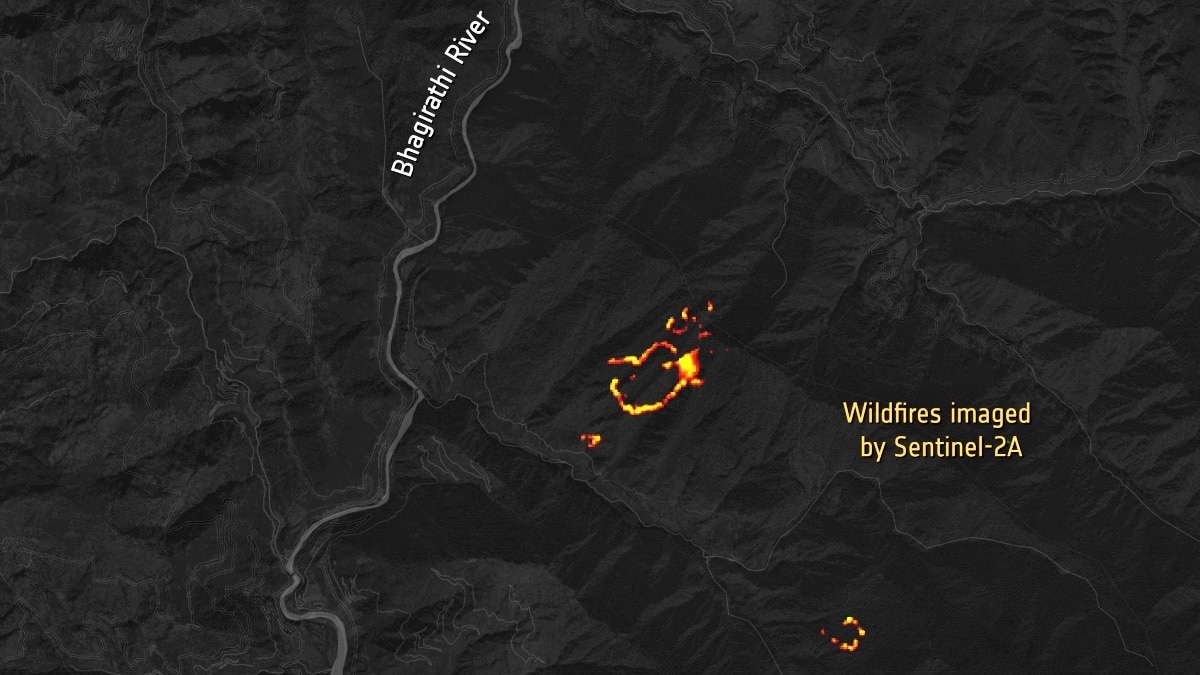
The European Space Agency (ESA) is experimentally testing its aging Sentinel-2A satellite for night-time imaging, yielding positive results. This initiative aims to inform the development of the next-generation Sentinel-2 mission, which will feature dedicated night vision capabilities. The trials successfully captured city lights, gas flares, and even a wildfire in India at night.
ESA is pushing Sentinel-2A beyond its original daytime imaging remit.
Night-time imaging trials on Sentinel-2A have yielded positive results.
This experiment will inform the design of the next-generation Sentinel-2 mission.
Sentinel-2A detected city lights, gas flares, and a wildfire in India at night.
The current Sentinel-2 satellites were not designed for systematic night imaging.
New capabilities are crucial for security, urban growth, and disaster monitoring.
The European Space Agency (ESA) has announced groundbreaking experimental trials with its Sentinel-2A satellite, pushing the decade-old spacecraft beyond its initial operational scope to explore night-time imaging capabilities. Although the current generation of Sentinel-2 satellites was not designed for systematic night vision, these recent tests have yielded strikingly positive results, providing crucial insights for the development of the future Copernicus Sentinel-2 Next Generation mission.
During these trials, Sentinel-2A successfully captured images of various nocturnal targets, demonstrating its unexpected potential. Notable achievements include the detection of bright gas flares from oil production in the Middle East, the subtle characteristics of a wildfire in India, and the lights of fishing boats off the coast of South Korea.
The Sentinel-2 mission, a cornerstone of the European Union's Copernicus Earth observation program, traditionally provides high-resolution, multispectral optical images relying on reflected sunlight. However, as Sentinel-2A approaches the end of its operational life, ESA engineers and scientists are leveraging its remaining time in orbit to test innovative ideas for future missions.
The findings from these night-time acquisitions are vital for establishing key features and assessing the technical feasibility of dedicated night imaging for the Sentinel-2 Next Generation. Such capabilities promise to contribute significant amounts of useful information for a range of applications, including security, monitoring urban growth through city lights, and enhanced disaster management. This initiative marks a significant step towards expanding Earth observation during periods of darkness, offering a new perspective on global changes and human activities.
Read the full story on Quick Digest