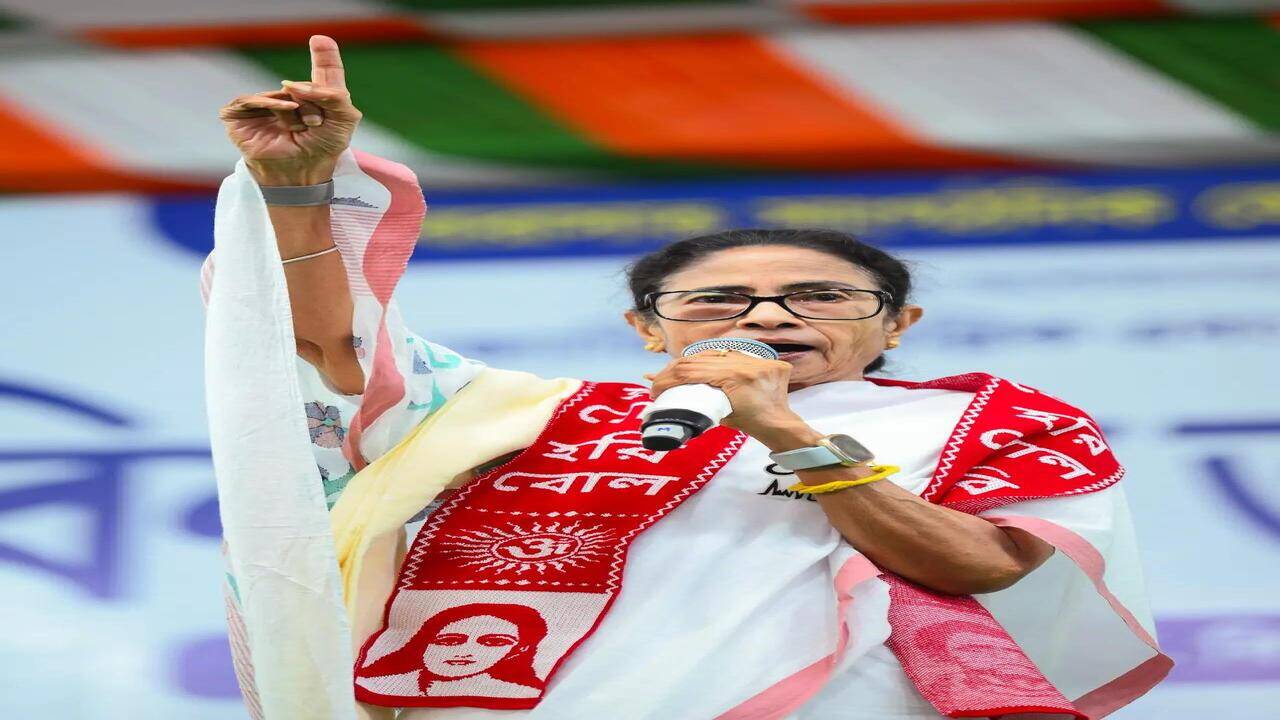
EC Issues Stern Warning to TMC Ahead of West Bengal Polls
The Election Commission has issued a strong warning to the Trinamool Congress, asserting that upcoming West Bengal elections will be free from fear and violence. This follows a tense meeting where the TMC accused the EC of bias regarding voter roll revisions and officer transfers.
Key Highlights
- EC issued a 'no-nonsense warning' to TMC for free and fair polls.
- Tense meeting saw TMC allege CEC told them to 'get lost'.
- EC denied TMC claims, accused leaders of shouting during meeting.
- Poll body to deploy 3,000 more armed personnel from other states.
- Tensions fueled by voter roll revisions and official transfers.
- West Bengal elections scheduled for April 23 and 29, results on May 4.
The Election Commission of India (ECI) has issued a stern and explicit warning to the ruling Trinamool Congress (TMC) in West Bengal, declaring that the upcoming Assembly elections will be conducted free from "fear, violence, intimidation, inducement, raids, booth jamming, and source jamming." This strong admonition, described as a "no-nonsense warning" and "straight-talk" by the EC, underscores the poll body's commitment to ensuring electoral integrity in a state with a history of political unrest during elections.
The heightened tensions between the ECI and the TMC culminated in a heated meeting on April 8, 2026, between a delegation from the Trinamool Congress and the Election Commission. Accounts from the meeting diverged sharply, with TMC leaders, including MP Derek O'Brien, alleging that Chief Election Commissioner Gyanesh Kumar told them to "get lost" within minutes of the interaction. O'Brien publicly challenged the EC to release audio or video recordings of the meeting to corroborate his claims. Conversely, sources within the Election Commission denied O'Brien's allegations, accusing him and other TMC leaders of raising their voices and engaging in "indecent behaviour." The EC asserted that CEC Gyanesh Kumar had to intervene to restore decorum.
A primary point of contention fueling this standoff is the Special Intensive Revision (SIR) of electoral rolls in West Bengal. The TMC has vociferously accused the ECI of acting with bias in favour of the opposition Bharatiya Janata Party (BJP) by allegedly facilitating the removal of legitimate voters from the electoral lists. TMC leaders claimed that out of 60 lakh voters placed under adjudication, approximately 27 lakh names were removed, expressing concerns about the transparency and fairness of this process.
Further escalating the dispute, the TMC also raised objections regarding the ECI's decision to transfer 483 officials in West Bengal ahead of the polls, a significantly higher number compared to other states undergoing elections. The ruling party viewed these transfers as a "power grab" and alleged that some poll officials had documented links with the BJP. In response, the Election Commission maintained that these transfers were necessary to ensure free and fair elections and to prevent a recurrence of the post-poll violence witnessed during the 2021 Assembly elections.
In a clear demonstration of its resolve to ensure peaceful polling, the ECI has announced the deployment of an additional 3,000 armed police personnel from other states, specifically Uttar Pradesh, Bihar, and Madhya Pradesh. These personnel are scheduled to begin arriving in West Bengal from April 13, in a phased manner, to supplement the already substantial presence of 2,400 companies of central forces planned for deployment across the state. This significant reinforcement of security forces is intended to bolster election security and maintain law and order, particularly given the sensitive nature of elections in West Bengal.
The West Bengal Assembly elections are scheduled to be held in two phases: April 23 and April 29, 2026. The counting of votes and declaration of results will take place on May 4, 2026. The unfolding events highlight the intense political climate and the critical role of the Election Commission in upholding democratic processes amidst accusations and counter-accusations from key political players.
This news is highly relevant for an Indian audience, particularly those in West Bengal, as it directly impacts the democratic process, electoral fairness, and the political landscape of a major state. The issues of electoral roll accuracy, administrative transfers, and the deployment of security forces are central to ensuring credible elections and resonate deeply with citizens concerned about the integrity of the voting process.
Frequently Asked Questions
What is the Election Commission's main warning to the Trinamool Congress?
The Election Commission has issued a "no-nonsense warning" to the Trinamool Congress, stating that the upcoming West Bengal elections will be free from fear, violence, intimidation, inducement, raids, booth jamming, and source jamming.
What transpired during the meeting between the TMC delegation and the Election Commission?
The meeting turned tense, with TMC leaders alleging that Chief Election Commissioner Gyanesh Kumar told them to 'get lost.' However, the EC denied this, accusing TMC leaders of shouting and maintaining that the CEC had to ask them to maintain decorum.
Why are there tensions regarding electoral rolls and officer transfers?
Tensions stem from the Special Intensive Revision of electoral rolls, with the TMC alleging that the EC is unfairly removing voters in favor of the BJP. The TMC also opposes the EC's transfer of 483 officials, while the EC states these are necessary for free and fair elections and to prevent post-poll violence.
What security measures is the Election Commission taking for the Bengal polls?
The Election Commission is deploying an additional 3,000 armed police personnel from other states like Uttar Pradesh, Bihar, and Madhya Pradesh, supplementing the existing 2,400 companies of central forces already planned for West Bengal.
When are the West Bengal Assembly elections scheduled?
The West Bengal Assembly elections are scheduled to be held in two phases on April 23 and April 29, 2026, with the results to be announced on May 4, 2026.