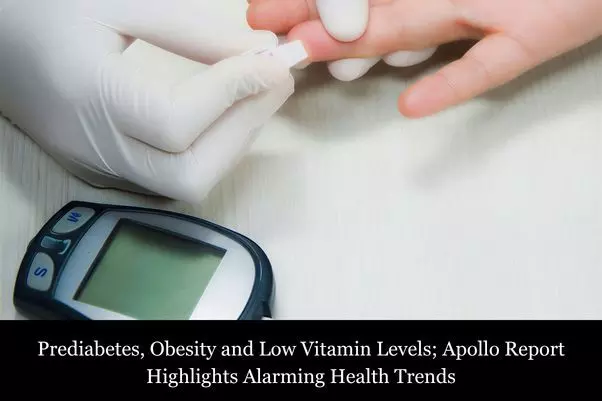
Apollo Report: Most Indians Over 40 Not Disease-Free
Apollo Hospitals' 'Health of the Nation 2026' report reveals alarming health trends in India, with a significant decline in the number of disease-free individuals by age 40. The report, based on over three million health assessments, highlights the early onset and hidden nature of non-communicable diseases (NCDs), impacting a vast majority of the young and working-age population. Key findings include widespread obesity, prediabetes, and deficiencies in vital nutrients, underscoring the urgent need for preventive healthcare.
Key Highlights
- Majority of Indians are not disease-free by age 40.
- Health risks like obesity and prediabetes emerge earlier.
- Vitamin deficiencies (D & B12) are prevalent among young adults.
- Hidden diseases like fatty liver are common.
- Preventive healthcare and early intervention are crucial.
The 'Health of the Nation 2026' report by Apollo Hospitals presents a stark picture of India's current health landscape, indicating a rapid and silent shift towards non-communicable diseases (NCDs). Released on World Health Day, the report, which analyzed over three million preventive health assessments conducted across Apollo's network in 2025, reveals that health risks are emerging earlier in life and often remain undetected.
A particularly concerning finding is the sharp decline in the number of disease-free individuals. By the age of 30, only one in four Indians remains disease-free, a figure that plummets to a mere 7% by the age of 40. This indicates that the steepest health decline in India is occurring in early adulthood. The report highlights that in the working population, with an average age of 38, nearly half have prediabetes or diabetes, and a staggering eight in ten are overweight.
Young adults are not spared from these alarming trends. Two in three young adults are already at risk for NCDs. Specifically, among individuals under 30, one in five is prediabetic. The report emphasizes that timely intervention can lead to significant improvements, with 28% of those who took corrective action reversing prediabetes to normal levels, compared to only 7% among those over 50.
Beyond blood sugar issues, the report reveals widespread nutritional deficiencies and metabolic concerns. More than half of those under 30 are obese, and over half have abnormal cholesterol levels. Vitamin deficiencies are also highly prevalent, with nearly 70% of younger adults deficient in Vitamin D and close to half having low Vitamin B12 levels. Furthermore, nearly two-thirds of under-30s assessed showed poor flexibility, strength, or balance, which are markers of declining physical function linked to increased risk of cardiovascular issues, falls, and a shorter lifespan.
The report also sheds light on the limitations of traditional diagnostic methods. It found that 74% of individuals with fatty liver, confirmed by ultrasound, had normal liver enzyme levels. Similarly, 45% of asymptomatic individuals undergoing coronary calcium scoring showed early signs of atherosclerosis. These findings underscore the importance of advanced diagnostics and imaging beyond routine blood tests for early detection.
Women's health is highlighted as a critical theme, with distinct risks such as anemia, central obesity, and earlier onset of breast cancer. The average age of breast cancer detection in India is 51, nearly a decade earlier than in Western populations, suggesting the need for earlier screening.
The 'Health of the Nation 2026' report strongly advocates for a shift from symptom-led healthcare to a predictive, personalized, and continuous care model. It emphasizes that early, continuous action and regular health check-ups are crucial for detecting diseases at their earliest, most treatable stages. The findings from this comprehensive report serve as a wake-up call, urging individuals and healthcare providers in India to prioritize preventive health measures to combat the growing burden of NCDs.
Frequently Asked Questions
What is the 'Health of the Nation 2026' report?
The 'Health of the Nation 2026' is the sixth edition of a report by Apollo Hospitals, based on over three million preventive health assessments conducted across India in 2025. It highlights alarming trends in the health of Indians, particularly the early onset and hidden nature of non-communicable diseases (NCDs).
What percentage of Indians are disease-free by age 40, according to the report?
According to the Apollo 'Health of the Nation 2026' report, only about 7% of Indians remain disease-free by the age of 40, indicating a steep decline in health during early adulthood.
What are the major health risks identified in young adults and the working population in India?
The report indicates that two in three young adults are at risk for NCDs. In the working population (average age 38), nearly half have prediabetes or diabetes, and eight in ten are overweight. Widespread issues include vitamin deficiencies (D and B12), obesity, and abnormal cholesterol levels.
Why is preventive healthcare emphasized in the report?
The report emphasizes preventive healthcare because many health risks and diseases, such as fatty liver and early signs of heart disease, are emerging earlier and remaining hidden without obvious symptoms. Early detection through regular check-ups and proactive interventions are crucial for better health outcomes and preventing the progression of chronic illnesses.