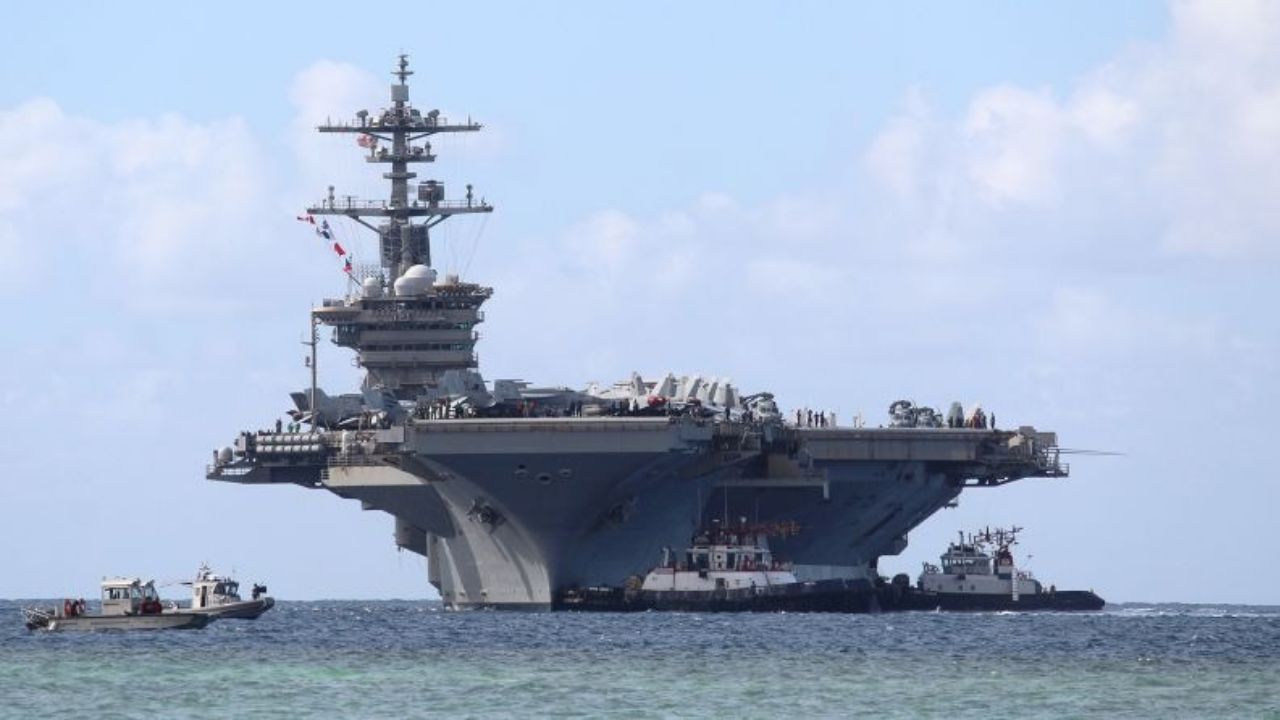
US deploys USS George Washington to replace USS Lincoln amid crew crisis
The U.S. Navy is deploying the USS George Washington to the Middle East to relieve the USS Abraham Lincoln, which has been on an extended deployment of over 260 days. Reports indicate a mental health crisis among the Lincoln's crew due to prolonged sea duty, poor living conditions, and extended missions related to the conflict with Iran. Defense Secretary Pete Hegseth has downplayed some of the concerns, labeling them as misrepresented.
Key Highlights
- USS George Washington is en route to replace USS Abraham Lincoln in the Middle East.
- Lincoln's crew faces a mental health crisis after over 260 days at sea.
- Extended deployment is linked to poor living conditions and combat operations against Iran.
- Defense Secretary Hegseth disputes some of the reported issues as misrepresented.
- Lawmakers are demanding accountability from the Navy regarding crew welfare.
- The US is maintaining its naval posture around Iran with carrier rotations.
Amidst escalating geopolitical tensions and ongoing military operations in the Middle East, the United States Navy is undertaking a significant carrier deployment shift. The USS George Washington, currently based in Japan, is en route to the Middle East to relieve the USS Abraham Lincoln. This move comes as reports surface detailing a severe mental health crisis and deteriorating living conditions aboard the USS Abraham Lincoln, which has been on an exceptionally prolonged deployment.
The USS Abraham Lincoln's deployment, initially planned for a standard duration, has been extended multiple times due to the ongoing conflict with Iran, which began on February 28, 2026. As of mid-August 2026, the carrier and its approximately 5,000 sailors and Marines have been at sea for over 260 consecutive days, with some reports indicating as many as 250-265 days without making port. This extended period at sea, coupled with continuous combat operations and operational tempo, has reportedly taken a significant toll on the crew's mental and physical well-being.
Reports from military publications such as Navy Times and Stars and Stripes, citing interviews with sailors' families and crew members, allege a worsening mental health crisis onboard. These reports include accounts of multiple sailors attempting to go overboard, with some incidents reportedly being thwarted by fellow crew members. Families have expressed deep concerns during town hall meetings with Navy leadership, including acting Navy Secretary Hung Cao, describing issues such as severe burnout, suicidal thoughts, flagging morale, exhaustion, and feelings of hopelessness. Some family members have stated that their loved ones have expressed thoughts of not wanting to wake up, or even considering jumping off the ship as a means of relief from the extreme strain.
In addition to mental health concerns, reports have also highlighted significant quality-of-life issues aboard the USS Abraham Lincoln. These include descriptions of moldy showers, broken plumbing and toilets, prolonged laundry outages, lack of hot water, rationed or poor-quality food, and shortages of essential supplies like hygiene products. The Navy has acknowledged that the war disrupted traditional supply hubs in the Middle East, leading to challenges in delivering food, hygiene items, and mail. However, the Navy has also stated that critical supplies like clean water and healthy meals are available.
U.S. Secretary of Defense Pete Hegseth has publicly downplayed some of the reports, characterizing them as "completely misrepresented" and "more fake news." He has stated that the Navy has "not identified" an increase in reported suicidal ideation or suicide attempts aboard the ship, though the Navy has declined to provide specific data due to operational security and patient privacy concerns. Despite these assertions, lawmakers, including Senators Richard Blumenthal and Jason Crow, have voiced serious concerns and are demanding accountability from the Pentagon regarding the crew's welfare and the conditions on the carrier.
The deployment of the USS George Washington from its forward-deployed base in Yokosuka, Japan, to the Middle East is being framed by some officials as part of a planned rotation to sustain naval operations and deterrence in the region, rather than solely a response to the issues on the Lincoln. The USS George Washington's transit through the Singapore Strait and Strait of Malacca signifies its movement towards the U.S. Fifth Fleet's area of responsibility. This carrier swap ensures the continued presence of U.S. airpower in the Middle East, particularly around the Strait of Hormuz, while also addressing the operational demands of sustained combat missions.
This situation underscores the immense pressure on naval forces engaged in prolonged combat operations. The extended deployments, combined with the challenging operational environment, raise critical questions about personnel welfare, the sustainability of such missions, and the Navy's capacity to manage the physical and psychological impacts on its sailors. The reports also highlight a broader systemic issue within the military regarding the challenges of maintaining crew well-being during extended deployments in high-threat environments.
Prior to this, the USS Gerald R. Ford had also completed a record-breaking deployment in the Middle East, which included operational support for the conflict with Iran and other missions. The Ford's deployment was also marked by operational challenges, including a fire in a laundry space that required repairs.
The Times of India article accurately reflects the core of these unfolding events, reporting on the U.S. decision to dispatch a new carrier to the Middle East in light of the reported issues with the USS Abraham Lincoln. The headline's emphasis on the "mental health crisis" is a significant and verifiable aspect of the story, supported by multiple credible sources. The article serves to inform the Indian audience about a critical U.S. military operation and its associated human element, providing context for regional security dynamics.
Frequently Asked Questions
Why is the USS George Washington being sent to the Middle East?
The USS George Washington is being deployed to the Middle East to replace the USS Abraham Lincoln, which has been on an extended deployment for over 260 days. This replacement is part of ongoing naval operations and deterrence efforts in the region.
What are the reported issues aboard the USS Abraham Lincoln?
Reports indicate a mental health crisis among the USS Abraham Lincoln's crew, stemming from an exceptionally long deployment. Issues include severe burnout, potential suicidal ideation, poor living conditions, and supply shortages.
How long has the USS Abraham Lincoln been deployed?
The USS Abraham Lincoln has been deployed for more than 260 consecutive days, exceeding typical deployment lengths and setting a modern-era record for a U.S. aircraft carrier. Its deployment has been extended multiple times due to ongoing military operations.
What has the U.S. Defense Secretary said about the situation?
Defense Secretary Pete Hegseth has downplayed some of the reports concerning the USS Abraham Lincoln's conditions, calling them 'completely misrepresented' and 'more fake news.' He stated that the Navy has not identified an increase in suicidal ideation or attempts on the ship.
Are lawmakers concerned about the situation?
Yes, several U.S. lawmakers have expressed serious concern over the reported conditions and mental health issues aboard the USS Abraham Lincoln, demanding accountability from the Navy and the Pentagon regarding crew welfare.