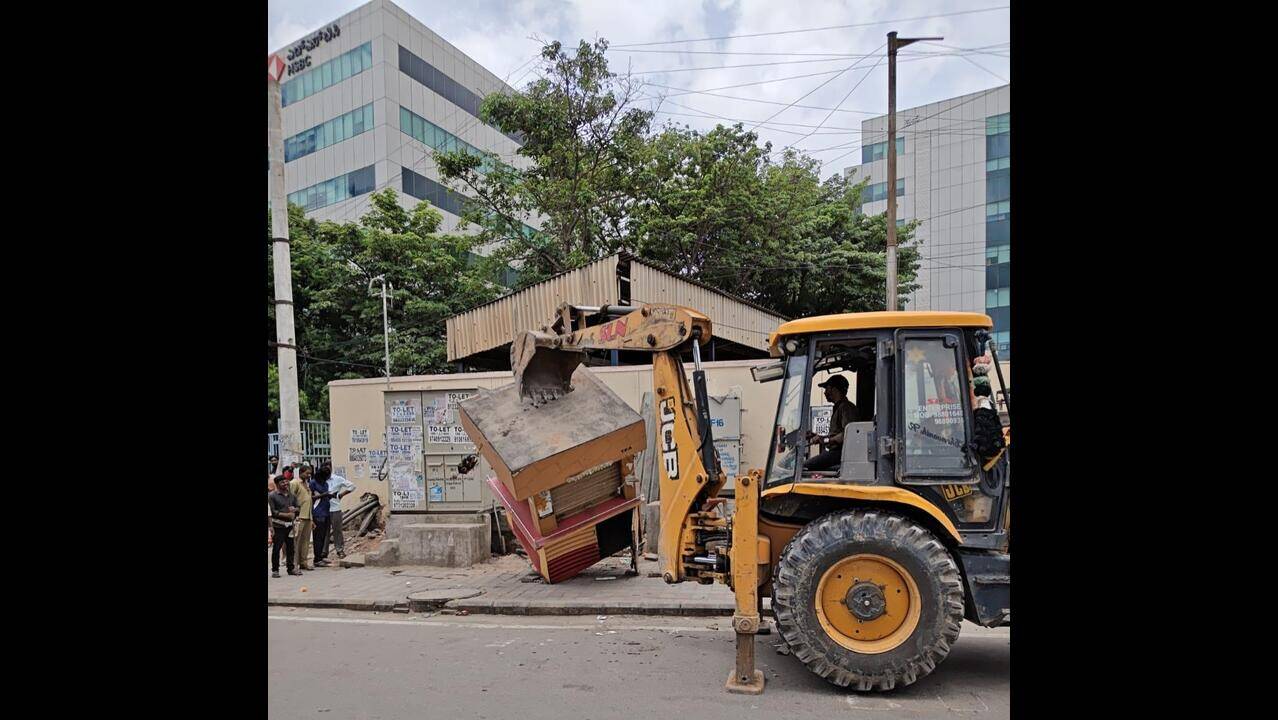
Bengaluru Street Vendors Protest Evictions Amidst 'Safe Footpath' Drive
Street vendors in Bengaluru staged massive protests and a bandh against the Greater Bengaluru Authority's 'Safe Footpath Campaign', alleging illegal evictions and violation of the Street Vendors Act, 2014. The drive aims to clear footpaths for pedestrians, but vendors assert it threatens their livelihoods without proper rehabilitation or due process.
Key Highlights
- Thousands of street vendors protested GBA's 'Safe Footpath Campaign'.
- Vendors held a city-wide bandh on July 8, 2026, demanding halt to evictions.
- Protests cite violations of the Street Vendors Act, 2014, regarding notices and rehabilitation.
- The campaign targets 1,500-2,000 km of roads for pedestrian safety.
- Demands include halting evictions, return of seized goods, and proper Act implementation.
- A delegation met GBA officials, who promised discussions with the Minister.
Thousands of street vendors across Bengaluru organized a massive protest and a city-wide bandh (shutdown) on Wednesday, July 8, 2026, to voice their strong opposition against the Greater Bengaluru Authority's (GBA) ongoing 'Safe Footpath Campaign'. The demonstration, primarily held at Freedom Park, saw vendors from various parts of the city, including prominent markets like KR Market, Gandhi Bazaar, Malleshwaram, and Jayanagar, participate in large numbers, bringing vending activities to a halt in several areas.
The 'Safe Footpath Campaign', initiated by the GBA from July 1 to July 10, 2026, aims to reclaim approximately 1,500 to 2,000 km of arterial and sub-arterial roads by clearing encroachments to ensure safer and more accessible pathways for pedestrians. Karnataka Development Minister Krishna Byre Gowda has championed the drive, stating its objective is to make streets 'safer, more accessible and easier to navigate for every pedestrian'. The Minister also highlighted that the initiative aligns with a Supreme Court ruling emphasizing the fundamental right of citizens to walk on footpaths and aims to reduce pedestrian accidents, which account for a significant percentage of road fatalities in Bengaluru. A sum of ₹70 crore has reportedly been allocated for the repair and maintenance of existing footpaths.
However, street vendor unions, united under banners such as the Joint Action Committee of Street Vendors and Beedhi Vyaparigala Janti Horata Samiti, vehemently argue that the eviction drive is illegal and directly violates provisions of the Street Vendors (Protection of Livelihood and Regulation of Street Vending) Act, 2014. Vendors allege that authorities have carried out evictions without issuing the mandatory 30-day prior notice, failing to provide alternative vending spaces, or referring disputes to the statutory Town Vending Committees (TVCs) as required by the Act. Many also reported confiscation of their goods and vending equipment without proper receipts or compensation for damages, pushing them further into financial distress. For many, street vending is their sole source of income, crucial for supporting their families and covering essential expenses like rent, loans, and children's education.
During the protests, vendors raised slogans demanding an immediate halt to the 'illegal' evictions and called for the effective implementation of the 2014 Act. Their key demands included allowing evicted vendors to resume operations at their original locations, or providing suitable temporary vending spaces along the same roads where total removal is deemed necessary, until the TVCs make a final decision. They also sought the immediate return of seized goods, compensation for any damaged merchandise, and a fresh, comprehensive survey of street vendors, followed by the issuance of identity cards to all eligible vendors. Furthermore, they appealed for the constitution and strengthening of TVCs with genuine representation from vendors, and for footpath designs that can accommodate both pedestrians and street vendors. The unions also highlighted that encroachments by illegal parking, commercial establishments, private gardens, and construction debris are significant contributors to footpath obstruction, not just street vendors.
Following the protest, a delegation of street vendor representatives met with Greater Bengaluru Authority Chief Commissioner M Maheshwar Rao and submitted a memorandum outlining their demands. Rao reportedly assured them that he would consult with Bengaluru Development Minister Krishna Byre Gowda and convene a formal meeting with vendor representatives in the coming days to discuss their grievances.
The context of footpath improvement in Bengaluru also involves figures like Arun Pai, often referred to as the 'Footpath Mayor', known for his civic action and advocacy for walkability. While his work aligns with the broader goal of clear footpaths, he is not directly involved in organizing these specific protests against vendor evictions. His efforts contribute to the public discourse around urban infrastructure and pedestrian rights.
In a related development, some vendors in Malleswaram, particularly from Sampige Road, have reportedly been asked by unaffiliated unions to contribute Rs 5,000 each to fund legal action against the ongoing clearance drive, indicating a potential legal challenge to the evictions. This highlights the ongoing tension and the vendors' determination to protect their livelihoods through various means. The ongoing campaign has sparked a wider debate in Bengaluru regarding public space management, urban planning, and balancing the needs of pedestrians with the livelihoods of thousands of street vendors.
Frequently Asked Questions
What is the 'Safe Footpath Campaign' in Bengaluru?
The 'Safe Footpath Campaign' is an initiative by the Greater Bengaluru Authority (GBA), launched in July 2026, to clear encroachments from approximately 1,500 to 2,000 km of arterial and sub-arterial roads. Its primary goal is to ensure safer, obstruction-free pedestrian movement in the city and reduce road accidents involving pedestrians.
Why are street vendors protesting the campaign?
Street vendors are protesting the campaign because they allege that the eviction drives are illegal and violate the Street Vendors (Protection of Livelihood and Regulation of Street Vending) Act, 2014. They claim evictions are carried out without proper notice, alternative vending spaces, or adherence to the Town Vending Committee (TVC) procedures, leading to a loss of their livelihoods.
What are the key demands of the protesting street vendors?
The protesting street vendors demand an immediate halt to the eviction drive, reinstatement to their original vending spots or provision of temporary alternative locations, return of seized goods and compensation for damages, a comprehensive survey of vendors, issuance of identity cards, and full implementation of the Street Vendors Act, 2014, including strengthening TVCs.
What is the government's stance on the eviction drive?
The Karnataka government, led by Development Minister Krishna Byre Gowda, maintains that the drive is essential for public safety and to reclaim public spaces for pedestrians, citing Supreme Court directives. While acknowledging the need to balance livelihoods, the government aims to relocate registered vendors rather than evict them permanently from major roads.
When did the protest and bandh take place?
The major protest and city-wide bandh by street vendors in Bengaluru took place on Wednesday, July 8, 2026, at Freedom Park and various markets across the city.