Yemen conflict escalates: Houthi attacks hit Saudi Arabia, oil prices surge
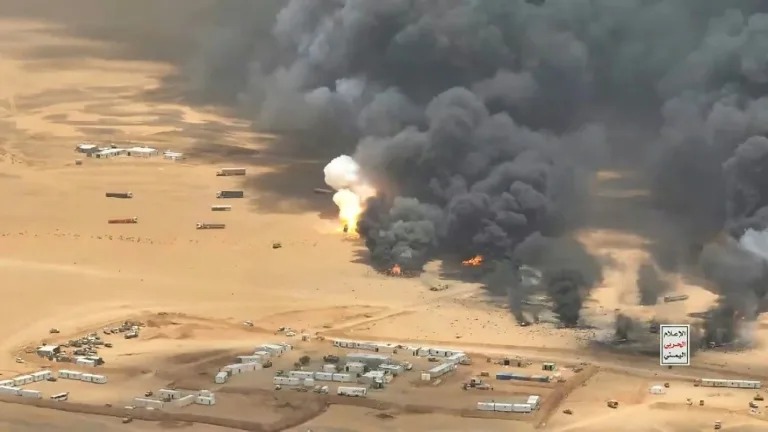
Yemen's Houthi rebels have launched a major offensive targeting several Saudi Arabian cities, including energy infrastructure, resulting in numerous civilian casualties. This escalation has caused oil prices to spike and raises concerns about regional stability and global energy supplies. The attacks are seen as a significant expansion of the conflict.
Key Highlights
- Houthis attacked four Saudi cities, wounding 73 civilians.
- Energy facilities were targeted, leading to temporary operational halts.
- Global oil prices surged, nearing $100 per barrel.
- This escalation risks widening the broader regional conflict.
- India has significant economic interests tied to this region's stability.
The long-standing conflict in Yemen has escalated significantly with coordinated attacks by the Iran-backed Houthi rebels on multiple cities across southern Saudi Arabia, including Khamis Mushait, Abha, Najran, and Jazan. These strikes, launched on Tuesday, September 8, 2026, targeted both civilian areas and critical energy infrastructure, resulting in at least 73 wounded civilians, including women and children. Several energy facilities were impacted, leading to temporary halts in operations, and the attacks caused fires at various sites.
This surge in violence has had immediate repercussions on the global market, with Brent crude oil prices approaching $100 a barrel, reaching their highest levels since July 24, 2026. The disruption to Saudi energy infrastructure, a key global supplier, has heightened concerns about the stability of energy supplies and could further exacerbate existing inflationary pressures. The attacks are also seen as a significant expansion of the conflict, potentially drawing in regional and international actors and complicating the broader geopolitical landscape in the Middle East.
The Houthi military spokesperson claimed responsibility for the attacks, stating they were a response to Saudi-led strikes on various Yemeni provinces, including Bayda, Hodeidah, Jawf, Marib, and Taiz. They vowed further "harsher and wider" strikes if the Saudi operations did not cease. Saudi Arabia's Foreign Minister warned that the kingdom "will not hesitate to defend ourselves" against these "provocations". The Saudi-led coalition condemned the attacks as a "dangerous escalation" and a "flagrant violation" of Saudi sovereign territory, vowing to take "necessary operational measures to deter the group, respond to the sources of the threats and neutralise the danger".
International condemnation followed swiftly, with several countries, including Egypt, Lebanon, Jordan, Kuwait, Qatar, and the UAE, denouncing the attacks. Pakistan, bound by a joint defense pact with Saudi Arabia, expressed "unwavering solidarity" and condemned the attacks for threatening innocent lives and regional peace and security.
The conflict in Yemen has a long history, with Houthi rebels battling a Saudi-led coalition since 2014. While a UN-brokered ceasefire in 2022 had brought a period of relative calm, recent weeks have seen a significant resurgence in fighting. The Houthis' actions, particularly their targeting of Red Sea shipping, are seen as a strategic move to pressure Saudi Arabia and influence global oil prices, leveraging their alliance with Iran.
For India, this escalation carries significant implications. Saudi Arabia is a major oil supplier to India, and disruptions to shipping routes, such as the Bab al-Mandeb Strait and the Red Sea, directly impact India's energy security and economic interests. The closure of these vital maritime corridors can lead to increased shipping costs and potential shortages. India, which maintains strategic ties with both Saudi Arabia and Iran, is closely monitoring the situation to navigate the complex geopolitical dynamics and protect its economic interests. The potential for the conflict to merge with the broader US-Iran confrontation also adds another layer of complexity for India's foreign policy in the region.
The news article, originally published by Al Jazeera, appears to be a factual report on the recent events, providing details on the attacks, casualties, political responses, and market impacts. The claims made in the article are corroborated by multiple other reputable news outlets, including The Hindu, Bloomberg, NDTV, CBC News, Forbes, and Channel 4 News, which report similar details regarding the Houthi attacks, civilian casualties, damage to oil facilities, and the subsequent rise in oil prices. The timeline of events suggests the article was published around September 8, 2026.
Frequently Asked Questions
What triggered the recent escalation in fighting between Saudi Arabia and the Houthis?
The Houthis launched coordinated attacks on several Saudi Arabian cities and energy facilities, claiming it was in response to Saudi-led strikes in Yemen. This has led to a significant increase in fighting.
What are the economic implications of these Houthi attacks?
The attacks have caused oil prices to surge, nearing $100 a barrel, due to concerns about disruptions to Saudi energy supplies. This can impact global markets and energy security.
What is the broader geopolitical context of this conflict?
The conflict is seen as part of the larger regional power struggle involving Iran and Saudi Arabia, with potential implications for the wider US-Iran confrontation and stability in the crucial Red Sea shipping lanes.