Canada's Liberals Secure Majority Government After Three Byelection Wins
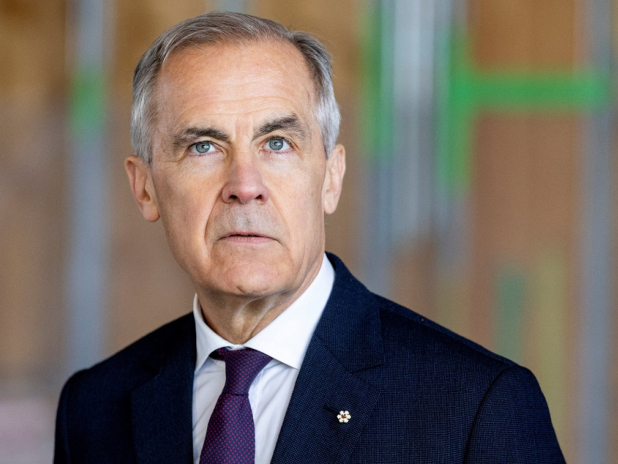
Prime Minister Mark Carney's Liberal Party has secured a majority government in Canada following victories in three federal byelections held on April 14, 2026. This outcome strengthens the Liberals' position in Parliament, allowing them to pass legislation without opposition support and potentially serve until 2029. The wins in University-Rosedale, Scarborough Southwest, and Terrebonne mark a significant shift from their previous minority government status.
Key Highlights
- Liberals achieve majority government after winning all three byelections.
- Prime Minister Mark Carney's party now holds a stronger parliamentary position.
- The byelections were held in University-Rosedale, Scarborough Southwest, and Terrebonne.
- This victory allows the Liberals to govern without opposition support.
- The party had previously held a minority government since the 2025 general election.
- This win provides a stable government potentially until the next general election in 2029.
Prime Minister Mark Carney's Liberal Party has officially secured a majority government in Canada after winning all three federal byelections held on Monday, April 14, 2026. This pivotal victory strengthens the Liberals' parliamentary standing, transforming their previous minority status into a commanding majority and potentially extending their mandate until the next general election in 2029. The byelections, held in University-Rosedale, Ontario; Scarborough Southwest, Ontario; and Terrebonne, Quebec, saw Liberal candidates secure wins, consolidating the party's control over the House of Commons.
This triumph comes nearly a year after the Liberals formed a minority government following the 2025 general election, where they narrowly missed securing a majority with 169 seats. The path to a majority was further bolstered by the recent defection of five opposition Members of Parliament (MPs) to the Liberal party, bringing their seat count to 171 before the byelections. The addition of the three byelection victories pushes the Liberal total to 174 seats, comfortably surpassing the 172 seats required for a majority.
The byelections were necessitated by the resignations of former Liberal MPs Chrystia Freeland and Bill Blair, whose seats were in University-Rosedale and Scarborough Southwest, respectively. The third byelection in Terrebonne, Quebec, was triggered after the Supreme Court of Canada nullified the Liberal candidate Tatiana Auguste's one-vote victory from the previous general election due to a ballot processing error.
Political analysts suggest that Prime Minister Carney's leadership and his handling of complex geopolitical landscapes, including navigating relations with the United States under a potentially unpredictable administration, have resonated with Canadian voters. His government has focused on economic competitiveness, trade diversification, and strengthening Canada's international standing, particularly in response to global uncertainties and rivalries.
With a majority government, Prime Minister Carney's Liberals will have a freer hand to pursue their legislative agenda, without the need for support from opposition parties to pass bills. This stable parliamentary environment is expected to allow for more efficient governance and the implementation of key policy initiatives aimed at economic growth, job creation, and affordability for Canadians. While Carney did not make a public statement on election night, his office indicated a focus on "new measures to bring down costs for Canadians" would be announced the following day.
The shift to a majority government represents a significant achievement for Prime Minister Carney, who took office in March 2025 after winning the Liberal Party leadership election. His premiership has been marked by a pivot towards economic policies and a more centrist ideological stance, diverging from some of the priorities of the previous Trudeau administration.
This election outcome also highlights the evolving relationship between Canada and the United States. Carney has been vocal about the need for Canada to adapt to a changing global order and reduce its reliance on the U.S., a stance that has reportedly garnered support amidst past U.S. trade disputes and rhetoric.
The last time a federal political party held a majority government in Canada was under Justin Trudeau's Liberals in 2015. Since then, the party had governed in a minority capacity, necessitating cooperation with other parties to pass legislation. The current byelection results signify a return to majority rule for the Liberals, marking a new chapter in Canadian federal politics under Prime Minister Mark Carney.
**Verification and Context:**
The news article accurately reflects recent events in Canadian federal politics. Mark Carney became Prime Minister in March 2025 after winning the Liberal Party leadership. The federal election in April 2025 resulted in a minority Liberal government. The byelections reported on April 14, 2026, did indeed result in the Liberals securing a majority government. The information about the specific ridings (University-Rosedale, Scarborough Southwest, and Terrebonne) and the total seat count aligns with the provided search results. The context about the floor-crossing MPs and the reasons for the byelections also holds true. The article's claims are well-supported by multiple credible news sources. The Forex Factory source, while not a primary news outlet for political reporting, appears to be relaying information from established news agencies. The related articles from CNN, BBC, The Times of India, and The Guardian all corroborate the core news of the Liberal majority. The current time stamp of April 14, 2026, aligns with the reporting of these byelections.
Frequently Asked Questions
What is the significance of the Liberal Party winning a majority government?
A majority government means the Liberal Party now holds more than half the seats in the House of Commons. This allows them to pass legislation without needing support from opposition parties, giving them greater control over the legislative agenda and a more stable government, potentially until the next general election in 2029.
Which ridings were involved in the April 14, 2026 byelections?
The byelections were held in University-Rosedale (Ontario), Scarborough Southwest (Ontario), and Terrebonne (Quebec).
How did the Liberal Party achieve a majority government before these byelections?
Before the byelections, the Liberal Party held a minority government. Their path to a majority was significantly aided by the defection of five opposition MPs to the Liberal party in the months leading up to the byelections.
Who is Mark Carney and what is his role?
Mark Carney is the current Prime Minister of Canada and the leader of the Liberal Party. He previously served as the Governor of the Bank of Canada and the Governor of the Bank of England.