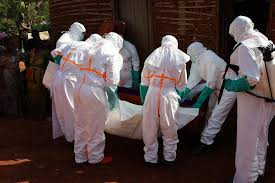
WHO: Ebola Outbreak in DRC Faces 'Catastrophic Collision' with Conflict
The World Health Organization (WHO) has warned of a 'catastrophic collision' between the Ebola outbreak in the Democratic Republic of Congo (DRC) and ongoing conflict, stating that insecurity is severely hampering containment efforts. The Bundibugyo strain of Ebola, for which there is no approved vaccine or treatment, is spreading in a volatile region, exacerbating humanitarian challenges and complicating the work of health professionals.
Key Highlights
- WHO warns of a 'catastrophic collision' between Ebola and conflict in DRC.
- Insecurity and attacks on health facilities hinder Ebola response efforts.
- The Bundibugyo strain of Ebola lacks approved vaccines or treatments.
- Uganda has closed its borders with DRC to contain the outbreak.
- Conflict drives displacement, worsening conditions for disease spread.
- International aid cuts have weakened the health system in eastern DRC.
The World Health Organization (WHO) has issued a stark warning about a "catastrophic collision" between the ongoing Ebola outbreak in the Democratic Republic of Congo (DRC) and the persistent conflict in the eastern part of the country. WHO Director-General Tedros Adhanom Ghebreyesus highlighted that the Ebola outbreak, specifically the Bundibugyo strain, is outpacing response efforts due to severe insecurity and attacks on health facilities in Ituri province and surrounding areas. This volatile environment makes it "nearly impossible" to trace cases and their contacts, a critical component of disease containment.
The Bundibugyo strain of Ebola, first identified in Uganda in 2007, presents a significant challenge as it currently has no approved vaccine or specific treatment. The WHO has recorded approximately 10 confirmed Ebola deaths and over 220 suspected deaths since mid-May, with more than 900 suspected cases reported. However, the true extent of the outbreak is believed to be wider, as experts suggest the virus may have been circulating for some time before detection.
Conflict in the eastern DRC, which has been plagued by armed groups for decades, is a major impediment to public health efforts. Clashes are driving mass displacement, pushing exposed populations into overcrowded camps and disrupting critical containment corridors. The insecurity also leads to a lack of humanitarian access, which Tedros stated is crucial for stopping the transmission of Ebola. Attacks on health facilities further compromise the ability of frontline workers to operate, making contact tracing and case isolation extremely difficult.
In response to the escalating situation, neighboring Uganda announced the closure of its borders with the DRC, allowing only essential personnel and cargo to cross under strict health screenings. Individuals returning from the DRC to Uganda are subject to a mandatory 21-day quarantine.
The International Rescue Committee (IRC) has warned that the outbreak is spreading faster than the response and that severe global aid cuts have weakened the already fragile health systems in eastern DRC. This situation is particularly concerning as the region was less prepared and had fewer resources to combat the current outbreak compared to the 2018-2020 epidemic, which claimed over 2,000 lives. The conflict not only complicates disease control but also exacerbates underlying humanitarian crises, including hunger and displacement.
The article highlights the broader issue of public health emergencies occurring in conflict zones, where health systems are inherently weakened and populations are more vulnerable. The disruption of essential services, lack of access to clean water and food, and the targeting of healthcare facilities are common consequences of armed conflict that create fertile ground for disease outbreaks.
The WHO's call for an immediate ceasefire underscores the critical need for humanitarian access and a secure environment for health teams to effectively combat the Ebola outbreak. The organization is urgently scaling up operations, but the current trajectory indicates that the epidemic is outpacing response efforts.
Regarding the news category, this story falls under Global Health, International Relations, and Public Health Emergencies. It is a global issue with specific implications for the Democratic Republic of Congo and its neighboring countries, particularly Uganda. While the direct impact on India is limited, global health crises and the effectiveness of international responses are of significant interest to an Indian audience due to India's large population, its role in global health initiatives, and its own experiences with public health challenges. The urgency is high due to the potential for rapid spread and severe humanitarian consequences. The credibility of The Hindu as a source is high, and the information presented aligns with reports from other reputable international news organizations and the WHO itself. The article is primarily news reporting with elements of analysis from the WHO chief. The publication date provided in the article is May 27, 2026. The story is current and trending due to the ongoing nature of the outbreak and the WHO's critical warning.
Frequently Asked Questions
What is the 'catastrophic collision' that the WHO is warning about in the DRC?
The WHO is warning of a 'catastrophic collision' between the ongoing Ebola outbreak in the Democratic Republic of Congo (DRC) and the persistent conflict in the region. This means that the ongoing violence and insecurity are severely hindering efforts to control the spread of the Ebola virus, creating a dual crisis.
What specific strain of Ebola is affecting the DRC, and what are its characteristics?
The current outbreak in the DRC is caused by the Bundibugyo strain of Ebola. A significant challenge with this strain is that there is currently no approved vaccine or specific treatment available, making containment efforts more difficult.
How is the conflict in the DRC impacting the Ebola response?
The ongoing conflict creates significant obstacles for health workers. Insecurity, attacks on health facilities, mass displacement of populations into overcrowded camps, and disrupted access routes make it extremely difficult to trace infected individuals, isolate cases, and provide necessary medical care. This lack of humanitarian access is a major impediment to controlling the outbreak.
What measures have neighboring countries taken in response to the Ebola outbreak?
Uganda, a neighboring country to the DRC, has announced the closure of its borders with the DRC. This measure is aimed at preventing the further spread of the virus, with exceptions made for authorized response teams, humanitarian operators, and essential cargo. Individuals entering Uganda from the DRC are required to undergo a mandatory 21-day quarantine.