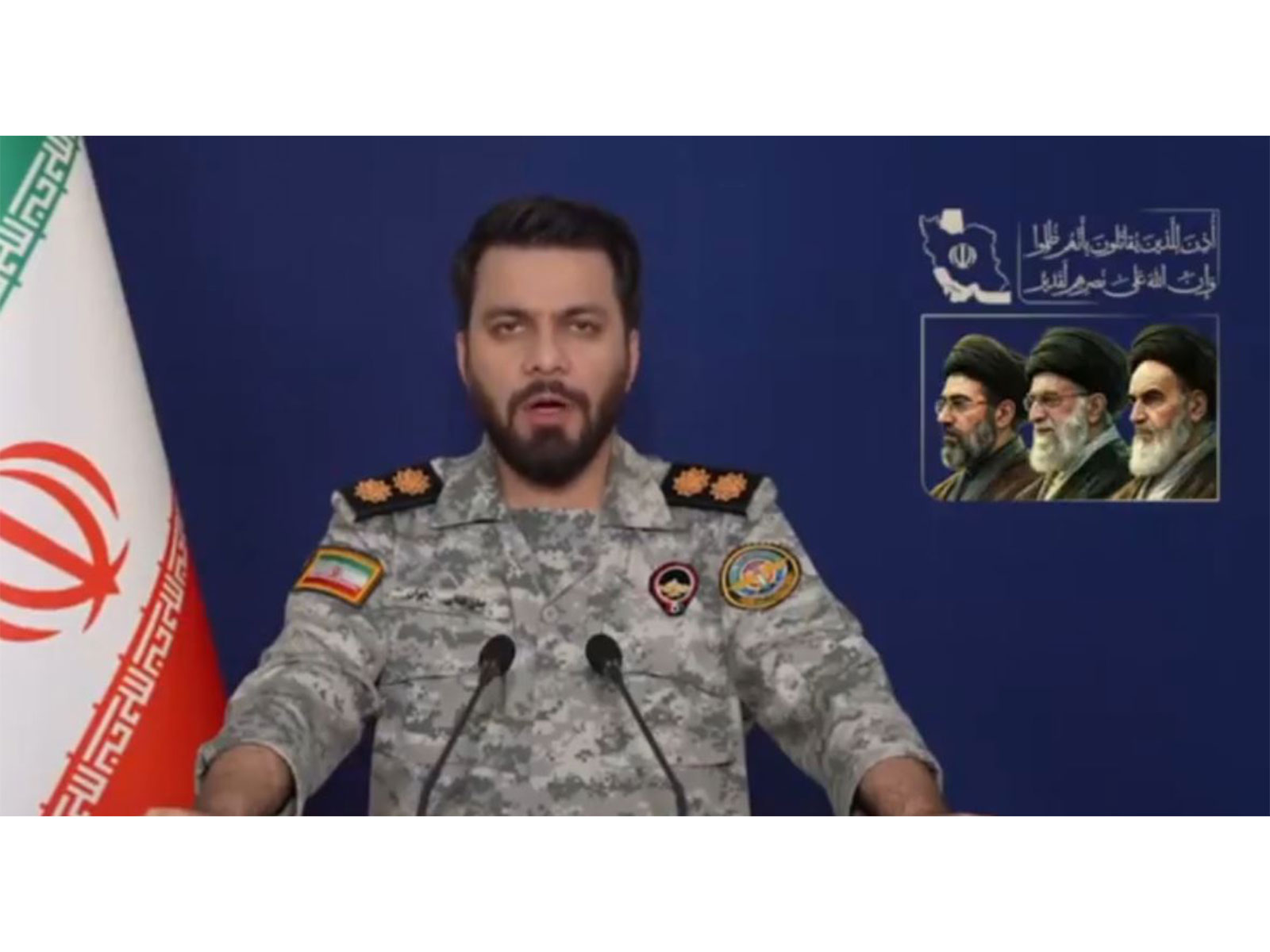
IRGC Assumes De Facto Control of Iran Amidst War and Leadership Vacuum
Iran's Islamic Revolutionary Guard Corps (IRGC) has reportedly seized de facto control of the government, pushing President Masoud Pezeshkian into a political deadlock amidst ongoing conflict and uncertainty surrounding the Supreme Leader's condition. The IRGC has blocked key appointments and consolidated decision-making power.
Key Highlights
- IRGC effectively controls key state functions, sidelining the president.
- President Pezeshkian faces political deadlock due to IRGC's actions.
- Uncertainty around Supreme Leader Mojtaba Khamenei aids IRGC power grab.
- A military council within the IRGC reportedly directs decision-making.
- This consolidation reflects the IRGC's growing influence in Iran.
- The situation arises amidst a protracted war and internal instability.
In a significant power shift within Iran, the Islamic Revolutionary Guard Corps (IRGC) has reportedly assumed de facto control over key governmental functions, plunging the presidency of Masoud Pezeshkian into a state of "complete political deadlock." This development is occurring against the backdrop of a protracted war and a concerning lack of clarity regarding the condition and whereabouts of Iran's Supreme Leader, Mojtaba Khamenei. Sources indicate that the IRGC has actively obstructed presidential appointments and decisions, including the critical nomination of a new intelligence minister, by establishing a security perimeter around the core power structures and effectively marginalizing the civilian government's executive authority. This consolidation of power by the IRGC appears to be facilitated by the prevailing wartime conditions and internal succession uncertainties.
Multiple credible news outlets, including Hindustan Times, The Jerusalem Post, and The Economic Times, have corroborated these claims, largely citing Iran International as their primary source. The reports consistently detail how the IRGC has blocked presidential initiatives, such as attempts to appoint a new intelligence minister, with IRGC chief-commander Ahmad Vahidi reportedly exerting direct pressure to reject proposed candidates. This move underscores the IRGC's intent to manage all critical leadership positions directly, particularly during what they term "wartime conditions." The traditional process of presidential nominations for sensitive roles, which requires approval from the Supreme Leader, has been circumvented due to the unclear status of Mojtaba Khamenei, further enabling the IRGC to solidify its grip on the state's security apparatus.
Informed sources suggest that a "military council" comprising senior IRGC officers is now exercising complete control over the nation's core decision-making processes. This council is allegedly enforcing a security cordon around Mojtaba Khamenei, preventing government reports on the country's situation from reaching him, and effectively controlling the flow of information to the top leadership. Speculation has also emerged regarding the Supreme Leader's health, which may be contributing to the current power dynamics and the IRGC's ascendancy. This situation is not entirely unprecedented, as the IRGC has historically exerted considerable influence on Iran's national politics, with many of its veterans occupying significant governmental roles. However, the current situation signifies a more direct and overt assumption of control.
The IRGC's augmented power is rooted in its evolution from an ideological militia to a powerful state entity responsible for internal security, economic influence, and foreign policy operations. Its control extends to the nation's ballistic missile program and support networks for allied groups, making it a critical player in both domestic and international affairs. The ongoing war has likely amplified the IRGC's perceived importance and its ability to assert dominance over civilian institutions. The weakening of the presidency and other civilian bodies has been a decades-long trend, with the IRGC strategically expanding its reach across military, intelligence, and economic sectors, positioning itself as the dominant force within the Iranian state.
Iran International, the primary source for these reports, is a London-based Persian-language news outlet that has been identified as an influential source of independent news for Iranians, despite facing threats and scrutiny from the Iranian government. Its reporting has been deemed credible by a significant portion of its audience. The context of the ongoing war between Iran and a US-Israeli coalition adds another layer of complexity to this internal power struggle, with Iran having suffered losses of senior leaders and strikes on its military facilities. The geopolitical implications of the IRGC's de facto control are far-reaching, potentially impacting regional stability, international negotiations, and the global response to Iran's foreign policy and nuclear ambitions. The situation highlights the inherent fragility of Iran's civilian leadership when confronted with the formidable power and institutional entrenchment of the IRGC, especially within a crisis environment.
This power consolidation by the IRGC suggests a transition towards a more militarized governance structure in Iran, with significant implications for its internal policies and external relations. The long-term consequences of this shift, particularly concerning Iran's engagement with international bodies and its role in regional conflicts, will be closely watched by the global community. The economic strain on Iran, exacerbated by sanctions, also plays a role in the complex dynamics, potentially fueling internal discontent while simultaneously reinforcing the IRGC's argument for centralized, security-focused leadership.
Frequently Asked Questions
What is the IRGC and what is its role in Iran?
The Islamic Revolutionary Guard Corps (IRGC) is a branch of the Iranian Armed Forces, founded after the 1979 revolution. It is responsible for protecting the revolution, internal security, and projecting Iranian influence abroad. It has grown to become one of the most powerful organizations in Iran, with significant influence in politics, economy, and military affairs.
What does 'de facto control' mean in this context?
'De facto control' means that although the formal government structures may still exist, the IRGC is exercising actual power and making key decisions behind the scenes, effectively overriding or controlling the civilian government's authority.
Why is the condition of Supreme Leader Mojtaba Khamenei important?
The Supreme Leader holds ultimate authority in Iran's political system. Uncertainty or a power vacuum at this top position allows other powerful entities, like the IRGC, to assert more control and make decisions without the usual checks and balances, especially if the Supreme Leader's authority or presence is in question.
What is a 'political deadlock' for the president?
A political deadlock for the president means that the president is unable to effectively carry out their duties or implement their policies because key decisions or appointments are being blocked by other powerful factions, leaving the president powerless to act.