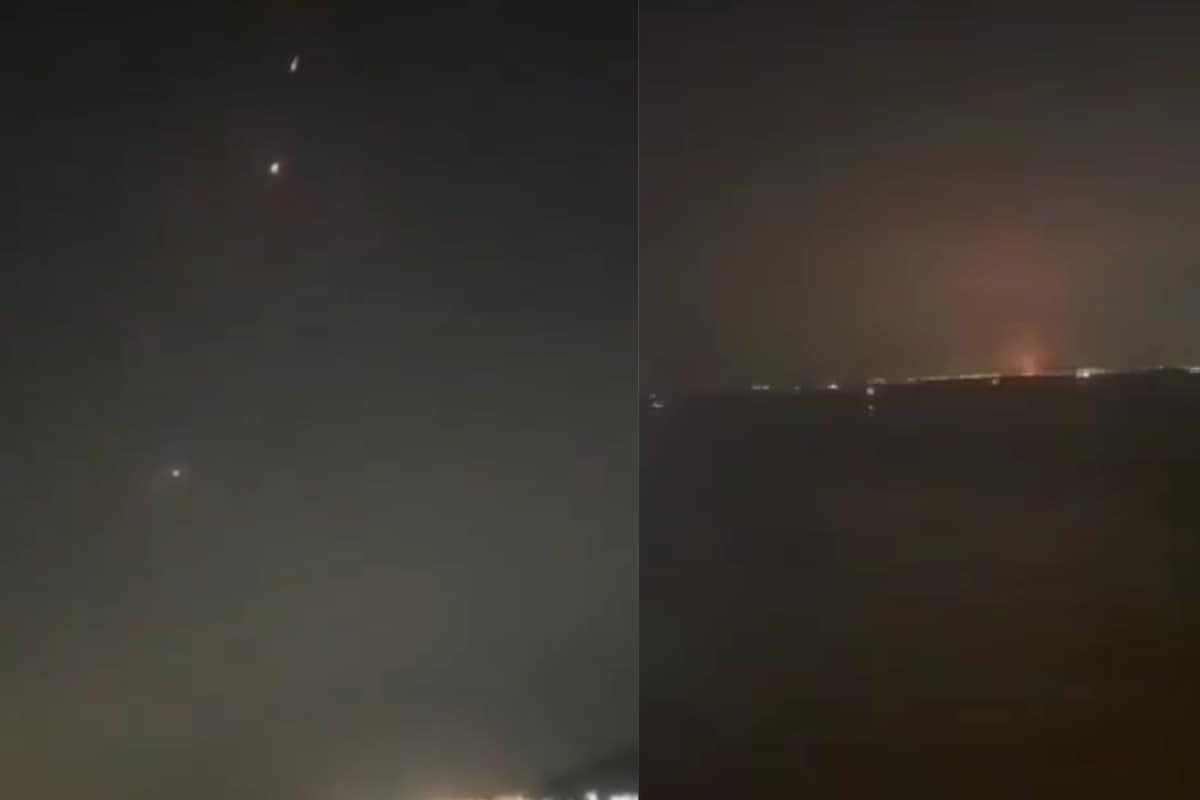
Iran attacks ships in Strait of Hormuz amid escalating regional conflict
Two Indian ships successfully transited the Strait of Hormuz despite ongoing attacks on commercial vessels in the region. The situation remains volatile as Iran escalates its actions in the crucial waterway. Multiple vessels have been targeted, causing significant disruptions to global energy supplies and maritime safety.
Key Highlights
- Iran attacks ships in Strait of Hormuz, escalating regional conflict.
- Two Indian tankers successfully navigated the warzone.
- Multiple vessels targeted, raising global energy supply concerns.
- UN Security Council passed a resolution on self-defense against attacks.
- Situation in the Strait remains precarious with conflicting signals from Iran.
The Strait of Hormuz has become a warzone with escalating tensions and attacks on commercial vessels, creating "utter confusion" in the maritime environment as of Thursday, March 12, 2026. Amidst this volatile situation, two Indian-flagged tankers, the SCI Pushpak and SCI Piramal, successfully transited the Strait of Hormuz without naval escort between late Wednesday night and Thursday morning. This occurred even as three other tankers in the vicinity were attacked by Iranian projectiles and sustained damage. The Thai-flagged bulk carrier Mayuree Naree was notably hit on its hull while transiting the strait..
Maritime experts describe the sea lane access as "precarious" with conflicting signals emanating from Iranian authorities regarding vessel movements and the allowance of naval escorts. Shipping analysts indicate that crude oil tankers are currently navigating the route without military escort, significantly increasing the risks.. The scale of the conflict has intensified, with a total of 19 ships reportedly hit by Iran in the Strait of Hormuz, resulting in seven confirmed deaths.. There is a growing concern among investigators that the Islamic Revolutionary Guard Corps (IRGC) might be employing underwater drones or projectiles, a suspicion fueled by the specific hull damage sustained by the Mayuree Naree..
In response to the escalating attacks, the UN Security Council adopted a resolution on Wednesday night, invoking Article 51 of the UN Charter, which affirms the right of member states to individual or collective self-defense against Iranian attacks. The resolution was sponsored by 134 countries and passed with 13 votes in favor, though China and Russia abstained..
Analysts suggest that Tehran is leveraging the Strait of Hormuz as a "military lever" to achieve two primary objectives:
1. **Triggering a global energy and food crisis:** This is intended to pressure the US and Israel into halting their offensive operations.
2. **Punishing Sunni Gulf countries:** Iran is targeting these nations for allowing US bases on their soil.
The targeting of the Strait of Hormuz by Iran is considered a violation of the UN Convention on the Law of the Sea (UNCLOS) articles 37-45 and an infringement upon the Freedom of Navigation as mandated by the convention..
The situation has led to a near-standstill in shipping through the Strait, which carries approximately one-fifth of the world's oil and a significant share of liquefied natural gas (LNG).. Major shipping companies have suspended operations, and vessels are anchored outside the strait.. The disruption is causing ripple effects across global markets, impacting energy supplies, maritime transport, and supply chains..
India has been actively engaged in diplomatic efforts, with External Affairs Minister S. Jaishankar speaking with his Iranian counterpart Abbas Araghchi to discuss shipping safety and energy security.. The Indian Ministry of Shipping has also established a 24-hour control room to monitor developments and coordinate assistance for Indian vessels and seafarers.. Despite the risks, India's willingness to ensure the safe passage of its ships highlights its strategic interest in maintaining stable energy supplies..
The article was published on March 12, 2026.. The news category spans World News, Geopolitics, and Maritime Security.. The affected countries are primarily Iran, with global implications for maritime trade and energy markets.. The credibility of Hindustan Times is rated as questionable by some sources due to alleged bias and poor sourcing, although it is a significant Indian newspaper.. In a recent development, Hindustan Times overtook The Times of India in media trust rankings in TRA's Brand Trust Report 2026..
Frequently Asked Questions
What is the significance of the Strait of Hormuz?
The Strait of Hormuz is a vital maritime chokepoint that connects the Persian Gulf to the Gulf of Oman and the open ocean. It is one of the world's most critical routes for oil and liquefied natural gas (LNG) shipments, carrying approximately one-fifth of the world's oil supply.
Why are there attacks on ships in the Strait of Hormuz?
The attacks are part of an escalating conflict between Iran and the US/Israel. Iran is using the Strait of Hormuz as a strategic leverage point, responding to military operations and aiming to disrupt global energy supplies.
What was the role of Indian ships in this incident?
Two Indian-flagged tankers, the SCI Pushpak and SCI Piramal, successfully transited the Strait of Hormuz despite the ongoing attacks, providing a brief moment of relief. However, the overall situation remains precarious.
What actions have been taken by international bodies?
The UN Security Council adopted a resolution invoking Article 51 of the UN Charter, affirming the right of member states to self-defense against Iranian attacks. This resolution passed with 13 votes in favor, with China and Russia abstaining.
What are the broader implications of these attacks?
The attacks are causing significant disruptions to global energy supplies, maritime transport, and supply chains. This has led to increased oil prices, insurance costs, and concerns about global economic stability.