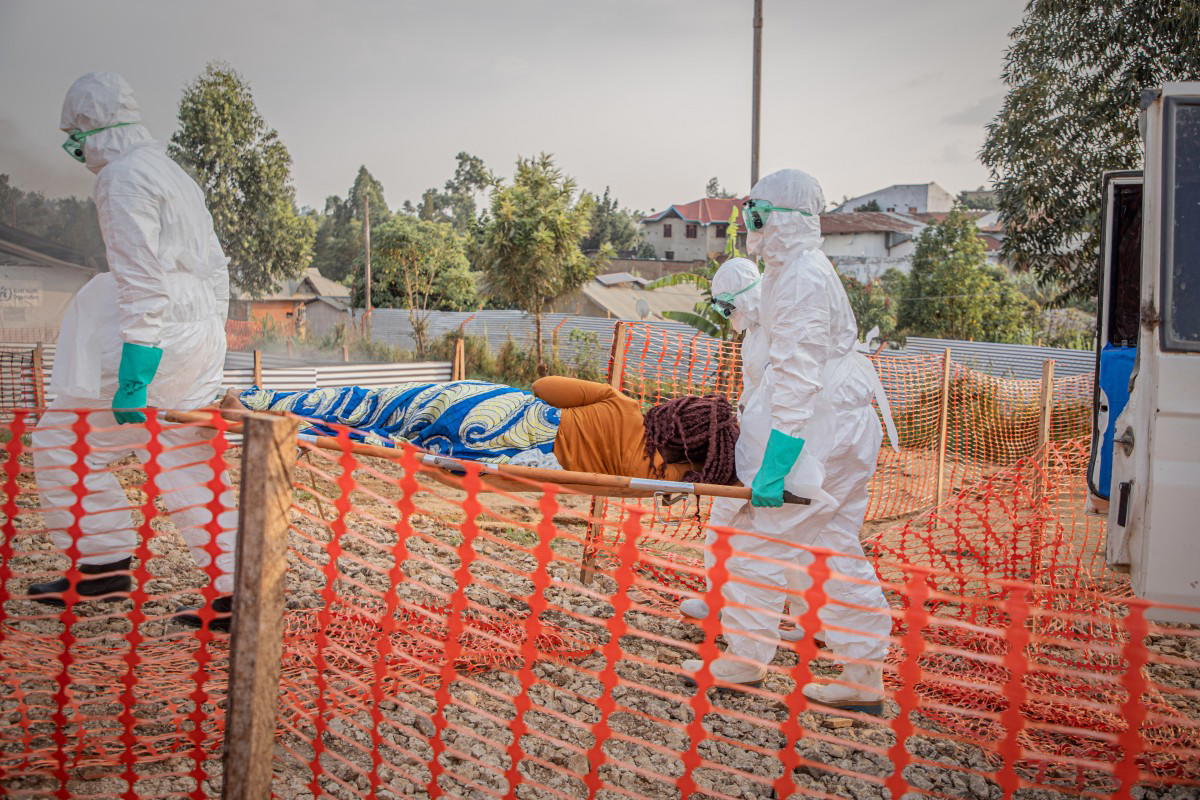
DR Congo Grapples with 2026 Ebola Outbreak, Over 1,200 Cases Reported
The Democratic Republic of Congo is facing a severe Ebola outbreak, declared in mid-May 2026, with over 1,200 confirmed cases and more than 300 deaths. This 17th outbreak, caused by the Bundibugyo strain, poses significant challenges due to insecurity, community resistance, and limited treatment capacity, prompting a Public Health Emergency of International Concern declaration.
Key Highlights
- DRC reports 1,203 confirmed Ebola cases and 321 deaths since mid-May 2026 outbreak.
- Outbreak, the 17th in DRC's history, is caused by the Bundibugyo virus.
- WHO declared the outbreak a Public Health Emergency of International Concern (PHEIC).
- Insecurity, community mistrust, and cross-border spread to Uganda hinder response efforts.
- Nearly 300 confirmed Ebola patients are currently unaccounted for.
- No licensed vaccine or specific treatment exists for the Bundibugyo Ebola strain.
The Democratic Republic of Congo (DRC) is currently battling its 17th recorded Ebola outbreak, which was officially declared on May 15, 2026, centered in the northeastern Ituri Province. As of June 27, 2026, the country's public health authorities have reported a concerning 1,203 confirmed cases and 321 deaths related to the virus. Additionally, 148 patients have successfully recovered, while 419 remain in isolation or are receiving hospital treatment. Health officials have also identified 265 suspected cases, leading to 77 deaths among them.
This particular outbreak is caused by the Bundibugyo strain of the Ebola virus (Bundibugyo ebolavirus), which presents a unique challenge as, unlike the more common Zaire strain, there is currently no licensed vaccine or specific treatment available for it. This necessitates a heavy reliance on comprehensive public health measures, including rigorous contact tracing, early case detection, stringent infection prevention and control protocols, supportive care, and safe burial practices.
The World Health Organization (WHO) quickly recognized the severity of the situation, declaring the outbreak a Public Health Emergency of International Concern (PHEIC) on May 16 or 17, 2026, calling for international coordination and cooperation in the response. The outbreak has spread across 34 health zones in three provinces: Ituri, which remains the epicenter, North Kivu, and South Kivu. Furthermore, the virus has crossed borders, with neighboring Uganda reporting confirmed cases epidemiologically linked to the transmission originating in the DRC. As of mid-June, Uganda had reported 19 confirmed cases, including two deaths.
The response efforts are severely hampered by a complex and volatile environment. Insecurity due to ongoing conflict in the region, coupled with widespread community resistance and mistrust, significantly impedes the ability of health workers to conduct essential activities like contact tracing, safe burials, and provide treatment. WHO Director-General Tedros Adhanom Ghebreyesus highlighted this, stating that "war makes fighting Ebola so much harder, blocking access, scattering contacts, and driving people into hiding out of fear and mistrust." This environment has also led to a critical issue where nearly 300 confirmed Ebola patients are currently unaccounted for, raising serious concerns about further undetected spread.
Operational challenges include insufficient treatment capacity in affected areas, particularly in Ituri, where treatment centers are nearing saturation. There are also reported shortages of essential medicines and infection prevention and control supplies, alongside a need for approximately 20 additional isolation centers. The contact follow-up rate remains below the target of 95%, further complicating containment efforts. High population mobility, including cross-border and mining-related flows, also contributes to the rapid spread of the disease.
Projections from the WHO's Africa regional office, published in The Lancet Infectious Diseases, estimate that if current trends continue, the outbreak could escalate significantly, potentially reaching around 8,210 cases and 1,420 deaths by mid-September 2026. This underscores the critical need for sustained international support and intensified local efforts to address not only the medical aspects of the outbreak but also the underlying humanitarian and security challenges that fuel its spread. The current outbreak's rapid progression, with a record number of cases in its first month for an Ebola outbreak in Africa, highlights the urgency of the situation.
It is important to differentiate this 2026 outbreak (the 17th) from the major 10th Ebola outbreak that occurred in the DRC between 2018 and 2020. That outbreak, caused by the Zaire strain, was the second-largest in recorded history, resulting in 3,470 cases and 2,287 deaths. While previous outbreaks have provided valuable lessons, the distinct characteristics of the current Bundibugyo strain and the persistent socio-political challenges mean each new outbreak presents its own set of complex hurdles. The international community, led by WHO and partners like Africa CDC, remains committed to supporting the DRC in bringing this critical public health emergency under control.
Frequently Asked Questions
What is the current status of the Ebola outbreak in the Democratic Republic of Congo?
As of June 27, 2026, the Democratic Republic of Congo has reported 1,203 confirmed cases and 321 deaths since the outbreak was declared in mid-May 2026. The outbreak is primarily affecting Ituri, North Kivu, and South Kivu provinces.
Which strain of Ebola is causing this 2026 outbreak, and is there a vaccine?
The current 2026 Ebola outbreak in the DRC is caused by the Bundibugyo virus. Unlike the Zaire strain, for which a vaccine exists, there is currently no licensed vaccine or specific treatment available for the Bundibugyo strain, complicating response efforts.
Why is the response to this Ebola outbreak so challenging?
The response is highly challenging due to ongoing insecurity and conflict in the affected regions, leading to community resistance and mistrust towards health workers. There are also issues with insufficient treatment capacity, shortages of supplies, and a significant number of confirmed patients (nearly 300) who are currently unaccounted for.
Has the World Health Organization (WHO) declared this a global emergency?
Yes, the World Health Organization (WHO) declared the 2026 Ebola outbreak in the Democratic Republic of Congo a Public Health Emergency of International Concern (PHEIC) on May 16 or 17, 2026, highlighting its potential for international spread and the need for a coordinated global response.
Is this the same Ebola outbreak that occurred in DRC a few years ago?
No, this is a new and separate outbreak (the 17th in DRC's history), declared in May 2026. It is distinct from the 10th Ebola outbreak (2018-2020) which was caused by the Zaire strain and was the second-largest in history. The current outbreak is caused by the Bundibugyo strain.