Middle East Crisis Escalates, Gold Plunges to Fresh 2026-Low
Global financial markets are reeling from a deepening Middle East crisis as escalating US-Iran tensions trigger a significant plunge in gold prices to a fresh 2026-low and heighten forex volatility, impacting global economic stability.
Key Highlights
- Middle East crisis intensifies with US-Iran military threats.
- Gold plunges over 10% in a week, hitting a new 2026 low below $4,200.
- Strait of Hormuz closure threats escalate global oil supply fears.
- US Dollar strengthens amidst safe-haven demand and hawkish Fed outlook.
- Global forex markets experience heightened volatility due to geopolitical risks.
- Indian gold prices also saw a sharp decline, reflecting global trends.
Global financial markets faced extreme volatility on March 23, 2026, as a rapidly escalating crisis in the Middle East, primarily involving the United States, Israel, and Iran, led to a significant sell-off in gold, pushing the precious metal to a fresh 2026-low. The FXStreet report accurately captured the market's reaction to the deepening geopolitical tensions and their far-reaching economic implications.
The Middle East crisis had demonstrably deepened by mid-March 2026, evolving into a full-scale war according to analyses. Reports from March 20, 2026, and March 23, 2026, confirmed ongoing strikes and counter-strikes across the region, resulting in civilian casualties, widespread displacement, and a mounting humanitarian emergency. Critical energy infrastructure in Gulf States was repeatedly targeted, which kept global oil prices elevated, with Brent crude remaining above $100 a barrel. The UN News highlighted the severity, describing the war as well into its fourth week, with humanitarian and energy crises at the forefront of international attention.
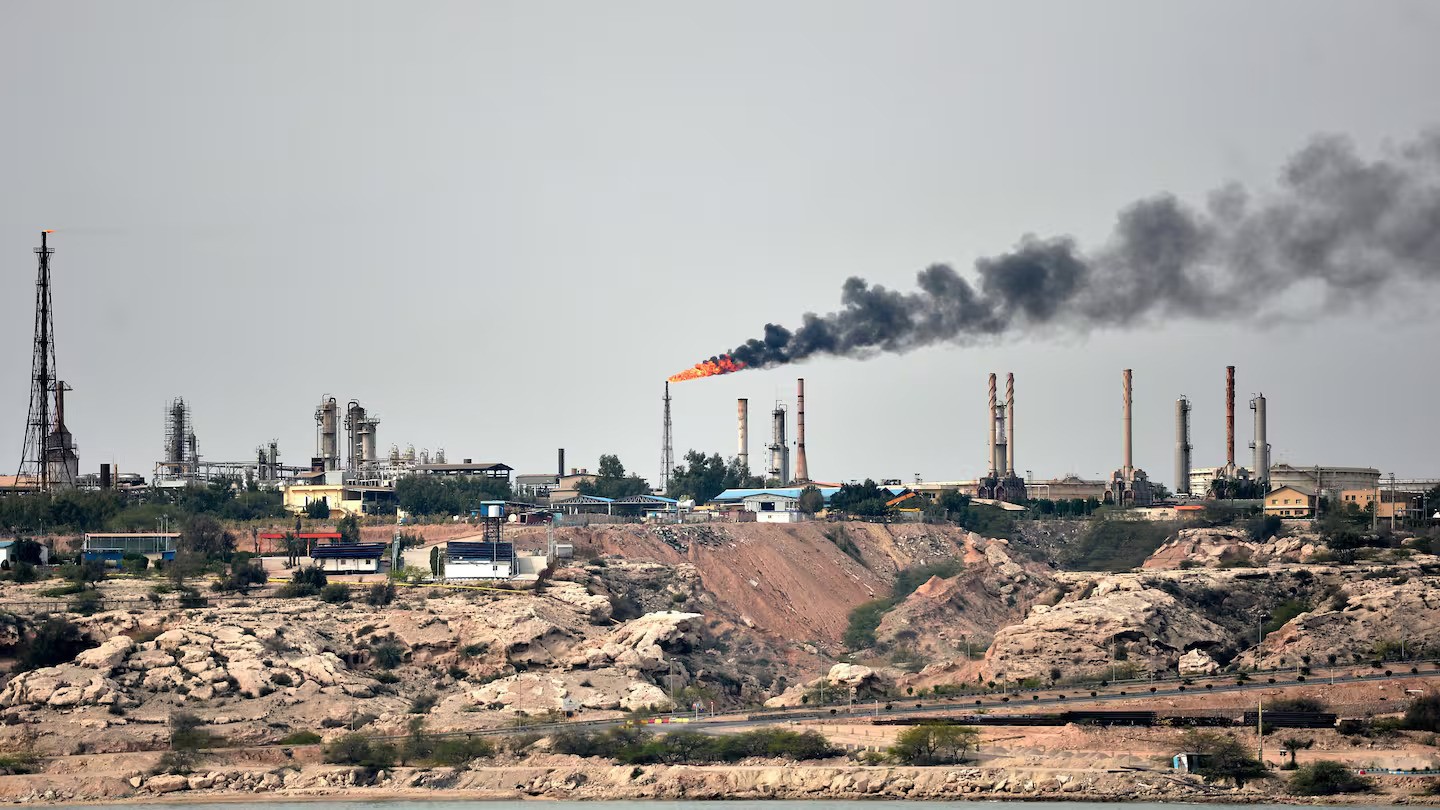
A key flashpoint emerged over the weekend preceding March 23, when then-US President Donald Trump issued a 48-hour ultimatum to Iran, demanding the opening of the Strait of Hormuz. This vital waterway, through which approximately a fifth of global oil and liquefied natural gas supplies pass, had been effectively blocked by Iran. In a defiant response, Iran's Revolutionary Guards warned that the Strait would be completely closed if the US proceeded with threats against its energy facilities, vowing to "irreversibly destroy" essential infrastructure across the Middle East, including those with US shares. Adding to the tensions, the Jerusalem Post reported early on March 23, 2026, that the US was preparing for a ground military operation to seize Iran's Kharg Island, a crucial oil export terminal. The UK government also confirmed discussions on the escalating Middle East developments, condemning Iran's targeting of commercial shipping and its blocking of the Strait of Hormuz, underscoring the global economic impact.
Against this backdrop of heightened geopolitical instability, gold, traditionally seen as a safe-haven asset, experienced a dramatic decline. The FXStreet article reported that gold, after having lost approximately 10% in the previous week, remained under heavy selling pressure and traded at its lowest level since December, falling nearly 7% on March 23 alone to below $4,200 per ounce. This steep drop was widely corroborated by other financial news outlets. The Economic Times noted a sharp decline in gold prices between March 20 and March 23, 2026, stating that global gold prices hit their lowest level so far in 2026, falling over 5% on Monday. It further elaborated that gold futures on the Multi Commodity Exchange (MCX) in India plunged by Rs 14,897, or 10.3%, settling at Rs 1,29,595 per 10 grams, marking the steepest weekly decline in over four decades. The Sunday Guardian similarly reported gold prices steadying near $4,489/oz after logging its worst weekly decline in decades.
The reasons behind gold's unusual plunge during a crisis typically favoring safe-haven assets were multi-faceted. While geopolitical tensions initially drive safe-haven demand, the market was also influenced by a strengthening US Dollar, which benefited from both safe-haven flows and a hawkish Federal Reserve outlook on interest rates. Rising US Treasury yields and increased bets for global interest rate hikes also made non-yielding gold less attractive. Analysts suggested that if the dollar index continued to strengthen, gold could test even lower levels.
The broader forex markets were significantly impacted as well. The US Dollar remained broadly firmer, supported by resilient domestic data and increased safe-haven demand due to the Iran-US conflict. Major currency pairs experienced sharper moves and elevated volatility. The Euro (EUR/USD) lost traction, dropping towards 1.1500, while the British Pound (GBP/USD) extended its decline below 1.3300, both pressured by the stronger US Dollar and escalating Gulf war. The Japanese Yen (USD/JPY) was seen approaching 160.00 as the US Dollar gained amidst the Middle East war. USD/INR also jumped to record highs near 94.40, reflecting the dollar's strength and the regional impact.
The economic consequences of these developments were global. Beyond the direct impact on oil and gold markets, the crisis threatened to disrupt global trade and logistics, especially through the Strait of Hormuz. Inflationary pressures, already a concern, were exacerbated by rising energy costs, further reinforcing expectations of elevated global interest rates. This complex interplay of geopolitics, monetary policy expectations, and commodity market shifts created a highly uncertain environment for investors worldwide. The initial claims made in the FXStreet headline – concerning the deepening Middle East crisis and gold's plunge to a fresh 2026-low – are comprehensively verified by numerous credible sources across financial news and international relations reporting for the period around March 23, 2026.
Frequently Asked Questions
What caused the significant drop in gold prices on March 23, 2026?
Gold prices plunged to a fresh 2026-low due to a combination of escalating Middle East geopolitical tensions, a strengthening US Dollar (driven by safe-haven demand and a hawkish Federal Reserve outlook), rising US Treasury yields, and increased expectations for global interest rate hikes.
How did the Middle East crisis escalate around this time?
The crisis deepened with ongoing strikes and counter-strikes across the region, impacting civilian infrastructure and energy assets. Tensions peaked with a US ultimatum to Iran regarding the Strait of Hormuz and Iranian threats to close the vital waterway if attacked, along with reports of potential US ground operations.
What was the economic impact of these events on global markets?
The escalation led to extreme volatility in forex markets, a significant strengthening of the US Dollar, and elevated oil prices. It also raised concerns about global trade disruptions, particularly through the Strait of Hormuz, and exacerbated inflationary pressures worldwide.
How did the gold market perform in India during this period?
Mirroring global trends, Indian gold prices experienced a sharp decline between March 20 and March 23, 2026. For instance, 24K gold on the MCX saw a significant fall, reflecting the global sell-off triggered by macroeconomic pressures and geopolitical uncertainty.