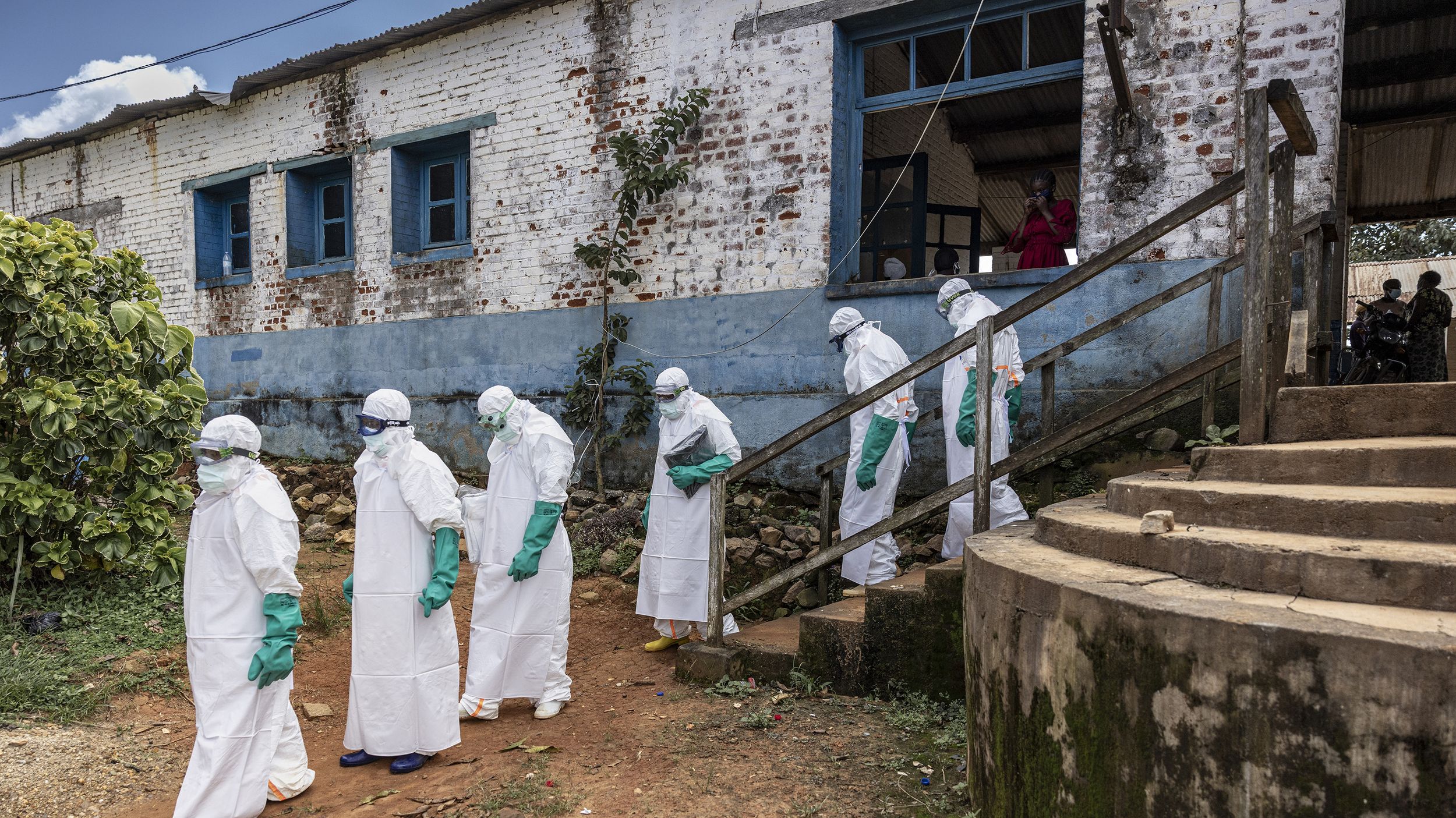
Ebola Outbreak Worsens in Congo with 71 New Cases, 82 Deaths Recorded
The Ebola outbreak in the Democratic Republic of Congo and Uganda has seen a concerning surge with 71 new cases confirmed in a 24-hour period, bringing the total to 452 cases and 82 deaths since May 15. The outbreak, caused by the rare Bundibugyo strain, is concentrated in Ituri province, exacerbated by insecurity and poor health infrastructure.
Key Highlights
- 71 new Ebola cases confirmed in a single day, signaling rapid spread.
- Total confirmed cases now stand at 452, with 82 recorded deaths.
- Outbreak is heavily concentrated in the Ituri province of Northeast Congo.
- Insecurity and weak health infrastructure are hindering containment efforts.
- The rare Bundibugyo strain of Ebola is causing this outbreak.
- Cases have also been confirmed in neighboring Uganda.
The Ebola virus disease outbreak in the Democratic Republic of Congo (DRC) and Uganda has intensified, with health authorities reporting 71 new confirmed cases within a 24-hour period. This alarming surge brings the total number of confirmed cases to 452 since the outbreak of the rare Bundibugyo strain was officially announced on May 15, 2026. Tragically, 82 confirmed deaths have been attributed to the virus.
The epicenter of this outbreak remains heavily concentrated in Ituri province, a remote region in northeastern Congo. This area is characterized by significant insecurity due to ongoing conflict involving armed groups and a generally poor health infrastructure, which are critical factors hampering effective containment and response efforts.
The Bundibugyo strain of Ebola, responsible for this epidemic, presents unique challenges as there are no licensed vaccines or specific therapeutics developed for it. This means that response efforts are primarily focused on supportive care, infection prevention and control, and robust contact tracing.
The outbreak has also seen cross-border transmission, with cases confirmed in neighboring Uganda. The World Health Organization (WHO) declared the situation a Public Health Emergency of International Concern (PHEIC) on May 16, 2026, highlighting the significant risk of regional spread.
International organizations, including the International Organization for Migration (IOM) and the WHO, are working in coordination with national authorities to bolster preparedness and response capacities. These efforts include strengthening surveillance along mobility corridors, enhancing cross-border coordination, and community-based surveillance.
However, the response faces considerable hurdles. The ongoing insecurity in the affected regions, including attacks on health centers, and mistrust among some residents have created a complex humanitarian context that complicates containment.
Amidst this crisis, there are also ongoing efforts to improve the response. A joint plan by the WHO and the Africa Centres for Disease Control and Prevention (Africa CDC) aims to raise $518 million to support outbreak response measures through November 2026.
For India, the evolving Ebola situation underscores the importance of continued vigilance and preparedness. While the direct risk to India is considered low due to strict border protocols and screening measures, the interconnected nature of global travel necessitates ongoing monitoring and robust public health infrastructure. Experts emphasize that preparedness, surveillance, and calm leadership are crucial, while warning against misinformation and panic.
The article's source, NDTV, is an Indian news network. While Media Bias/Fact Check rates NDTV as having mixed factual reporting and a right-center bias, it is generally considered a reputable news source in India, known for its reporting on national and international events. A 2021 study by Oxford University and the Reuters Institute for the Study of Journalism found NDTV to be India's most trusted private TV news network.
The number of cases and deaths reported in the NDTV article aligns with figures from other credible sources, such as the WHO and ReliefWeb, around the publication date. The details regarding the Bundibugyo strain, the concentration of cases in Ituri province, and the challenges posed by insecurity are consistent across multiple reports.
Credibility Score:
NDTV is a well-established Indian news network. While some fact-checking organizations have noted a mixed factual reporting record and a right-center bias, it remains a significant source of news in India. The information presented in the article is corroborated by other reputable international health organizations. Therefore, a credibility score of 7 out of 10 is assigned, reflecting its general reliability while acknowledging potential biases.
Importance Score:
Given the severity of an Ebola outbreak, its potential for rapid spread, and the declaration of a Public Health Emergency of International Concern, this story holds high importance. The implications for global health security and preparedness are significant. For an Indian audience, understanding such international health crises is important for awareness and preparedness, especially in light of India's role in global health initiatives. Therefore, an importance score of 8 out of 10 is assigned.
Urgency:
The urgency is high due to the expanding nature of the outbreak, the high case numbers, and the declaration of an international health emergency, which necessitates immediate attention and potential international response.
News Category:
This news falls under 'Health' and 'World News' categories. Given the international nature and potential impact on global health, it is also relevant to 'Global Health Security'.
Geographical Scope:
Primarily affects the Democratic Republic of Congo and Uganda, with implications for regional and global health security.
Frequently Asked Questions
What is the Bundibugyo strain of Ebola?
The Bundibugyo virus is a species of Ebola virus that has caused previous outbreaks in the Democratic Republic of Congo and Uganda. Unlike other strains, there are currently no licensed vaccines or specific therapeutics available for the Bundibugyo strain, making response efforts primarily focused on supportive care and infection control.
Why is the Ebola outbreak in Congo particularly challenging to contain?
The outbreak is concentrated in Ituri province, a region facing significant insecurity due to armed conflict. Additionally, poor health infrastructure, limited access to healthcare, mistrust among some residents, and the complex humanitarian context all hinder effective containment and response efforts.
Has Ebola spread to countries outside of the Democratic Republic of Congo and Uganda?
Yes, there has been confirmed cross-border transmission to Uganda. The World Health Organization declared the outbreak a Public Health Emergency of International Concern, highlighting the risk of regional spread. However, as of the reported dates, confirmed cases are primarily within DRC and Uganda.
What is India's current risk regarding this Ebola outbreak?
Experts assess the direct risk to India as low due to limited travel links from affected regions and the absence of confirmed cases in the country. However, vigilance is maintained through intensified airport screening and preparedness measures, acknowledging the potential for imported cases in a hyper-connected world.