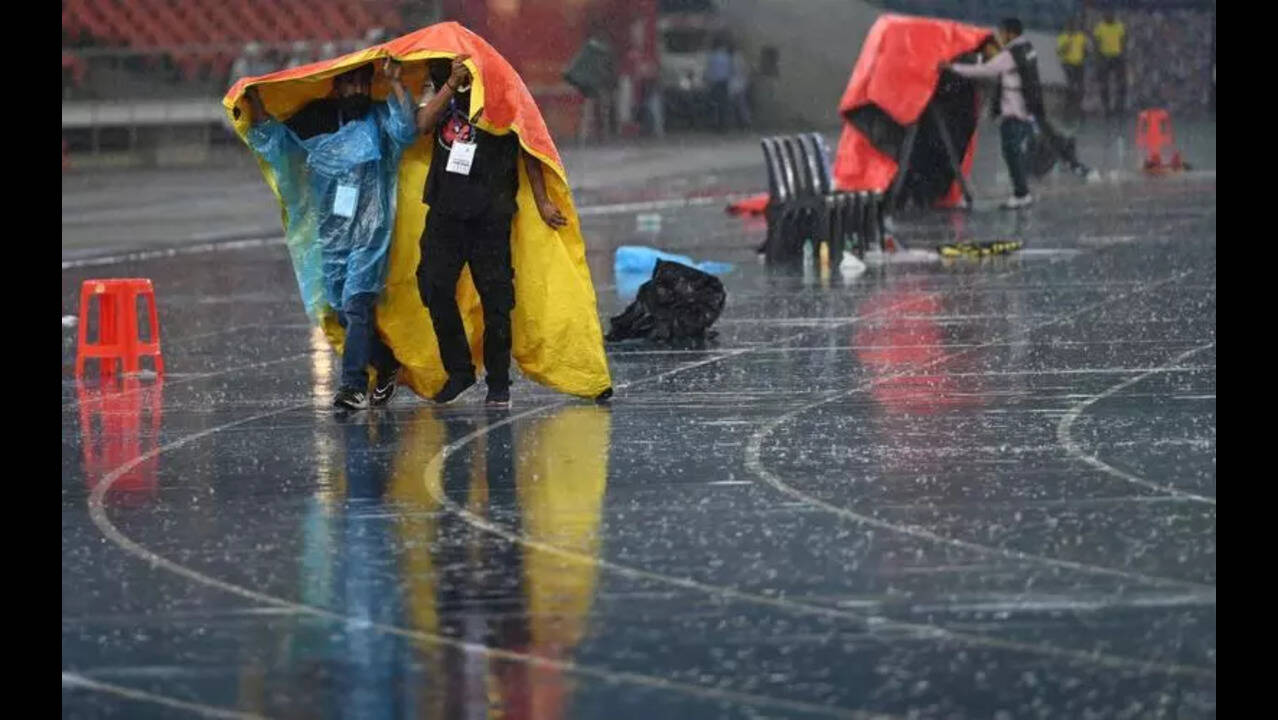
Rare Western Disturbance Brings Sudden Cold, Rain to Delhi-NCR
Delhi and its National Capital Region (NCR) experienced a significant and sudden drop in temperatures and widespread rainfall around March 19-20, 2026, due to an "unusual" and "intense" Western Disturbance. This weather system brought unseasonable cold, strong winds, and made March the wettest in Delhi in three years, catching residents off guard as the region was anticipating summer.
Key Highlights
- Delhi-NCR saw sudden temperature drop and widespread rain in mid-March 2026.
- Experts termed the Western Disturbance as 'unusual' and 'most intense'.
- Minimum temperature dropped to 16°C, 4.5°C below normal on March 20.
- Delhi experienced its wettest March in three years due to the rainfall.
- IMD issued a yellow alert for thunderstorms, lightning, and gusty winds.
- The weather system significantly impacted daily life and air quality.
Delhi and the National Capital Region (NCR) witnessed a significant and unexpected shift in weather conditions around March 19-20, 2026, as a rare and intense Western Disturbance brought widespread rain, thunderstorms, and a noticeable drop in temperatures, making the capital considerably colder. This sudden change occurred while the region was transitioning towards the summer season, surprising many residents.
According to the India Meteorological Department (IMD) and various weather experts, the change was triggered by an active Western Disturbance impacting northwest India. Dr. Pradeep, a climate scientist, described this particular Western Disturbance as "unusual" due to its distinctive structure. He noted that a trough, spanning thousands of kilometers in a straight line, is generally a rare occurrence and possesses the capacity to generate very strong thunderstorms and thunderclouds. He further stated on X (formerly Twitter) that the "most intense trough line" of this weather system was "very close to North India" on March 20, advising caution and adherence to IMD advisories. Mahesh Palawat, Vice President of Skymet Weather, echoed this sentiment, indicating that "current models suggest that weather conditions on March 20 are likely to be more intense." Amateur weather expert Navdeep Dahiya also referred to "western disturbance under complete intensification" and predicted "Rare #Coldday conditions expected on 20th March".
The impact on temperatures was immediate and significant. On March 19, Delhi's maximum temperature dipped to 26.8 degrees Celsius, marking the first time in nearly a month that it fell below 30 degrees Celsius. This was 4.7 degrees below the normal for the season and represented the lowest maximum temperature recorded in Delhi since February 24, when it was 29.9 degrees Celsius. By March 20, the minimum temperature further dropped to 16 degrees Celsius, which was 4.5 degrees below the seasonal average, according to IMD readings from the Safdarjung weather station. This led to a palpable chill in the air, prompting many to return to layering up.
The weather system brought not just a drop in mercury but also substantial rainfall and gusty winds across Delhi-NCR. On March 19, the city experienced strong winds reaching up to 68 km/h, followed by intense spells of rain that caused temperatures to plunge sharply, from approximately 29 degrees Celsius to nearly 19 degrees Celsius, within a mere hour. Delhi-NCR woke up to further rainfall on March 20, accompanied by a yellow-coloured warning issued by the IMD for very light to light rainfall, thunderstorms, lightning, and gusty winds with speeds of 30-40 kmph, occasionally gusting to 50 kmph.
Several areas reported significant rainfall. Safdarjung and Lodhi Road recorded 8.2 mm each, Ridge station received 8.6 mm, Palam 6.2 mm, Ayanagar 7.2 mm, and Pitampura 5.5 mm between March 18 and March 19. Janakpuri recorded the highest at 12.5 mm. This spell of rain contributed to March 2026 becoming the wettest March in Delhi in three years. While the average rainfall for March had reached 9.4 mm by March 20, it was nearing the normal monthly average of 12.6 mm. The last time Delhi experienced higher March rainfall was in 2023, with a total of 50.4 mm.
Beyond Delhi, the Western Disturbance also affected adjoining areas, including Ghaziabad, Noida, Faridabad, and Gurugram, all experiencing similar conditions of rain and cooler temperatures. The IMD had previously forecasted thunderstorms, lightning, and gusty winds across Delhi-NCR, including Noida and Greater Noida, with similar conditions expected to persist. Mahesh Palawat further explained that a Western Disturbance over North Pakistan and adjoining Jammu and Kashmir, coupled with an induced cyclonic circulation over Haryana, was responsible for driving rainfall across northern parts of the country. He also noted that this pre-monsoon activity arrived earlier than usual this year, attributed to higher temperatures in early March and a more intense Western Disturbance.
While the immediate effect brought welcome relief from early March heat, the IMD indicated that this respite was temporary. Forecasts suggested that the maximum temperatures would gradually begin to rise again from Friday, March 20, as the influence of the Western Disturbance was expected to fade. Temperatures were projected to touch 31 degrees Celsius by Sunday. The weather system also contributed to an improvement in Delhi's air quality, with the Air Quality Index (AQI) recorded in the "moderate" category, down from the "poor" category a day earlier, as rainfall and strong winds helped disperse pollutants. The series of related articles also highlight a consistent pattern of a significant Western Disturbance bringing impactful weather across North India from mid to late March 2026.
Frequently Asked Questions
What caused the sudden cold weather and rain in Delhi-NCR?
The sudden change was attributed to an active and 'unusual' Western Disturbance affecting northwest India. This system brought a unique trough structure, generating strong thunderstorms and causing temperatures to drop significantly and widespread rainfall across the region.
How much did temperatures drop in Delhi?
On March 19, the maximum temperature in Delhi dropped to 26.8 degrees Celsius, which was 4.7 degrees below normal. By March 20, the minimum temperature settled at 16 degrees Celsius, 4.5 degrees below the seasonal average.
Was the rainfall in March 2026 significant for Delhi?
Yes, the rainfall experienced around March 19-20, 2026, made it the wettest March in Delhi in three years. As of March 20, the average rainfall for the month had reached 9.4 mm.
Are experts calling this weather system unusual or intense?
Yes, climate scientists and weather experts described the Western Disturbance as 'unusual' and noted its 'most intense trough line' being very close to North India, capable of creating very strong thunderstorms.
How long is this cold spell expected to last?
While the immediate impact brought cold and rain, the India Meteorological Department indicated that the respite from early March heat was temporary. Temperatures were expected to gradually rise again from March 20 onwards as the influence of the Western Disturbance faded, with maximum temperatures projected to reach 31 degrees Celsius by Sunday.