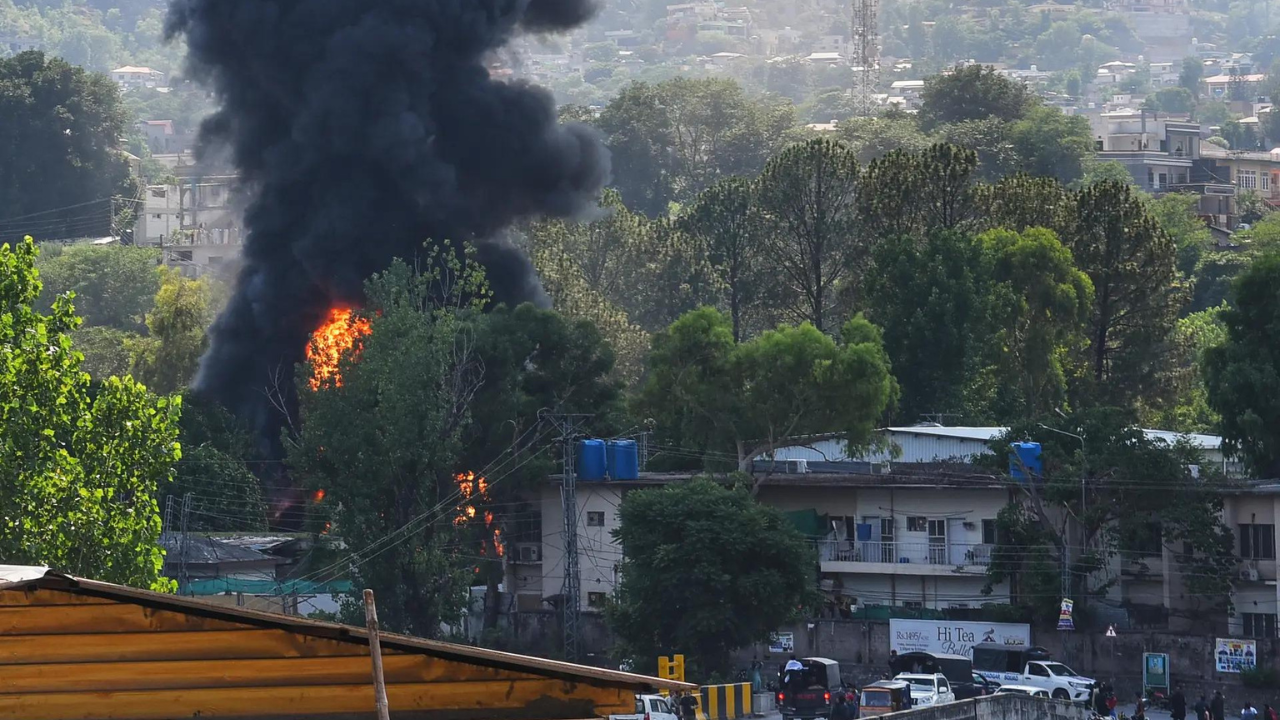
Pakistan Strikes Afghanistan; Civilian, Militant Death Tolls Disputed
Pakistan launched airstrikes in Afghanistan on June 10, 2026, claiming 26 militants killed. Afghan authorities, however, reported 13 civilian deaths, including 11 children, escalating tensions between the two nations after recent cross-border attacks.
Key Highlights
- Pakistan conducted airstrikes in Afghanistan on June 10, 2026.
- Islamabad claims 26 militants were killed in targeted operations.
- Afghan Taliban reported 13 civilians, including 11 children, died.
- Strikes follow recent terrorist attacks inside Pakistan's borders.
- Tensions reignite after a period of relative calm along the border.
- Both nations accuse each other of harboring militant groups.
Tensions between Pakistan and Afghanistan have sharply escalated following Pakistan's recent airstrikes inside Afghan territory on June 10, 2026. Islamabad confirmed carrying out 'precise and calibrated strikes' against alleged militant hideouts and infrastructure, with Pakistan's Information Minister Attaullah Tarar stating that 26 militants were eliminated. These operations were reportedly in response to recent terrorist incidents within Pakistan's borders. The Pakistani government maintains that these strikes targeted locations used by militants, including a training center, a hideout, an ammunition cache, and compounds linked to commanders identified as Aleem Khan Khushali and Akhtar Muhammad Jani Khel.
However, the Afghan Taliban administration, which controls Afghanistan, presented a starkly different account of the casualties. Taliban spokesman Zabihullah Mujahid reported that the Pakistani military aircraft violated Afghanistan's airspace and bombed civilian homes in the eastern provinces of Kunar, Khost, and Paktika. According to Afghan officials, these strikes resulted in the deaths of at least 13 civilians, including 11 children, one woman, and one elderly man, with 14 others reportedly injured. Mujahid condemned the attacks as a violation of Afghanistan's sovereignty and described the targeting of residential houses as a 'crime,' vowing a response to what they perceive as an unprovoked aggression. The discrepancy in casualty figures and the nature of the targets highlights the deeply contentious narrative surrounding the cross-border conflict.
This recent exchange marks a renewed escalation of hostilities after a period of relative calm following intense clashes earlier in the year, particularly in February and March 2026. The underlying cause of the persistent conflict is Pakistan's long-standing assertion that the Afghan Taliban provides safe haven to the Tehrik-e-Taliban Pakistan (TTP), also known as the Pakistani Taliban, a jihadist militant group responsible for numerous attacks inside Pakistan. Islamabad has repeatedly urged the Afghan Taliban to take decisive action against the TTP, a demand Kabul consistently rejects, stating it does not allow its soil to be used against other countries.
The history of such cross-border engagements is complex and marked by recurring violence since the Afghan Taliban's takeover in 2021. For instance, in March 2024, Pakistan conducted intelligence-based airstrikes in Afghanistan, targeting alleged hideouts of TTP and Hafiz Gul Bahadur groups, in retaliation for an attack in North Waziristan that killed Pakistani soldiers. Another significant escalation occurred in October 2025, when Pakistan carried out an air strike in Kabul, targeting a TTP leader, which led to retaliatory operations by Afghan forces. Reports from the United Nations Assistance Mission in Afghanistan (UNAMA) indicated at least 75 civilians killed and 193 injured from late February to March 2026, with overall civilian casualties between late January and March 2026 reaching 764, including 372 deaths and 392 injuries, many linked to airstrikes and cross-border shelling.
International mediation efforts, including a ceasefire agreement in October 2025 and reported Chinese mediation, have failed to achieve a lasting truce, with both sides blaming each other for not seriously engaging in talks. The current escalation on June 10, 2026, further destabilizes an already fragile region. For an Indian audience, the continuous conflict between Pakistan and Afghanistan is of high importance due to its direct implications for regional security, potential for increased militancy, and humanitarian crises, which can have wider geopolitical ramifications across South Asia. The ongoing instability could also impact trade routes and diplomatic initiatives in the wider region, making it a critical watch for regional stakeholders.
The international community often calls for restraint and dialogue to de-escalate the situation, but the deep-seated mistrust and conflicting national security narratives continue to fuel the cross-border violence. Pakistan views these strikes as necessary defensive measures against terrorism emanating from Afghanistan, while the Afghan Taliban views them as violations of its sovereignty and attacks on its civilian population. Independent verification of casualty figures and the exact nature of targets remains challenging amidst the ongoing hostilities, making it difficult to ascertain the full impact of these recent airstrikes. The cycle of accusation, retaliation, and denial perpetuates a dangerous environment, with civilians frequently bearing the brunt of the escalating tensions.
Frequently Asked Questions
What prompted Pakistan's recent airstrikes in Afghanistan?
Pakistan stated that its airstrikes on June 10, 2026, were 'precise and calibrated' operations in response to recent terrorist incidents that occurred within its borders. Islamabad frequently accuses the Afghan Taliban of harboring Tehrik-e-Taliban Pakistan (TTP) militants responsible for attacks in Pakistan.
What are the reported casualties from the airstrikes?
Pakistan's Information Minister Attaullah Tarar claimed that 26 militants were killed in the strikes. In contrast, Afghan Taliban officials reported at least 13 civilian deaths, including 11 children, one woman, and one elderly man, with 14 others injured, accusing Pakistan of targeting residential areas.
How have Pakistan-Afghanistan relations escalated recently?
Relations between Pakistan and Afghanistan have been strained since the Taliban takeover in 2021, marked by recurring cross-border attacks and accusations of harboring militants. The current strikes on June 10, 2026, signify a renewed escalation after a period of relative calm, following significant clashes in February and March 2026.
What is the role of the Tehrik-e-Taliban Pakistan (TTP) in this conflict?
The Tehrik-e-Taliban Pakistan (TTP) is a militant group that Pakistan alleges operates from Afghan territory and carries out attacks within Pakistan. Pakistan's military operations are often justified as targeting TTP hideouts, a claim the Afghan Taliban denies, stating they do not allow their soil to be used against other countries.
What are the broader implications of this conflict for regional stability?
The ongoing conflict between nuclear-armed Pakistan and Afghanistan's Taliban regime heightens regional instability, raising concerns about prolonged conflict, increased militancy, and humanitarian crises. This situation has significant implications for South Asia, including for countries like India, due to potential ripple effects on security and diplomatic efforts.