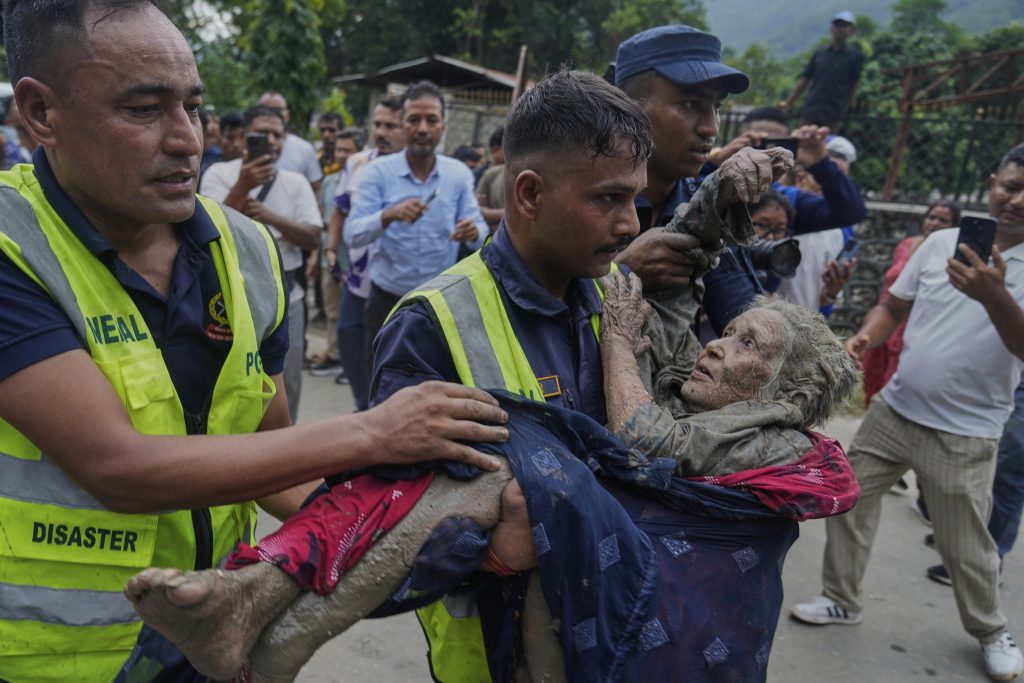
Himalayan Flash Floods Devastate Nepal-Tibet Border Port, Hundreds Missing
Devastating flash floods triggered by a glacial collapse have ravaged the Nepal-Tibet border, severely impacting Gyirong Port. Aerial footage reveals widespread destruction, with hundreds missing, including many foreign nationals and Indians. The disaster has disrupted critical trade routes and sparked fears of secondary flooding.
Key Highlights
- Flash floods and mudslides struck Nepal-Tibet border on August 26, 2026.
- Gyirong Port (Rasuwagadhi) sustained severe damage; aerial footage confirms devastation.
- Glacial collapse, not earthquake, caused the catastrophic floods.
- Hundreds of people, including many foreign nationals and Indians, are missing.
- Critical trade routes between Nepal and China remain disrupted.
- Concerns rise over potential secondary floods from a newly formed barrier lake.
A catastrophic series of flash floods and mudslides struck the mountainous border region between Nepal and China's Tibet (Xizang Autonomous Region) on August 26, 2026, causing widespread devastation and leaving hundreds dead or missing. The disaster, which has drawn international attention, was primarily triggered by a glacial collapse or ice-rock avalanche, and not an earthquake as initially suspected.
The main focus of the Hindustan Times article, 'Aerial footage shows port near Tibet before and after Nepal flash floods,' is heavily corroborated by real-time information. Aerial and drone footage indeed captured the overwhelming scale of destruction at Gyirong Port, a vital trading hub located on the Nepal-China border, which is also known as Rasuwagadhi on the Nepali side. The 'before and after' visuals starkly illustrate the complete obliteration of infrastructure, with the port area, including the Rasuwagadhi customs yard and dry port, being reduced to a riverbed. The Hindustan Times itself noted it could not independently verify the authenticity of the viral aerial clip, a commendable journalistic practice.
The human toll of the disaster is staggering. Initial reports on August 26 indicated 157 confirmed deaths in Nepal, with China reporting three fatalities in Tibet. However, the number of missing persons quickly escalated, reaching between 1,000 and 1,468 across both sides of the border by August 27. Among the unaccounted for are a significant number of foreign nationals, including tourists and pilgrims from various countries such as India, Britain, the United States, Australia, and Canada. For India, the situation is particularly critical, with around 200 Indian nationals on the Tibet side seeking evacuation assistance and over 100 Indians reported missing. The Indian Ministry of External Affairs confirmed establishing contact with 290 Indians in Nepal, with more than 80 successfully rescued. Furthermore, India's National Disaster Response Force (NDRF) teams were placed on high alert in Uttar Pradesh and Bihar, anticipating potential downstream flooding as the Bhote Koshi river, originating in Tibet, flows into Nepal's Trishuli river and eventually becomes India's Gandak river.
Infrastructure damage is extensive, crippling connectivity and trade. The floods have swept away homes, multiple bridges (at least 19 were destroyed), and around 40 kilometers of roads. Critically, 13 hydropower projects were also severely damaged, resulting in a loss of about 12% of Nepal's national hydropower capacity. The main trade routes between Nepal and China, particularly the Rasuwagadhi border point, have been rendered impassable, with the Tatopani border point also facing significant disruptions due to landslides. This disruption poses a severe threat to Nepal's economy, especially with the upcoming festive season, as billions of rupees worth of goods meant for import through these routes are now stranded or lost. Customs officials, agents, and truck drivers who were at the Rasuwagadhi customs yard are also among the missing, compounding the crisis.
A major ongoing concern is the formation of a barrier lake at the confluence of the Chhochen Khola and Purepu Tsangpo rivers in Tibet, which flow into the Bhote Koshi river system. Chinese officials issued a Level-IV alert, warning of a high risk of the lake breaching and causing a massive secondary disaster downstream. Rescue operations in Tibet have been temporarily halted due to this escalating risk, and emergency teams have been ordered to stand by. Chinese Premier Li Qiang has visited the disaster-hit area to oversee rescue and relief efforts, while satellites and drones are being deployed to aid in monitoring and search operations.
The news article is accurate and well-corroborated by numerous credible sources. The headline is factual and does not appear sensationalized or exaggerated, accurately reflecting the gravity of the situation. The information provided aligns with other major news outlets reporting on the event, confirming the widespread damage, casualties, and the critical situation at the Nepal-Tibet border. The event underscores the vulnerability of Himalayan regions to cryosphere hazards and the urgent need for robust early warning systems.
Frequently Asked Questions
What caused the flash floods near the Nepal-Tibet border?
The flash floods and mudslides were primarily caused by a glacial collapse or ice-rock avalanche in the high-altitude Himalayan region, which then triggered a massive debris flow into river systems like the Bhote Koshi.
Which border port was most affected by the floods?
Gyirong Port, also known as Rasuwagadhi on the Nepali side, a crucial trade link between Nepal and China, was severely devastated by the floods and mudslides. The port's infrastructure and customs yard were extensively damaged.
How many people are reported dead or missing?
Hundreds of people are reported dead or missing on both the Nepali and Chinese sides of the border. Reports indicated over 1,000 to 1,400 people missing, including many foreign nationals from countries like India, the US, UK, Australia, and Canada.
What are the concerns about a 'barrier lake'?
A significant concern is the formation of a barrier lake in Tibet due to accumulated debris from the mudslides. Authorities have issued alerts about the high risk of this lake breaching, which could lead to a massive secondary flood downstream, further endangering affected areas and hampering rescue efforts.
What is India's involvement and concern regarding this disaster?
India is concerned due to hundreds of its nationals being among the missing or affected in Nepal and Tibet. The Indian Ministry of External Affairs has been actively tracking the situation and assisting with evacuations. Additionally, India's NDRF teams are on alert in states like Uttar Pradesh and Bihar due to the potential for downstream flooding from rivers originating in the affected Himalayan region.