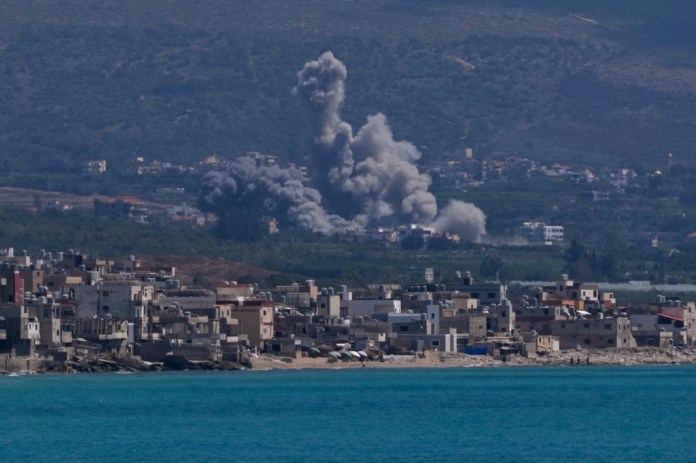
Israeli Strikes Kill 16 in Southern Lebanon Amid Ceasefire Breach
Despite a recently announced ceasefire, Israeli strikes on southern Lebanon on June 20, 2026, killed at least 16 people, primarily in the Nabatieh district. These escalating hostilities occurred less than a day after a US-brokered truce between Israel and Hezbollah, further jeopardizing broader US-Iran peace talks aimed at ending the West Asia war.
Key Highlights
- 16 killed in Israeli strikes on south Lebanon on June 20, 2026.
- Attacks occurred despite a new ceasefire between Israel and Hezbollah.
- Ceasefire brokered by US and Qatar just hours before fresh strikes.
- Violence jeopardizes broader US-Iran peace deal for West Asia.
- US-Iran talks postponed due to renewed fighting in Lebanon.
- Lebanon's Civil Defense confirmed 16 fatalities in Nabatieh region.
On Saturday, June 20, 2026, Israeli strikes on southern Lebanon resulted in the deaths of at least 16 people, with several others wounded, despite a recently agreed-upon ceasefire between Israel and the Iran-backed Hezbollah group. The Lebanese Civil Defense agency confirmed transporting 16 bodies and 12 wounded individuals following the attacks in the Nabatieh district, where rescue and evacuation operations continued amidst difficult conditions. Lebanese official media reported fresh Israeli strikes across more than a dozen locations in south Lebanon after midnight and into Saturday morning, primarily in and around the Nabatieh area.
These renewed hostilities occurred less than 24 hours after a new ceasefire was announced on Friday, June 19, 2026. The truce was reportedly brokered by US and Qatari mediators following intense exchanges between Israel and Hezbollah. The agreement was intended to alleviate tensions that had placed a broader US-Iran deal, aimed at ending the wider West Asia war, under significant strain. However, the continuation of Israeli military operations cast serious doubt on the effectiveness and durability of the ceasefire.
Israel's military acknowledged carrying out strikes against Hezbollah targets in southern Lebanon on Saturday in response to more than 50 overnight projectile launches from the militant group. This cycle of violence underscores the fragile security situation in the region and the challenges in maintaining any cessation of hostilities. On the previous day, Friday, June 19, 2026, Lebanese authorities had reported a significantly higher casualty count, with the Health Ministry stating that 47 people were killed in Israeli airstrikes and bombardments across southern and eastern Lebanon. This was described as the worst violence since Washington and Tehran sealed a deal earlier in the week to halt the wider West Asia conflict, which was also supposed to include a halt to fighting between Israel and Hezbollah in Lebanon.
The escalation of fighting prompted the postponement of crucial talks between the United States and Iran, which were scheduled to take place in Switzerland to advance the peace deal. The US Vice President JD Vance was expected to attend these talks, highlighting their importance in the diplomatic efforts to stabilize the region. The ongoing violence and the subsequent cancellation of these negotiations raised concerns about the viability of the nascent US-Iran agreement.
Adding to the tensions, an Israeli Minister, Itamar Ben-Gvir, made controversial statements on Friday, reportedly saying that "all of Lebanon must burn" after four Israeli soldiers were killed in fighting in the south of the country. Such incendiary remarks further complicated efforts toward de-escalation and peace. The Lebanese army reported that one of its soldiers was killed in an Israeli strike on the Kfar Rumman-Nabatieh road on Saturday, accusing Israel of attempting to obstruct any solution that could restore stability in Lebanon.
Multiple international news outlets, including BBC, Al Jazeera, The Times of Israel, Saudi Gazette, Palestine Chronicle, ANI, and NDTV, corroborated reports of significant Israeli strikes and casualties in southern Lebanon on June 20, 2026, despite the ceasefire. The Hindu's "LIVE updates" coverage is consistent with the unfolding events and the continuous reporting by various global media organizations. The events highlight the deep-seated conflict in West Asia and the intricate web of regional and international actors involved, with direct implications for regional stability, energy security, and global geopolitical dynamics, making it a critical story for an Indian audience concerned about international affairs and their broader impact.
Frequently Asked Questions
What happened in southern Lebanon on June 20, 2026?
On June 20, 2026, Israeli strikes on southern Lebanon killed at least 16 people, predominantly in the Nabatieh district, despite a ceasefire that had been announced just hours earlier. This brought the casualty count from the previous day's fighting to a total of 47 people killed.
Was there a ceasefire in place between Israel and Hezbollah?
Yes, a new ceasefire between Israel and Hezbollah was announced on Friday, June 19, 2026, brokered by US and Qatari mediators. However, Israeli military operations continued into Saturday, June 20, 2026, constituting a breach of this agreement.
How did these events impact the broader US-Iran peace talks?
The renewed and escalating fighting in Lebanon significantly jeopardized a nascent US-Iran peace deal aimed at ending the West Asia war. Consequently, crucial talks between the United States and Iran, scheduled to take place in Switzerland to advance this deal, were postponed.
What was the Israeli military's justification for the strikes?
The Israeli military stated that its strikes on Saturday, June 20, 2026, were in response to more than 50 projectile launches by Hezbollah from southern Lebanon during the overnight hours.
What was the reaction from Lebanese authorities?
Lebanese official media reported the fresh Israeli strikes and casualties. The Lebanese army also stated that an Israeli strike killed one of its soldiers, accusing Israel of continuing its 'brutal attacks' to obstruct any solution aimed at restoring stability in Lebanon.