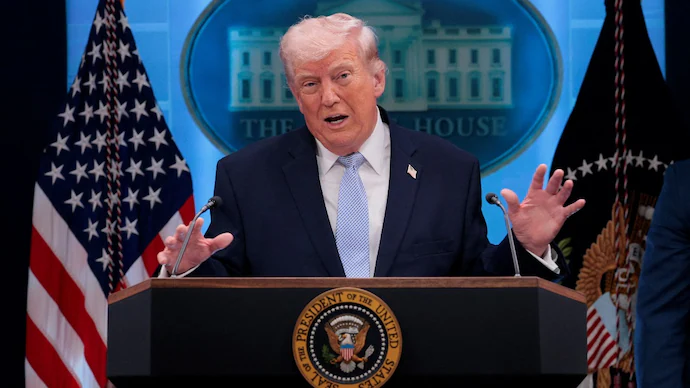
Pakistan PM Shehbaz Sharif Urges Trump for Iran Deadline Extension Amid Escalation
Pakistan's Prime Minister Shehbaz Sharif has reportedly appealed to US President Donald Trump to extend an Iran deadline by two weeks, seeking a ceasefire to facilitate diplomacy. This comes amidst heightened US-Iran tensions, echoing similar calls for de-escalation by Pakistan in the past.
Key Highlights
- Shehbaz Sharif, Pakistan PM, urged Trump to extend Iran deadline.
- Request for two-week extension aims at fostering diplomacy.
- Calls for ceasefire to de-escalate US-Iran tensions.
- Comes amidst renewed US strikes and Trump's stern warnings to Iran.
- Pakistan positioning itself as a key mediator in Middle East conflict.
In a significant diplomatic move, Pakistan's Prime Minister Shehbaz Sharif has reportedly appealed to US President Donald Trump to extend a looming deadline for Iran by two weeks, advocating for a ceasefire to enable crucial diplomatic efforts. This plea emerges amidst a period of escalating tensions between the United States and Iran, marked by recent military actions and strong rhetoric from Washington.
As of April 2026, Shehbaz Sharif holds the office of Prime Minister of Pakistan, having previously served from 2022 to 2023 and again since March 2024. Concurrently, Donald Trump is serving as the President of the United States, a context confirmed by various news reports from March and April 2026 detailing interactions between him and Pakistani leadership, as well as his ongoing stance on Iran. These developments indicate a renewed phase of US-Iran confrontation, bearing striking resemblances to the heightened tensions witnessed in late 2019 during Trump's previous term.
Pakistan has actively positioned itself as a mediator in the ongoing US-Iran standoff. Recent reports from March 2026 confirm Islamabad's willingness and readiness to host direct or indirect negotiations between the United States and Iran. Prime Minister Sharif himself confirmed Pakistan's eagerness to facilitate such talks. This diplomatic initiative is underpinned by Pakistan's unique standing, maintaining working relationships with both Washington and Tehran, which grants it an advantageous position to foster dialogue where direct communication is limited.
The call for a two-week extension of any US-imposed deadline on Iran, coupled with a plea for a ceasefire, is intended to create a conducive environment for diplomacy. The objective is to avert further military escalation and open channels for a negotiated resolution. Pakistan's top leadership has been in communication with both American and Iranian counterparts to push for de-escalation. For instance, Pakistan's army chief, Field Marshal Asim Munir, reportedly spoke with President Trump on March 23, 2026, while Prime Minister Sharif held a phone call with Iranian President Masoud Pezeshkian the following day, all part of concerted efforts to ease tensions.
The backdrop to this urgent mediation is a deeply volatile situation. Recent news from early April 2026 reports US strikes on military targets on Kharg Island, Iran's crucial oil export terminal. This is accompanied by strong warnings from President Trump, including his statement that a "whole civilization will die tonight" if Iran fails to meet his demands, particularly regarding the reopening of the Strait of Hormuz. These events signify a significant escalation, underscoring the critical need for diplomatic intervention to prevent a wider regional conflict that could have severe global ramifications, particularly for energy markets and international stability.
It is important to note the historical parallels. In late 2019, during a previous period of intense US-Iran tensions, Pakistan's then-Prime Minister Imran Khan also publicly offered to mediate between the two nations after engaging with leaders in both countries. This past effort also included discussions around de-escalation and the prevention of an all-out conflict. The current situation in 2026, with Shehbaz Sharif leading Pakistan's mediation, reflects a recurring pattern where Islamabad attempts to leverage its diplomatic ties to promote stability in the Middle East. While Pakistan's mediation efforts in 2019 did not lead to a significant breakthrough in US-Iran relations, they demonstrated Pakistan's consistent stance as a proponent of dialogue.
For an audience in India, the stability of the Middle East and US-Iran relations hold significant importance due to energy security concerns, regional geopolitical dynamics, and the presence of a large Indian diaspora in the Gulf region. Any escalation in the conflict would directly impact India's economic interests and strategic calculations. Therefore, Pakistan's efforts, even if indirect, to de-escalate tensions are watched closely for their potential regional implications.
While the India Today article's headline specifically mentions Shehbaz Sharif, it's crucial to acknowledge that a similar scenario involving a Pakistani Prime Minister mediating with a US President named Trump regarding Iran's deadline also occurred in 2019 with Imran Khan. However, current (April 2026) real-time information indicates that Shehbaz Sharif is indeed the sitting Prime Minister, interacting with President Trump amid fresh US-Iran tensions and mediation offers, rendering the current headline accurate in its contemporary context.
Frequently Asked Questions
Who is requesting an extension for the Iran deadline from President Trump?
Pakistan's Prime Minister Shehbaz Sharif has reportedly made this request to US President Donald Trump amidst renewed tensions between the US and Iran.
What is the purpose of Pakistan's mediation efforts between the US and Iran?
Pakistan's primary goal is to de-escalate tensions, prevent further military conflict, and create a diplomatic window, possibly a two-week ceasefire, to facilitate negotiations between the United States and Iran.
What is the current context of US-Iran relations that prompted this request?
The request comes amidst a period of heightened US-Iran tensions in April 2026, characterized by reports of US strikes on Iran's Kharg Island and strong rhetoric from President Trump, including warnings of significant consequences for Iran if demands are not met.
Has Pakistan mediated between the US and Iran before?
Yes, Pakistan has historically offered to mediate in US-Iran tensions. Notably, in late 2019, then-Prime Minister Imran Khan also publicly offered to mediate during a similar period of heightened tensions.
Why is the Strait of Hormuz relevant to this situation?
The Strait of Hormuz is a strategically vital waterway through which a significant portion of the world's oil transits. Its potential closure or disruption due to conflict is a major concern mentioned in the context of US-Iran tensions and Trump's deadlines.