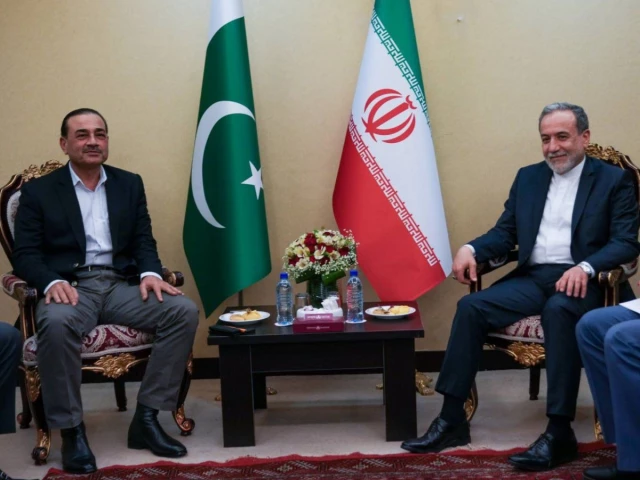
Pakistan Army Chief, Iran FM Discuss West Asia De-escalation
Pakistan's Army Chief, General Asim Munir, met with Iranian Foreign Minister Abbas Araghchi in Tehran on May 22-23, 2026, as part of Islamabad's intensified diplomatic efforts to mediate the ongoing West Asia conflict between the United States and Iran. The high-level discussions focused on preventing further escalation and promoting regional peace.
Key Highlights
- Pakistan Army Chief Asim Munir visited Tehran on May 22, 2026.
- Met with Iranian Foreign Minister Abbas Araghchi for late-night talks.
- Discussions focused on mediating the US-Iran West Asia conflict.
- Aimed at preventing escalation and strengthening regional stability.
- Pakistan's Interior Minister Mohsin Naqvi also engaged in Tehran diplomacy.
- This marks Munir's second visit to Iran in over a month.
Pakistan's Chief of Army Staff, General Asim Munir, undertook a crucial visit to Tehran, Iran, on Friday, May 22, 2026, engaging in extensive talks with Iranian Foreign Minister Seyed Abbas Araghchi. These high-level discussions, which reportedly continued late into the night, were part of Islamabad's ongoing and intensified diplomatic efforts to mediate the escalating West Asia conflict involving the United States, Israel, and Iran.
The primary objective of General Munir's visit was to expedite efforts for a peace deal between the US and Iran and to prevent further escalation of tensions in the strategically vital West Asia region. Pakistan's military confirmed that the visit was "part of ongoing mediation efforts" to establish lasting peace. The talks specifically covered diplomatic initiatives aimed at de-escalating the conflict and ensuring peace, stability, and security across West Asia.
General Munir was warmly received by Iran's Interior Minister Eskandar Momeni upon his arrival in Tehran. Notably, Pakistan's Interior Minister Mohsin Naqvi, believed to be close to General Munir, was already in Tehran, having arrived earlier in the week and engaged in separate discussions with top Iranian officials, including Foreign Minister Araghchi. This indicates a concerted and multi-pronged diplomatic push by Pakistan.
This marks General Munir's second trip to Iran in just over a month, highlighting the urgency and importance Pakistan places on its mediation role. Pakistan has positioned itself as a key intermediary in the conflict, a role that has attracted significant attention. Islamabad's efforts gained traction after it successfully brokered a ceasefire on April 8, 2026, following US and Israeli military strikes on Iran that began on February 28, 2026. Subsequently, Pakistan hosted the highest-level talks between the US and Iran since 1979 on April 11-12, though these initial negotiations did not result in a permanent agreement.
The broader context of the conflict involves the US and Iran negotiating proposals regarding the reopening of the Strait of Hormuz and concerns over Tehran's nuclear program, alongside Iran's demand for sanctions relief. Iranian Foreign Minister Araghchi has communicated to United Nations Secretary-General Antonio Guterres that Washington's "excessive demands" remain a primary obstacle to ongoing peace negotiations. He accused the US of undermining diplomacy through broken commitments and contradictory stances.
Pakistan's motivation for mediation is multi-faceted, stemming from its own strategic and economic interests. The country is vulnerable to economic shocks resulting from regional escalation, fears instability spreading to its domestic arena (particularly Balochistan, which borders Iran), and needs to carefully manage its relations with both Saudi Arabia and Iran. Islamabad aims to convert its geopolitical relevance into economic, diplomatic, and security gains, especially amidst its own economic fragility. Analysts suggest that Pakistan enjoys the confidence of both Tehran and Washington, making it a credible channel for communication.
The implications for India are significant, as regional instability directly impacts its energy security, trade routes (the Strait of Hormuz handles nearly one-fifth of global energy supplies), and the safety of its large diaspora in the Gulf. While Pakistan's diplomatic visibility has increased, India's interests lie in the de-escalation of the war and the protection of its own channels of communication with all parties involved. US Secretary of State Marco Rubio acknowledged "some slight progress" in the talks, while President Donald Trump indicated that the US had postponed renewing attacks on Iran after requests from Gulf leaders, suggesting that serious negotiations are indeed underway.
The current events underscore the complex geopolitical landscape of West Asia and Pakistan's strategic maneuvering to play a constructive, albeit self-interested, role in stabilizing the region.
Frequently Asked Questions
What was the main purpose of Pakistan Army Chief General Asim Munir's visit to Iran?
The main purpose of General Asim Munir's visit was to conduct mediation efforts to de-escalate the ongoing West Asia conflict, often referred to as the US-Iran war, and to promote peace and stability in the region.
When did the talks between General Munir and Iranian Foreign Minister Araghchi take place?
The talks between General Munir and Iranian Foreign Minister Abbas Araghchi took place on Friday, May 22, 2026, and continued late into the night. They were reported on Saturday, May 23, 2026.
What is Pakistan's role in the West Asia conflict mediation?
Pakistan has emerged as a key intermediary, facilitating communication between Washington and Tehran. It previously brokered a ceasefire and hosted high-level talks, aiming to prevent further escalation and secure a peace deal, driven by its own economic and security interests.
What are the key obstacles to a peace deal between the US and Iran?
According to Iran's Foreign Minister Araghchi, Washington's "excessive demands" are a primary obstacle. Other contentious issues include Iran's nuclear program, control over the Strait of Hormuz, and Iran's demand for sanctions relief.
Why is this news relevant to an Indian audience?
The West Asia conflict directly impacts India's energy security (due to disruptions in the Strait of Hormuz), trade routes, and the safety of its large diaspora in the Gulf region. Regional stability is crucial for India's economic and strategic interests.