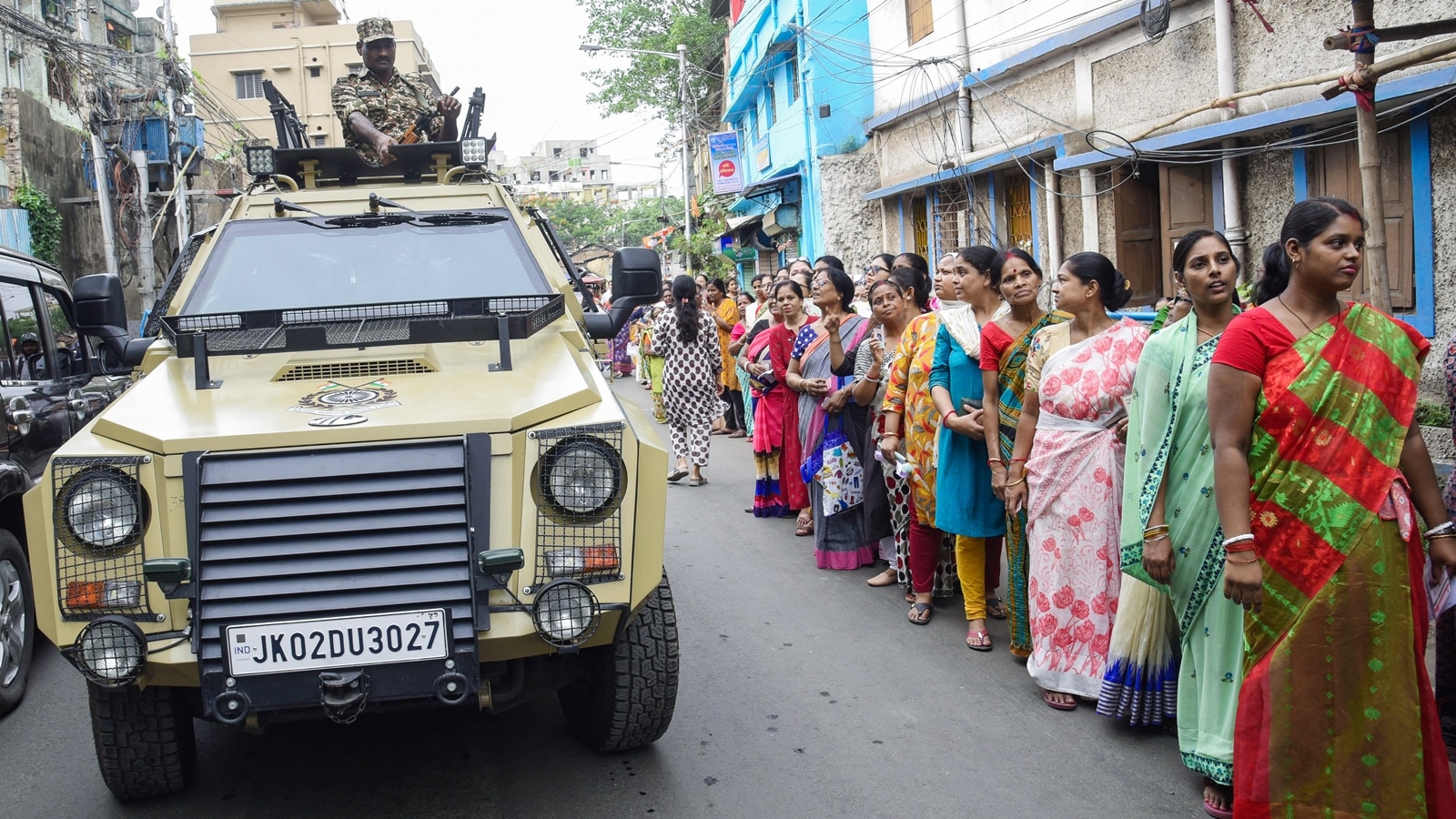
TMC Alleges EVM Tampering in Kolkata Strongroom; EC Denies Claims
The Trinamool Congress (TMC) has alleged EVM tampering in a Kolkata strongroom, leading to protests by party leaders. The Election Commission of India (ECI) has strongly refuted these claims, stating that all strongrooms remain secure and sealed. The ECI clarified that activities observed were related to the segregation of postal ballots, not the polled EVMs.
Key Highlights
- TMC protested alleged EVM tampering in a Kolkata strongroom.
- The Election Commission denied all allegations of EVM tampering.
- ECI stated strongrooms are sealed and secure.
- Alleged activities were related to postal ballot segregation.
- TMC leaders demanded transparency and a thorough investigation.
The Trinamool Congress (TMC) has leveled serious allegations of Electronic Voting Machine (EVM) tampering within a strongroom in Kolkata, prompting a significant political outcry and protests by party leaders. The TMC's claims, which were amplified across social media and news platforms, centered on suspicions of unauthorized access and manipulation of EVMs stored in the Netaji Indoor Stadium, a key strongroom hub. Prominent TMC leaders, including Shashi Panja and Kunal Ghosh, spearheaded the protest, staging a dharna outside the facility, demanding transparency and an investigation into the alleged irregularities. They claimed that CCTV footage suggested suspicious activities within the strongroom and that their representatives were being denied full access. West Bengal Chief Minister Mamata Banerjee also visited the strongroom site, further escalating the tension and voicing her party's concerns.
The Election Commission of India (ECI) vehemently denied all allegations of EVM tampering. In a swift response, the ECI issued statements clarifying that all strongrooms containing polled EVMs were "safely secured and sealed." They emphasized that robust security measures, including CCTV surveillance and the presence of security forces, were in place to ensure the integrity of the stored machines. The ECI further explained that certain activities observed and circulated on social media pertained to a separate strongroom designated for postal ballots, where segregation of these ballots was underway. This segregation, they clarified, was a routine process and did not involve the polled EVMs. The Commission assured that all observers and returning officers were informed, and candidates and their agents were also notified about the procedures.
Historically, concerns about EVM tampering have been raised by various political parties in India following election results. However, the Election Commission and the manufacturers have consistently maintained that the EVMs are tamper-proof, citing technical safeguards and the lack of connectivity to external networks like the internet or Bluetooth. The Supreme Court of India has also upheld the constitutional validity of EVMs and mandated the use of Voter Verified Paper Audit Trails (VVPATs) to enhance transparency and auditability. Despite these assurances and technical measures, allegations of EVM tampering continue to surface, particularly in closely contested elections, fueling political debates and public scrutiny. In this specific instance, the TMC's allegations emerged shortly after exit poll predictions, which projected a lead for the Bharatiya Janata Party (BJP), adding a layer of political context to the strongroom controversy.
The Election Commission has a well-established protocol for strongroom security, involving multiple layers of security, CCTV surveillance, and the presence of representatives from political parties. These protocols are designed to ensure the integrity of the stored EVMs until the counting day. The ECI's consistent stance on the tamper-proof nature of EVMs, backed by judicial pronouncements and technical explanations, forms the basis of its defense against such allegations. The Election Commission has previously refuted similar claims, providing detailed responses and explanations to address the concerns raised by political parties. The current situation highlights the ongoing challenge of maintaining public trust in electronic voting systems amidst persistent allegations and political tensions surrounding elections in India.
Frequently Asked Questions
What did the Trinamool Congress (TMC) allege regarding the Kolkata strongroom?
The TMC alleged that EVMs in a Kolkata strongroom were being tampered with, citing suspicious activities and demanding transparency in the process. They protested outside the strongroom, demanding an investigation into the alleged irregularities.
How did the Election Commission of India (ECI) respond to the TMC's allegations?
The ECI strongly denied all allegations of EVM tampering. They clarified that all strongrooms containing polled EVMs remained securely sealed and that the observed activities were related to the segregation of postal ballots, not the EVMs themselves.
What are the general concerns surrounding EVMs in India?
Concerns about EVM tampering have been raised by various political parties in India. However, the ECI maintains that EVMs are tamper-proof due to technical safeguards and the lack of external connectivity. The Supreme Court has also upheld the use of EVMs and mandated VVPATs to enhance transparency.
What was the context of these allegations in West Bengal?
The allegations emerged shortly after exit poll predictions for the West Bengal Assembly elections, which projected a lead for the Bharatiya Janata Party (BJP). This political backdrop added to the sensitivity of the strongroom controversy.
What are the standard security measures for EVM strongrooms in India?
Standard security measures include multiple layers of security, CCTV surveillance, and the presence of representatives from political parties to ensure the integrity of stored EVMs until counting day.