US-Iran peace talks collapse over 'excessive demands,' nuclear concerns
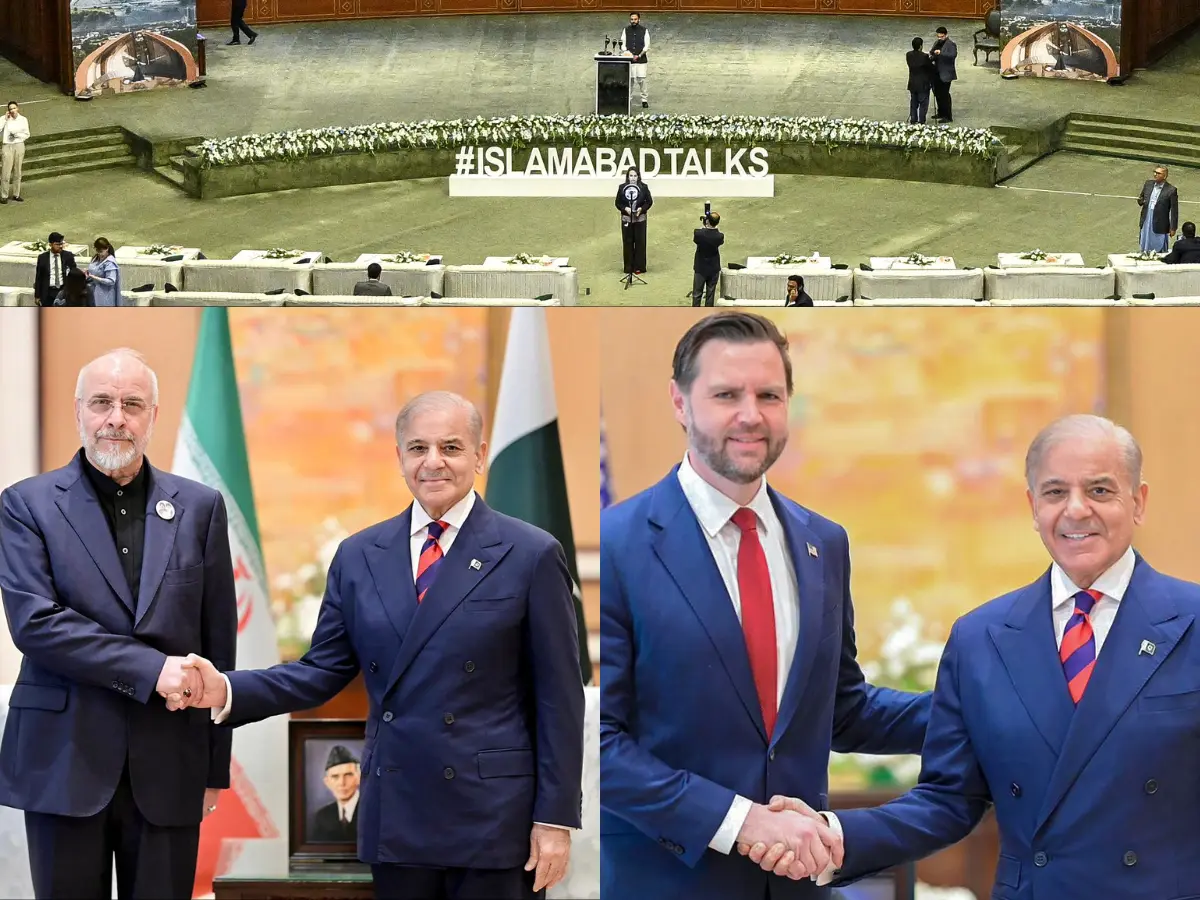)
Direct negotiations between the U.S. and Iran in Pakistan have concluded without a peace deal, with both sides citing 'excessive demands' and a failure to build trust. Key sticking points included Iran's nuclear program and control over the Strait of Hormuz, leaving a fragile ceasefire in uncertainty.
Key Highlights
- US-Iran peace talks in Pakistan ended without an agreement.
- Iran blamed 'excessive demands' from the US for the breakdown.
- Nuclear program and Strait of Hormuz control were key issues.
- A fragile ceasefire remains in uncertainty after failed talks.
- Both sides signaled a willingness to continue diplomatic efforts.
Direct peace talks between the United States and Iran, held in Islamabad, Pakistan, have concluded without reaching an agreement, with both nations attributing the failure to 'excessive demands' and a lack of trust. The negotiations, which spanned over 21 hours, aimed to secure a deal to end a six-week conflict that has significantly impacted the Middle East and global markets. U.S. Vice President JD Vance, who led the American delegation, stated that the talks failed because Iran did not provide an 'affirmative commitment' to abandon its pursuit of nuclear weapons. He described the U.S. position as a 'final and best offer' that was not accepted by the Iranian side [6, 15, 17].
On the Iranian side, Foreign Ministry spokesperson Esmaeil Baqaei indicated that while consensus was reached on some issues, significant disagreements persisted over 'two to three important matters.' Baqaei asserted that the success of future diplomatic processes depends on the seriousness and good faith of the opposing side, refraining from 'excessive demands and unlawful requests,' and accepting Iran's legitimate rights and interests [10, 12]. Iran's chief negotiator and Parliament Speaker, Mohammad Bagher Qalibaf, further elaborated on X (formerly Twitter) that the American side ultimately failed to gain Tehran's trust, despite Iran presenting 'forward-looking initiatives' [3, 11].
Several key issues emerged as major sticking points during the marathon negotiations. The primary U.S. demand centered on Iran forgoing its nuclear program and any tools that could enable it to quickly achieve a nuclear weapon [6, 15]. This was considered the 'core goal' of the U.S. administration [15]. For Iran, demands included sanctions relief, wartime compensation, and limitations on Israeli military actions in Lebanon [6, 12]. The control and navigation of the Strait of Hormuz, a critical global energy route, also remained a contentious issue [5, 6, 12]. Tensions were further exacerbated when the U.S. announced that two destroyers had transited the Strait of Hormuz for mine-clearing operations, a claim Iran disputed [6, 7].
The talks were described as historic, marking the highest-level engagement between the two countries since the 1979 Islamic Revolution [3, 4, 5]. The negotiations were facilitated by Pakistan, which has played a crucial role as a mediator [4, 10, 12]. Despite the lack of a formal agreement, both sides signaled a willingness to continue diplomatic efforts, with Iran's Foreign Ministry stating that 'diplomacy never ends' [12]. However, the breakdown of talks has cast a shadow of uncertainty over a fragile two-week ceasefire that was previously announced [6, 15].
The source article from The Hindu highlights Iran's perspective that the talks ended without a deal due to 'excessive demands' made by the U.S. [10]. This aligns with statements from other news outlets, such as The Times of India and News On AIR, which also reported that Iran blamed the U.S. for failing to gain trust and for making unreasonable demands [3, 1]. The Washington Post and CBS News also reported that the U.S. team considered themselves flexible and accommodating, but ultimately could not get Iran to accept their terms [17, 32].
Regarding the credibility of the sources, The Hindu is generally regarded as a highly credible and unbiased news source, with a strong reputation for in-depth reporting and factual accuracy [18, 19, 21, 22]. The Times of India, while a major publication, has faced criticism regarding sensationalism, potential bias, and slower reporting on breaking news, with some analyses rating its reliability as 'Average' [8, 9, 14, 16]. News On AIR is the public service broadcaster of India, generally considered reliable for news reporting.
The news is of high importance due to the potential impact on regional stability, global energy markets, and the ongoing conflict. The urgency is considered high given the fragility of the ceasefire and the potential for renewed hostilities. The news is relevant to India as a significant player in regional diplomacy and a country with strategic interests in the Middle East's stability.
Frequently Asked Questions
Why did the US-Iran peace talks in Pakistan fail?
The talks failed due to disagreements over Iran's nuclear program and demands for the U.S. to refrain from 'excessive demands'. Both sides also cited a lack of trust as a significant obstacle.
What were the main sticking points in the negotiations?
Key issues included Iran's nuclear ambitions, Iran's demand for sanctions relief and compensation, and control over the strategic Strait of Hormuz. The U.S. insisted on Iran abandoning its nuclear weapons program.
What is the status of the ceasefire following the failed talks?
A fragile two-week ceasefire was in place before the talks, but its durability is now uncertain following the breakdown of negotiations. There are concerns about a potential escalation of conflict.
Who were the lead negotiators for the US and Iran?
The U.S. delegation was led by Vice President JD Vance, and the Iranian delegation was led by Parliament Speaker Mohammad Bagher Qalibaf.