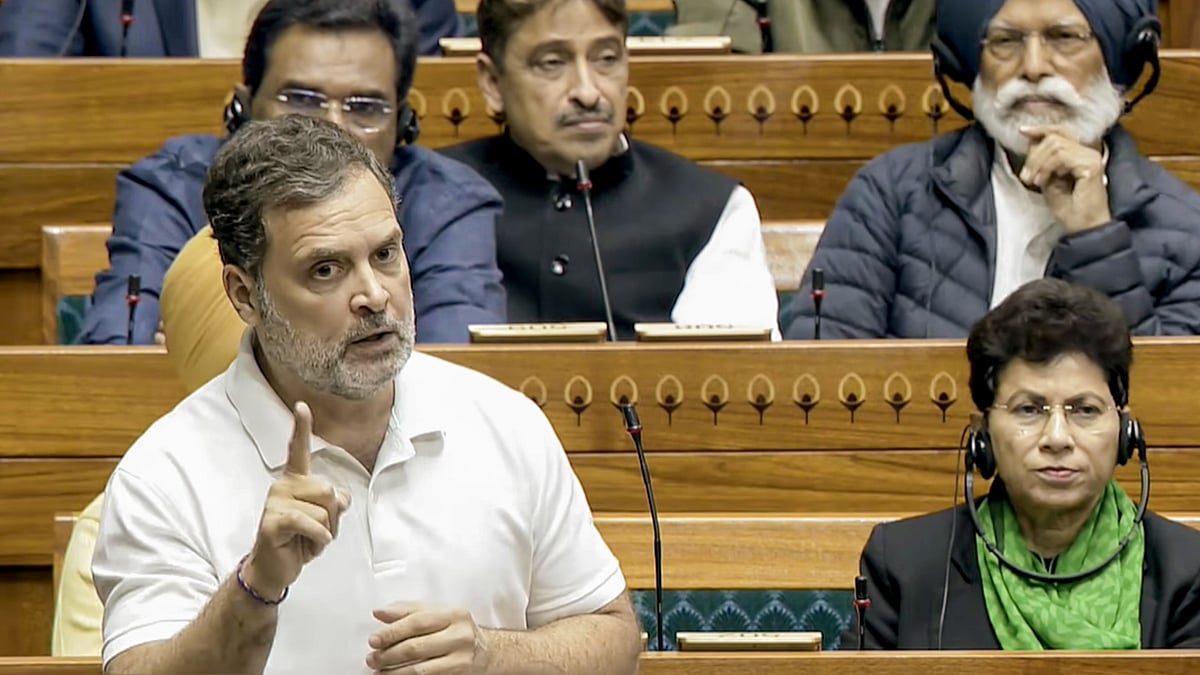
Rahul Gandhi criticizes India-US trade deal in Lok Sabha
Rahul Gandhi, the Leader of the Opposition, strongly criticized the interim trade agreement between India and the US in the Lok Sabha, alleging it was one-sided and a "wholesale surrender" of India's interests. He claimed the deal compromised energy security, farmers' interests, the textile sector, and data. The government, through Finance Minister Nirmala Sitharaman and Union Minister Kiren Rijiju, vehemently rejected these accusations, asserting that no one can sell or buy India and that the deal benefits the nation.
Key Highlights
- Rahul Gandhi alleged a "wholesale surrender" in the India-US trade deal.
- He claimed the deal compromised India's energy security and farmers' interests.
- Gandhi also raised concerns about data security and the textile sector.
- The government, led by Nirmala Sitharaman and Kiren Rijiju, denied the allegations.
- Rijiju stated that the ruling alliance would seek to expunge Gandhi's "lies" from records.
- The Lok Sabha witnessed a heated exchange between Gandhi and government ministers.
Leader of the Opposition Rahul Gandhi delivered a fiery speech in the Lok Sabha on February 11, 2026, vehemently criticizing the interim trade agreement between India and the United States. Gandhi accused the government of a "wholesale surrender" and "selling Bharat Mata" through this deal, alleging that it compromised India's energy security, the interests of its farmers, the textile sector, and crucial data. He claimed that the agreement was one-sided and that Prime Minister Narendra Modi had agreed to it under duress, suggesting a "chokehold" from the US. Gandhi further alleged that the deal would lead to the flooding of Indian markets with US agricultural products, harming domestic producers, and that control over digital trade rules had been ceded, with no data localization requirements and free data flow to the US, alongside a 20-year tax holiday for big tech companies. He also stated that the agreement dictated India's oil purchases, compromising its energy security.
The government, represented by Finance Minister Nirmala Sitharaman and Union Parliamentary Affairs Minister Kiren Rijiju, strongly rebutted Gandhi's claims. Sitharaman declared that "no one has the audacity to sell or buy out India" and accused the previous Congress-led UPA government of surrendering farmers' and the poor's interests to the World Trade Organization. Rijiju characterized Gandhi's speech as "full of lies" and stated that the ruling alliance would seek to expunge these remarks from the parliamentary records. He also challenged Gandhi to authenticate his allegations, emphasizing their serious connotations. Rijiju further highlighted India's economic progress, noting its rise from the "fragile five" to the fourth-largest economy.
The interim trade agreement itself, announced on February 6, 2026, outlines a framework for reciprocal trade between India and the US, aimed at reducing tariffs and fostering greater market access. Key terms include India's elimination or reduction of tariffs on US industrial goods and a range of agricultural products, while the US reduces reciprocal tariffs on Indian goods, including textiles, apparel, and machinery, to 18%. The agreement also addresses non-tariff barriers and aims to enhance cooperation in technology and supply chains. India's Commerce Secretary, Rajesh Agrawal, expressed optimism that the legal agreement would be finalized by the end of March 2026, emphasizing that sensitive sectors like dairy and agriculture were protected and that the deal was beneficial for India's exports. However, concerns have been raised by some stakeholders about potential impacts on domestic industries, particularly in agriculture and textiles, due to increased US imports. The White House also revised its fact sheet on the deal, softening language on certain agricultural products like pulses and digital trade commitments, indicating ongoing nuances and discussions surrounding the agreement.
The political discourse surrounding the trade deal underscores the deep divisions in India's parliamentary debates, with opposition parties often employing strong rhetoric to challenge government policies. Rahul Gandhi's use of the phrase "sold Bharat Mata" has drawn particular attention, and while he has used strong language in parliamentary debates before, the government's firm denial and calls for authentication highlight the contentious nature of the proceedings. The exchange represents a broader pattern of political confrontation in India, where trade agreements and economic policies are often subjected to intense scrutiny and partisan debate.
Frequently Asked Questions
What are Rahul Gandhi's main allegations regarding the India-US interim trade agreement?
Rahul Gandhi alleged that the interim trade agreement between India and the US is one-sided, a "wholesale surrender" of India's interests, compromising its energy security, farmers' interests, textile sector, and data. He also claimed that Prime Minister Narendra Modi agreed to the deal under duress and that it would harm domestic producers due to increased US imports.
How did the Indian government respond to Rahul Gandhi's allegations?
The Indian government, through Finance Minister Nirmala Sitharaman and Union Minister Kiren Rijiju, strongly rejected Rahul Gandhi's claims. They stated that no one can sell or buy India and that the deal benefits the nation. The government also vowed to seek the expungement of Gandhi's alleged "lies" from parliamentary records and challenged him to authenticate his serious allegations.
What are the key features of the India-US interim trade agreement?
The interim trade agreement, announced on February 6, 2026, aims to reduce tariffs and improve market access. Key aspects include India reducing tariffs on US industrial and agricultural goods, and the US lowering reciprocal tariffs on Indian goods to 18%. The agreement also addresses non-tariff barriers and focuses on cooperation in technology and supply chains.
When is the interim trade agreement expected to be finalized and signed?
India's Commerce Secretary, Rajesh Agrawal, expressed optimism that the legal agreement for the interim trade deal would be finalized and signed by the end of March 2026.
What were the reactions from other stakeholders regarding the trade deal?
While the government expressed positive feedback from stakeholders and exporters, some agricultural and textile industry representatives have raised concerns about potential impacts from increased US imports. The White House also revised its fact sheet on the deal, indicating ongoing discussions and nuances.