CJP Leader Apologizes After Police Brutality at Delhi Protest
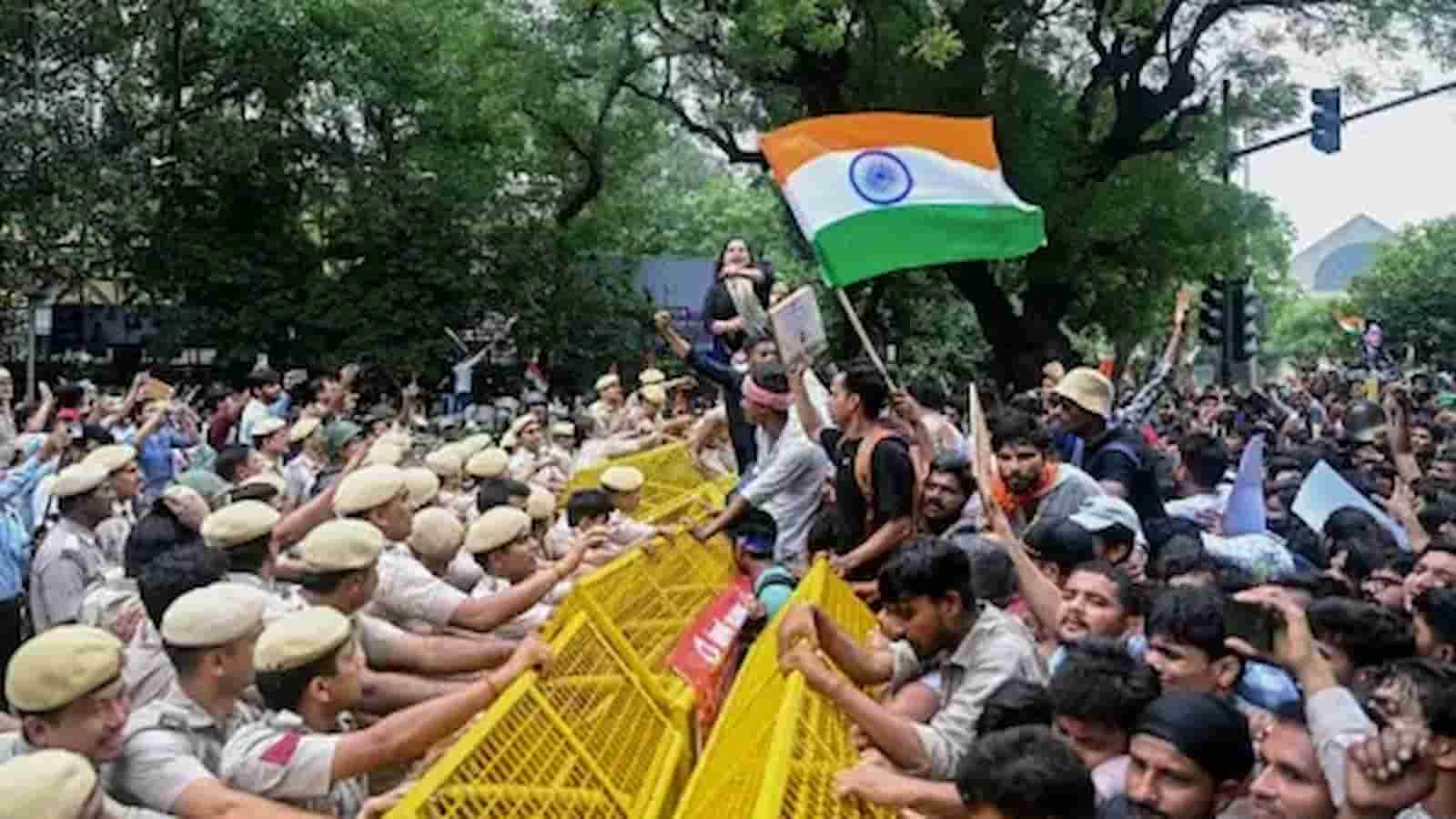
Abhijeet Dipke, founder of the Cockroach Janta Party (CJP), apologized to supporters allegedly brutalized by Delhi Police during their 'Sansad Chalo' march on July 20, 2026. The protest against NEET irregularities and Education Minister Dharmendra Pradhan's resignation saw widespread clashes, tear gas, and lathi-charges, with both protesters and police sustaining injuries.
Key Highlights
- CJP founder Abhijeet Dipke issued a public apology to injured protesters.
- Delhi Police reportedly used lathi-charges and tear gas against the march.
- Protesters were marching to Parliament demanding Education Minister's resignation.
- Over 118 police personnel and many protesters sustained injuries.
- Internet shutdown and metro station closures occurred in central Delhi.
- Prominent figures like Sonam Wangchuk, Shabana Azmi, and Prakash Raj supported the protest.
The 'Sansad Chalo' (March to Parliament) protest organized by the youth-led Cockroach Janta Party (CJP) in New Delhi on July 20, 2026, escalated into widespread clashes with police, leading to injuries on both sides and drawing sharp criticism from CJP leaders and human rights organizations. The primary catalyst for the protest was the ongoing national outrage over alleged irregularities in the National Eligibility cum Entrance Test (NEET-UG) and other competitive examinations, coupled with calls for the resignation of Union Education Minister Dharmendra Pradhan.
Abhijeet Dipke, the founder and convenor of the CJP, issued a heartfelt apology via social media, specifically addressing supporters, particularly women, who he claimed were 'brutally beaten by male police officers.' Dipke expressed regret, stating, 'We could have done better. I could have done better to protect you from the inhumane actions of the Delhi Police.' He further accused the government of being willing to 'spill the blood of many more young students' to protect Minister Pradhan.
The protest saw thousands of students and youth converge at Jantar Mantar with the intention of marching towards Parliament, despite police denying permission for the march beyond the designated protest site. As protesters attempted to breach barricades near Parliament Street, security forces resorted to deploying tear gas and lathi-charges (baton charges) to disperse the crowds. Videos and pictures circulated on social media depicted scenes of police action, and CJP spokespersons alleged that volunteers were 'beaten, dragged on roads, and seriously injured.' Specific claims included Gitanjali J Angmo, wife of activist Sonam Wangchuk, being pulled by her hair, and other protesters suffering head injuries and fractured ribs.
Conversely, the Delhi Police issued statements accusing protesters of displaying 'unruly, aggressive and violent behaviour,' 'deliberately violating prohibitory orders,' and engaging in stone-pelting, damaging government vehicles, and public property. According to police reports, more than 118 police personnel, including senior officers, and around 70 protesters were injured, with approximately 70 protesters being detained. Separate First Information Reports (FIRs) were reportedly being registered against individuals involved in the violence.
The background to the protest involves the CJP, founded by Abhijeet Dipke in May 2026, as a satirical political movement in response to the Chief Justice of India's remarks comparing unemployed youth to 'cockroaches.' The movement quickly gained immense online popularity and transitioned into a significant offline force, demanding accountability for examination paper leaks that have affected millions of students and led to several reported student suicides due to stress and uncertainty.
The protest was further galvanized by the ongoing indefinite hunger strike of renowned education activist Sonam Wangchuk, who began his fast on June 28 in solidarity with the students. Wangchuk was forcibly moved to Safdarjung Hospital by Delhi Police on July 18, which further fueled the protesters' anger. From the hospital, Wangchuk announced his decision to continue his fast in response to the police action against the protesters.
Several prominent personalities, including actors Shabana Azmi, Prakash Raj, and Diljit Dosanjh, extended their support to the students. Shabana Azmi and Prakash Raj were present at Jantar Mantar, expressing solidarity with the protesters, with Azmi emphasizing the constitutional right to peaceful protest. Diljit Dosanjh, through social media, urged authorities to listen to the students' demands and condemned the harsh treatment meted out to them.
Amidst the clashes, an internet shutdown was imposed in parts of the New Delhi district, and several Delhi Metro stations were closed, affecting the dissemination of information and mobility of protesters. Human Rights Watch also weighed in, calling for a prompt investigation into the allegations of excessive force by security forces and urging authorities to exercise restraint and restore internet connectivity.
Following the events, CJP leaders met with Union Health Minister J.P. Nadda, who assured them that the government leadership would discuss their demands internally, though no immediate commitments were made. Abhijeet Dipke, while apologizing for the police action, also announced that the CJP would not hold another march to Parliament due to concerns about further harm to youth. Despite this, the CJP affirmed its commitment to continue fighting for its supporters' demands.
The incident highlights the escalating discontent among Indian youth regarding educational reforms and government accountability, posing a significant political challenge to the current administration.
Frequently Asked Questions
What was the CJP protest in Delhi about?
The CJP protest on July 20, 2026, was primarily against alleged irregularities and paper leaks in the NEET-UG examination and other competitive exams, demanding the resignation of Union Education Minister Dharmendra Pradhan.
Who is Abhijeet Dipke and why did he apologize?
Abhijeet Dipke is the founder of the Cockroach Janta Party (CJP). He apologized to CJP supporters, particularly women, who he claimed were 'brutally beaten' by male police officers during the 'Sansad Chalo' march, expressing regret for not being able to protect them.
What was the police response to the protest?
Delhi Police used lathi-charges and tear gas to disperse thousands of protesters attempting to march to Parliament. While CJP and others alleged excessive force, police stated they acted in response to 'unruly, aggressive and violent behaviour' by protesters, including stone-pelting and property damage.
Were there any injuries during the protest?
Yes, reports indicate that over 118 police personnel and around 70 protesters sustained injuries during the clashes. Several protesters were also detained.
What is the 'Cockroach Janta Party' (CJP)?
The CJP is an Indian youth-based satirical political movement founded in May 2026 by Abhijeet Dipke. It was formed in response to the Chief Justice of India's remarks comparing unemployed youth to 'cockroaches' and quickly evolved into a significant voice for educational and governmental accountability.