Trump: Iran Seeks Deal Amid Israel's Influence Warning in Nuclear Talks
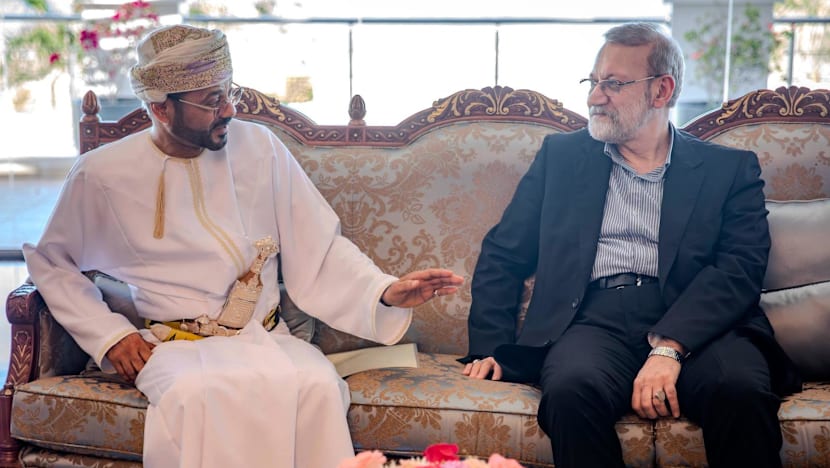
President Trump stated that Iran is keen on a nuclear deal, even as Tehran cautioned the US against Israel's 'destructive' influence in ongoing negotiations. These high-stakes indirect talks in Oman are overshadowed by Israeli Prime Minister Netanyahu's visit to Washington to press for a tougher, broader agreement, including ballistic missiles.
Key Highlights
- Trump believes Iran 'wants to make a deal' on its nuclear program.
- Tehran warned the US against Israel's 'destructive influence' on diplomacy.
- US-Iran indirect nuclear talks recently resumed in Oman.
- Netanyahu is meeting Trump to push for expanded deal terms.
- Discussions follow a '12-day Israel-Iran war' in June 2025.
- Trump is considering deploying a second aircraft carrier to the Mideast.
In a significant development in Middle East diplomacy, US President Donald Trump recently expressed his belief that Iran 'wants to make a deal' regarding its nuclear program. This statement comes amidst complex, high-stakes negotiations and direct warnings from Tehran to Washington regarding external pressures. Trump, speaking in interviews with Fox Business Network's Larry Kudlow and Axios on Tuesday, February 10, 2026, indicated cautious optimism, stating, 'We'll see what happens. I think they want to make a deal. I think they'd be foolish if they didn't.'
Simultaneously, indirect talks between the United States and Iran resumed last Friday, February 7, 2026, in Oman, marking a critical juncture after months of heightened tensions. These diplomatic efforts are taking place against a backdrop of severe regional instability, including what has been referred to as a '12-day Israel-Iran war' in June 2025. This conflict saw Israeli strikes on Iranian nuclear and military facilities, followed by US involvement and Iranian retaliation, further escalating the already volatile situation.
Adding another layer of complexity, Israeli Prime Minister Benjamin Netanyahu arrived in Washington on Tuesday, February 10, 2026, for a crucial meeting with President Trump. The primary objective of Netanyahu's visit, his seventh meeting with Trump since the president's return to office, is to advocate for a tougher and more comprehensive approach to the Iran nuclear negotiations. Netanyahu's office has explicitly stated that any future deal must extend beyond Iran's nuclear activities to include limitations on its ballistic missile program and an end to its support for regional militant groups like Hamas and Hezbollah. These are demands that Iran has consistently rejected, asserting that its missile program is non-negotiable.
In response to Netanyahu's impending visit and influence, Iran issued a strong warning to the United States. Iranian Foreign Ministry spokesman Esmail Baghaei, in a weekly press briefing on Tuesday, February 10, 2026, cautioned against Israel's 'destructive' influence on the diplomatic process. Baghaei emphasized that America must decide to act independently of pressures that are 'detrimental to the region,' further asserting that the 'Zionist regime' repeatedly acts as a 'saboteur' against any diplomatic process leading to peace in the region. Other Iranian officials, including Ali Larijani, a top adviser to Iran's Supreme Leader, echoed these sentiments, urging US officials to remain vigilant and not be 'lectured' by Netanyahu.
Despite Trump's recent expression of optimism regarding Iran's willingness to make a deal, he also maintained a firm stance, warning of 'very steep consequences' if an agreement is not reached. He alluded to past actions, stating, 'We took out their nuclear power last time, and we'll have to see if we take out more this time.' Trump also revealed he is considering deploying a second US aircraft carrier strike group to the Middle East, signaling a continued pressure campaign on Tehran. This military posturing adds another layer of tension to the already delicate diplomatic environment. The initial talks in Oman were described by Iranian Foreign Minister Abbas Araghchi as a 'good start,' though he noted that overcoming the deep-seated mistrust remains a 'serious challenge.' Observers like Raz Zimmt from Israel's Institute for National Security Studies highlight Israel's concerns that the US might agree to a deal that doesn't address the missile issue or grants sanctions relief for limited nuclear concessions.
The overall situation reflects a complex interplay of diplomacy, military deterrence, and regional rivalries, with all eyes on whether a comprehensive and lasting resolution to Iran's nuclear program and its broader regional activities can be achieved. For India, a major energy importer with significant diaspora in the Middle East, the stability of this region and the outcome of these talks have considerable geopolitical and economic implications.
Frequently Asked Questions
What is the current status of nuclear talks between the US and Iran?
Indirect talks between the US and Iran recently resumed in Oman on Friday, February 7, 2026. Both sides have described the initial discussions as a 'good start,' despite significant challenges like mutual distrust.
What is Donald Trump's stance on a potential deal with Iran?
President Trump believes Iran 'wants to make a deal' on its nuclear program. However, he also emphasizes that any deal must be 'good,' include 'no nuclear weapons, no missiles,' and has warned of 'very steep consequences' and potential military action if an agreement is not reached.
Why is Iran warning the US about Israel's influence?
Iran has warned the US against Israel's 'destructive' influence on the nuclear negotiations, urging Washington to act independently. This comes as Israeli Prime Minister Netanyahu is meeting with Trump to push for a broader deal that includes Iran's ballistic missile program and support for regional proxies, demands Iran rejects.
What is Benjamin Netanyahu's objective in meeting President Trump?
Prime Minister Netanyahu is meeting President Trump to press for an expansion of the nuclear talks with Iran. He aims to ensure that any deal addresses not only Iran's nuclear program but also its ballistic missile capabilities and its support for militant groups in the region, which Israel views as critical security threats.
What is the context of the recent tensions and military actions between Israel and Iran?
The current talks and diplomatic efforts follow an intense period of conflict, including a '12-day Israel-Iran war' in June 2025. This conflict involved Israeli strikes on Iranian nuclear and military sites, joined later by the US, and retaliatory actions from Iran, underscoring the severe regional volatility.